
Mobile Navigation

  • National
    • Policy
      • High Expectations
      • Quality Choices
      • Personalized Pathways
    • Research
    • Commentary
      • Gadfly Newsletter
      • Flypaper Blog
    • Events
    • Scholars Program
  • Ohio
    • Policy
      • Priorities
      • Media & Testimony
    • Research
    • Commentary
      • Ohio Education Gadfly Biweekly
      • Ohio Gadfly Daily
  • Charter Authorizing
    • Application
    • Sponsored Schools
    • Resources
  • About
    • Mission
    • Board
    • Staff
    • Career
Home
Home
Advancing Educational Excellence

Main Navigation

  • National
  • Ohio
  • Charter Authorizing
  • About

National Menu

  • Topics
    • Accountability & Testing
    • Advanced Education
    • Career & Technical Education
    • Charter Schools
    • Curriculum & Instruction
    • ESSA
    • Evidence-Based Learning
    • Facilities
    • Governance
    • Personalized Learning
    • Private School Choice
    • School Finance
    • Standards
    • Teachers & School Leaders
    • Think Again
  • Research
  • Commentary
    • Gadfly Newsletter
    • Flypaper Blog
    • Gadfly Podcast
  • Events
  • Scholars Program
Flypaper

Calling for independent research

Chester E. Finn, Jr.
10.1.2008

Economist Roland Fryer's Educational Innovation Laboratory is off to the races, thanks to the Broad Foundation, experimenting with new ways of incentivizing kids to learn in three big cities (New York , Chicago, Washington ). In D.C., the plan involves paying students in fifteen middle schools up to $1500 a year if they (a) attend, (b) behave and (c) get good grades.

I'm a longtime believer in giving young people real-world incentives to study hard and do well in school, though I've long supposed that means doing a better job of hinging promotion, graduation, college admission and jobs on school success. I don't have any big problem with more immediate and kid-like rewards, either, such as taking students with perfect attendance records to a theme park at the end of the year or giving pizzas to those who read more books .

Paying them cold cash to do the right thing gives me pause, however. It's fundamentally??amoral. It creates??weird and perverse incentives for pupils and teachers alike. It could get very expensive, using serious money that might otherwise go into better teachers, better textbooks, longer times, more instructional technology, etc. (Chicago has about 125,000 students in grades 5-8. At $1500 apiece, a totally successful program for them would cost $187.5 million per annum.)

Besides all that, I really want to know if it's going to work--and I really want that question to be addressed by analysts completely independent of Roland Fryer. Is there a freestanding evaluation built into this? Will the necessary??data be available to one and all to analyze? Fryer is a fine economist and presumably an honest man. But nobody should be his own evaluator. That's an even more dubious proposition than paying kids to do what's in their own interest in the first place.
Tags: Chicago Roland G. Fryer Jr.

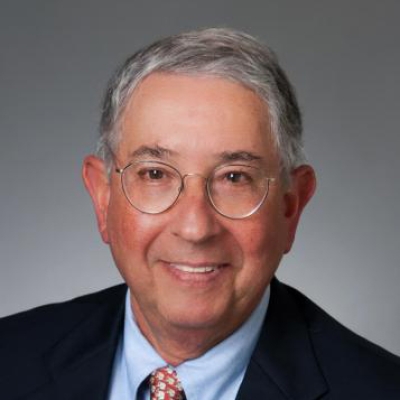
Chester E. Finn, Jr., scholar, educator and public servant, has devoted his career to improving education in the United States. At Fordham, he is now Distinguished Senior Fellow and President Emeritus. He’s also a Volker Senior Fellow at…

View Full Bio
Fordham Logo

© 2026 The Thomas B. Fordham Institute
Privacy Policy
Usage Agreement

National

P.O. Box 110
Burke, VA 22009

202.223.5452

[email protected]

Ohio

P.O. Box 82291
Columbus, OH 43202

614.223.1580

[email protected]

Sponsorship

130 West Second Street, Suite 410
Dayton, Ohio 45402

937.227.3368

[email protected]