Mobile Navigation

  • National
    • Policy
      • High Expectations
      • Quality Choices
      • Personalized Pathways
    • Research
    • Commentary
      • Gadfly Newsletter
      • Flypaper Blog
    • Events
    • Scholars Program
  • Ohio
    • Policy
      • Priorities
      • Media & Testimony
    • Research
    • Commentary
      • Ohio Education Gadfly Biweekly
      • Ohio Gadfly Daily
  • Charter Authorizing
    • Application
    • Sponsored Schools
    • Resources
  • About
    • Mission
    • Board
    • Staff
    • Career
Home
Home
Advancing Educational Excellence

Main Navigation

  • National
  • Ohio
  • Charter Authorizing
  • About

Ohio Menu

  • Topics
    • Accountability & Testing
    • Advanced Education
    • Career & Technical Education
    • Charter Schools
    • Curriculum & Instruction
    • ESSA
    • Evidence-Based Learning
    • Governance
    • Personalized Learning
    • Private School Choice
    • School Finance
    • Standards
    • Teachers & School Leaders
  • Research
  • Policy
  • Commentary
    • Ohio Gadfly Newsletter
    • Ohio Gadfly Blog
    • Events

The Education Gadfly Weekly

Sign Up to Receive Fordham Updates

We'll send you quality research, commentary, analysis, and news on the education issues you care about.
Thank you for signing up!
Please check your email to confirm the subscription.

Ohio Gadfly—Effective and transparent communication with parents should be a goal for schools this year

Volume 16, Number 17
8.23.2022
8.23.2022

Ohio Gadfly—Effective and transparent communication with parents should be a goal for schools this year

Volume 16, Number 17
view
Parent communication in new year blog image
Standards & Accountability

Effective and transparent communication with parents should be a goal for schools this year

A common refrain over the last couple years is that parents are growing increasingly frustrated with their children’s schools. The catalysts behind these feelings are wide-ranging and complex.

Jessica Poiner 8.23.2022
OhioOhio Gadfly Daily

Effective and transparent communication with parents should be a goal for schools this year

Jessica Poiner
8.23.2022
Ohio Gadfly Daily

The case for restructuring Ohio’s state board of education, and how to do it

Aaron Churchill
8.19.2022
Ohio Gadfly Daily

Creating great school options for all Ohio students: Recommendations to strengthen educational choice in the Buckeye State

8.16.2022
Report

Adding up the impact: A meta-analysis of summer math interventions

Jeff Murray
8.23.2022
Ohio Gadfly Daily

Double Punished: Locked Out of Opportunity

Jessica Poiner
8.18.2022
Ohio Gadfly Daily

LIVE EVENT: Should Universal School Choice Be Next on Ohio’s Education Policy Agenda?

8.23.2022
Event

How can Ohio turnaround its lowest-performing schools? VIRTUAL EVENT

8.8.2022
Event
view
Reconstituting the state board of education blog image

The case for restructuring Ohio’s state board of education, and how to do it

Aaron Churchill 8.19.2022
Ohio Gadfly Daily
view

Creating great school options for all Ohio students: Recommendations to strengthen educational choice in the Buckeye State

Aaron Churchill 8.16.2022
Report
view
Summer math program meta analysis SR image

Adding up the impact: A meta-analysis of summer math interventions

Jeff Murray 8.23.2022
Ohio Gadfly Daily
view
Juvenile justice SR image

Double Punished: Locked Out of Opportunity

Jessica Poiner 8.18.2022
Ohio Gadfly Daily
view

LIVE EVENT: Should Universal School Choice Be Next on Ohio’s Education Policy Agenda?

8.23.2022
Event
view

How can Ohio turnaround its lowest-performing schools? VIRTUAL EVENT

8.8.2022
Event
view
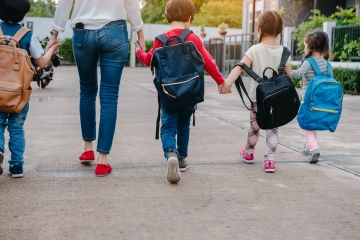
Parent communication in new year blog image

Effective and transparent communication with parents should be a goal for schools this year

Jessica Poiner
8.23.2022
Ohio Gadfly Daily

A common refrain over the last couple years is that parents are growing increasingly frustrated with their children’s schools. The catalysts behind these feelings are wide-ranging and complex. Some have been dissatisfied with remote learning, schools that were closed too long or not long enough, or Covid-19 safety protocols. Others have been concerned about learning loss, mental health, or controversial and politically sensitive topics..

Unfortunately, many of these issues aren’t going anywhere. We live in a fraught time, and education hasn’t been spared. But with a new academic year on the horizon, now is a good time for schools to prioritize building (or rebuilding) relationships with parents that might make it easier to deal with problems and controversies when they inevitably arise. They can do so by focusing on the basics.

First, they should prioritize effective outgoing communication. If that sounds like a no brainer, it’s because it is. Of course schools should be communicating clearly and concisely with parents. Unfortunately, there are plenty of places where that isn’t happening. Parents need timely and up-to-date information about their child’s academic progress, outside-of-school opportunities, and health and safety protocols. Schools should also consider upping the ante on traditional engagement events—things like back-to-school nights, open houses, and parent-teacher conferences—by making sure there are alternative dates and times and/or virtual options for families who are unable to attend. The more opportunities families have to engage—and the more clearly and effectively those opportunities are advertised—the more likely it is that they will.

Second, schools should work to expand and improve incoming communication—the ways families can ask questions or share their input with district leaders and teachers. Effective communication is a two-way street, but many schools only focus on one-way communication. They distribute information, but they don’t establish consistent feedback channels for parents to respond. Inviting families to attend regularly scheduled school board meetings or once-a-year events is a great place to start, but it’s not necessarily the best method for building mutually-beneficial relationships or gauging parental satisfaction. Listening tours, regular parent surveys, and other data gathering strategies that seek parents out—rather than asking parents to do the work of getting in touch—should be a regular part of schools’ parental engagement playbook.

Third, schools need to be transparent about student performance. This is not a new need. For years, the proficiency illusion has caused parents to assume that their students’ achievement and readiness levels are much higher than they actually are. Grade inflation and lowered standards were, unfortunately, the norm in plenty of places prior to the pandemic. Covid has only exacerbated gaps and increased the likelihood of lowered expectations. The laundry list of things that parents have to focus on right now makes it even more likely that they just don’t realize how far behind their kids are.

These efforts are particularly important in light of a recent Brookings analysis, which indicates low parental interest in interventions designed to address pandemic-related learning loss, such as tutoring and summer school. Given the size and scope of learning loss, low parental interest in mitigation efforts should trouble policymakers, advocates, and school leaders. But as the authors rightly point out, there are also several explanations as to why interest could be low. These include “parents’ understanding of whether their child is struggling academically, their beliefs about the benefits of such recovery programs, and logistical considerations, such as availability of transportation.” If parents don’t realize that their students need intervention, or if they aren’t aware of the existence of intervention programs let alone their potential benefits, they’re not going to engage. And unless schools understand why parental interest is low—and recognize that reasons will vary in different places—they can’t come up with solutions. 

Now, more than ever, it is critically important for schools to have open communication lines and use them to tell parents the truth. In terms of academics, that means using rigorous assessments to determine where kids are, making sure students’ report cards aren’t downplaying problems where they exist, creating evidence-based plans for how to remediate and enrich, and then communicating it all—where kids are, where they need to be, and how the school is going to get them there—to parents. Downplaying problems or kicking them down the road to deal with later won’t win schools any favor with parents, but being transparent and communicating a plan for improvement will. It will also help kids in the short- and long-term. And in the end, that’s what really matters.

view
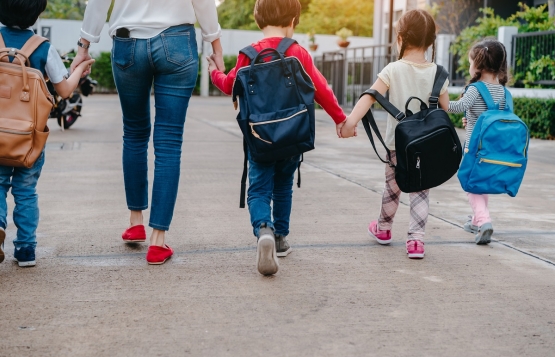
Reconstituting the state board of education blog image

The case for restructuring Ohio’s state board of education, and how to do it

Aaron Churchill
8.19.2022
Ohio Gadfly Daily

The state board of education (SBOE) plays an important role in Ohio’s K–12 education system. It exercises direct oversight of the Ohio Department of Education, hires the superintendent of public instruction, creates rules that guide implementation of education laws, and even takes on a quasi-judicial role in deciding whether to revoke educator licenses or sponsors’ charter authorizing authority.

That’s a lot to tackle, and it takes an effective board to carry out these tasks successfully. But let’s face it: Ohio’s state board of education isn’t exactly a well-oiled machine. Consider, for instance, the challenges the SBOE has had in hiring and retaining a top-notch state superintendent—its only duty specifically mentioned in the state constitution. In just the past decade, a whopping seven state superintendents, counting both permanent and interim chiefs, have taken the helm. The still-unsettled saga of replacing Paolo DeMaria, who retired last summer, further illustrates the point.

To be clear, the woes of SBOE shouldn’t be laid at any particular member’s feet. Rather, the institutional structure of the board sets it up to struggle. Two features limit its effectiveness.

First, the board is excessively large. The SBOE has a staggering nineteen members, the second largest board of education in the nation. The sheer size surely makes communication, coordination, and decision-making unwieldy. We all know that having candid discussions and building trust in larger groups is extremely hard. The voices of a few can dominate, while the rest check out—some perhaps losing a sense of ownership in the overall body’s work. Furthermore, when it comes to hiring a state superintendent, such a massive board makes the position less appealing. Who in their right mind wants to report to nineteen bosses?

Second, the hybrid structure of the board—eleven elected members and eight gubernatorial appointees—limits its ability to set a clear agenda and rigorously implement the priorities of the governor and General Assembly. This isn’t just a theoretical problem. The eclectic mix of members has led to ambiguous policy stances—the board’s strategic plan, for instance, offers little in terms of concrete policy direction—and in some cases even obstructionism (e.g., SBOE’s objections to the new at the time graduation requirements a few years back). Moreover, the structure also weakens the superintendency. State superintendents aren’t directly accountable to the governor, but have to kowtow to a multiplicity of voices. That erodes their leadership potential and creates yet another disincentive for visionary executives to consider the role.

Lawmakers can and should fix these structural flaws through changes in state statute. The first thing they should do is cull SBOE to seven members, the size of the education boards in states such as Colorado, Florida, and Oregon. Studies of corporate governance find that more productive firms typically have smaller boards. Lesser would be better in terms of SBOE’s size, too. It would strengthen communication between members, help to build trust, and foster a greater sense of ownership. It could also streamline decision-making and might even allow for shorter, more efficient board meetings (they’re currently two-day monthly marathons). A smaller SBOE might even raise the profile and stature of the body as it operates more smoothly and with greater clarity.

The other necessary reform relates to board selection. I’m on the record as wanting an all-appointed SBOE to create a clearer chain of command—from the governor to state superintendent via an appointed board. While that model is closer to the ideal, the politics of such an approach are rough. In fact, House lawmakers—with supporters from the governor’s own party—introduced a bill last year that would eliminate the appointed SBOE positions, leaving only the eleven elected members. That legislation, however, goes way too far in stripping the governor’s authority over an executive agency. This approach would also create an even more fractured board, as all of the members would be elected through a directly political process.

So here’s an olive branch: Shrink the size of the board to seven, with four appointees and three members elected via statewide, partisan ballot. (Like the current model, members would be elected in an even-numbered year for four-year terms.) The slight edge in appointed seats would give governors more influence in board decisions, though by no means guarantee they always get their way. There may be holdovers from a predecessor or appointees who—as is their right—disagree with them on an issue. Meanwhile, the elected members would continue to satisfy those who seek a variety of viewpoints. But rather than electing SBOE members by geographic district using a non-partisan ballot, Ohioans would choose board members in statewide races with party identification included. This procedure would increase the public’s recognition of—and accountability for—the elected members. With only three seats in play, the statewide elections would generate more attention and interest than the sleepy races they currently are. The partisan ballot would allow voters to identify the broad political leanings of the candidates, and allow them to vote in a more informed way.

Some may argue that this approach to electing SBOE members would reduce constituent service and further politicize the board. On the first count, Ohioans can always turn to their state representative or state senator if they have concerns. They have a constitutional duty to steward K–12 education, and indeed care deeply about Ohio schools. As for partisanship, it must be acknowledged that today’s “non-partisan” SBOE is hardly apolitical. Everyone assumes that the appointees generally align with the governor, and the political views of the elected members are no secret in policy circles. The partisan ballot would simply make the political composition of the board transparent to the electorate.

The current institutional structure of Ohio’s state board of education sows discord and gridlock and gets in the way of forward-thinking leadership. Lawmakers need to restructure the state board in ways that create a leaner, stronger body that can better tackle Ohio’s educational challenges.

view

Creating great school options for all Ohio students: Recommendations to strengthen educational choice in the Buckeye State

8.16.2022
Report

Ohio has a long history of empowering parents with educational options for their children. Today, more than 250,000 of the state’s 1.6 million students attend public charter schools, enroll in private schools with the support of state-funded scholarships, or participate in interdistrict open enrollment. Yet much more remains to be done to ensure that all families have access to high-quality schools that fit their children’s needs.

In this new policy brief, we outline specific ways that Ohio lawmakers could continue the push for more and better educational options. Recommendations focus on improving funding for charter schools, expanding eligibility for private school scholarships, and making interdistrict open enrollment a reality throughout the state. If adopted, Ohio will make further progress toward a pluralistic, parent-centered K–12 education system that focuses on achievement, quality, and diversity.

This paper is the first of a series of policy briefs that Fordham will release this year as Ohio lawmakers begin to consider ways to improve K-12 education in the next budget cycle. To read the brief and the policy recommendations, click here.

view
Summer math program meta analysis SR image

Adding up the impact: A meta-analysis of summer math interventions

Jeff Murray
8.23.2022
Ohio Gadfly Daily

While some evidence indicates a return to pre-pandemic levels of academic achievement for students across the country whose learning was interrupted by school closures and remote education, not every student is there yet, and the gaps between subgroups of students are either the same or worse than they were in 2019. Additionally, evidence suggests that the negative impacts have been larger in math than in English language arts. Out-of-school time, and summer programs specifically, have emerged as promising means by which to boost achievement. A recent meta-analysis—by a team of researchers led by Kathleen Lynch from the University of Connecticut—looked to determine whether the data support summer math programming as an effective way to increase student outcomes.

The two most recent meta-analyses on the impacts of out-of-school-time programs were released in 2000 and 2006; many of the studies included at the time are now decades old and “use samples and methodologies that are now dated.” Broadly adhering to the What Works Clearinghouse recommendation of a twenty-year-review time limit, Lynch and her team gathered thirty-seven studies published between 1998 and 2020 that analyzed a summer mathematics intervention, included treatment and control groups, presented outcomes comparing those groups, and presented sufficient information to calculate effect sizes. Study types included randomized experiment and regression discontinuity designs (30 percent), as well as quasi-experimental designs that met all the previously-listed criteria (70 percent). Two of the studies had been previously included in the 2006 meta-analysis; all the others were new. Thirty-five of the studies took place in the United States, one in Canada, and one in England. The studies looked at both large national programs like Upward Bound and small local programs conducted at the school and district levels; most involved a majority of low-income, non-White students. The interventions were nearly evenly split between elementary and middle/high school students. Interestingly, 11 percent of the summer programs studied took place fully online. Most programs were rather intense, with a mean duration of 158 hours.

The outcomes were not particularly surprising. Compared to control group individuals, students who participated in summer math programs experienced significantly greater improvements in math learning, however it was measured in the individual studies. The average weighted estimate was a boost of 0.10 standard deviations overall, as well as for the subset of studies whose outcomes were measured by standardized tests. This would equate to a 4 percentile-point improvement. Longer-term outcomes—such as future math course-taking and grades—were also positive but less precisely measurable with the data available. There was no difference in outcomes for children based on income level; all students benefitted equally by participating in summer math programs.

However, there was variation in the positive treatment effects, and a few studies actually showed mild negative impacts for treatment group students. In looking at features that might play a role in these variations, Lynch and her team compared aspects such as teacher professional development and the coursework provided to the students. The most positive outcomes occurred in programs focused specifically on math, as opposed those that included reading or science as part of the curriculum. At the same time, weak or negative results were more likely in programs that used math textbooks (i.e., summer programs that look too much like school), perhaps an indicator of a program that used summer school as “punishment” for students who were faring poorly during the school year.

Lynch and her team conclude that summer programs can be valuable options for schools to help their students recover, relearn, and even move ahead in their math learning. However, a data-backed message that such programs must be properly tailored, of high quality, outcomes-focused, and available to all who might need them is both welcome and timely.

SOURCE: Kathleen Lynch, Lilly An, Zid Mancenido, “The Impact of Summer Programs on Student Mathematics Achievement: A Meta-Analysis,” Review of Educational Research (July 2022).

view
Juvenile justice SR image

Double Punished: Locked Out of Opportunity

Jessica Poiner
8.18.2022
Ohio Gadfly Daily

According to the Sentencing Project, the number of youth committed to juvenile facilities across the country has steadily declined since 1999. But a significant number of young people remain incarcerated, and while in custody, they are legally entitled to receive education services. A recent report from Bellwether Education Partners attempts to shed light on the juvenile justice education policies in all fifty states, as well as Washington, D.C., and Puerto Rico.

To get the lay of the land, researchers reviewed state statutes, codes and regulations, other relevant legal documents, and the websites of local and state agencies responsible for youth in custody. Their findings reveal “confoundingly complex and opaque” systems that make general analysis and state-to-state comparisons difficult. Overall, they conclude that juvenile justice education in the U.S. lacks robust and coherent policy in three key areas: governance, accountability, and finance.

Governance policies determine who is responsible for providing youth in custody with education services. They vary widely across the country, with at least sixteen distinct models in use. In many states, more than one agency is responsible for providing education services to incarcerated youth. For example, in twenty-eight states, the agency that educates youth in local detention centers may be different than the agency responsible at state-run facilities. Furthermore, some states allow custodial agencies to contract with LEAs, private providers, or charter schools to provide services. As a result, most states have a fragmented system where students can easily fall through the cracks.

Like governance, accountability also varies widely across states. In all but two states, SEAs are responsible for holding juvenile justice education programs accountable. Twenty-nine of those states include these programs in their accountability system for public schools, but that doesn’t necessarily mean being subject to school report cards or data dashboards. Three states have built separate accountability systems. States use a wide range of measures to evaluate performance, but very few have indicators for what students are expected to achieve while in state custody. Instead, approximately half use post-incarceration indicators, such as successfully securing employment or enrolling in a job training program, K–12 setting, or postsecondary program. Only nineteen states define what happens when programs underperform (including nine states that directly intervene in poorly performing programs), and an additional fifteen provide technical assistance to struggling programs (five of which also directly intervene). Oregon and Florida are the only states that directly stated their willingness to shut down or reassign consistent poor performers.

The researchers note that, although states’ approved ESSA plans were the most reliable source of information on accountability policies, what was in the plans sometimes conflicted with on-the-ground reports from those overseeing juvenile justice education. Furthermore, in a reflection of fragmented governance, programs are often required to submit data to multiple government agencies, and the agencies’ distinctive goals can be in conflict and weaken accountability incentives.

Finance policies determine how funding is allocated to the agencies responsible for education in juvenile justice facilities. Although many states receive some federal dollars, funding is primarily a state and local responsibility. It should come as no surprise, then, that policies vary widely. Many states—like California, Florida, and Hawaii—make use of their funding models for traditional public schools to determine per pupil funding in juvenile justice facilities. Others, like Alaska and West Virginia, allocate earmarked money to the state department of education or its equivalent. Four states have established special funds to educate youth in custody, while two others have established shared agreements to pay for educating students in state facilities.

The report concludes with six recommendations the authors believe will set states and their juvenile justice facilities on the right path. They include reducing governance fragmentation, perhaps by making one agency responsible for providing education services in all facilities; creating meaningful accountability systems; setting clear goals that focus on short-term academic growth and successful transitions back to the community; investing in innovative assessments and data collection tools, uniform student records databases, and strong data-sharing practices; publicly reporting data to improve transparency and support rigorous research; and ensuring that finance policy is dictated by governance and accountability, rather than the other way around. Implementing these recommendations will take a considerable amount of time, effort, and funding, but the students in juvenile justice facilities deserve nothing less.

Source: Paul Beach, Brian Robinson, Hailly T.N. Korman, and Linea Koehler, “Double Punished: Locked Out of Opportunity,” Bellwether Education Partners (June 2022).

view

LIVE EVENT: Should Universal School Choice Be Next on Ohio’s Education Policy Agenda?

8.23.2022
Event

The Buckeye Institute, the Thomas B. Fordham Institute, and School Choice Ohio cordially invite you to a continental breakfast and coffee dialogue with national and Ohio experts as they discuss recent successful efforts around the country to expand parental choice, lessons learned, best practices, and potential next steps for the Buckeye State.

Tickets are $5, but you can use promo code StudentsFirst to get your tickets for free.

Click here to register and join us at the Athletic Club of Columbus for this important discussion.

view

How can Ohio turnaround its lowest-performing schools? VIRTUAL EVENT

8.8.2022
Event

A few years ago, in the midst of debates over academic distress commissions (ADCs), Governor DeWine said “The state has a moral obligation to help intervene on behalf of students stuck in failing schools.” That was true then, and is still true today. Yet Ohio policymakers have wrestled with what policies can best drive improvement. For many years, Ohio has focused on turning around entire school districts, the idea behind the controversial ADCs.  

Another approach—required under the federal law known as ESSA—is to focus on improving individual schools. But this effort has gotten significantly less attention. What is Ohio doing to implement ESSA’s school improvement requirements? How does the state identify low performers and what steps are taken after identification? Which schools are currently in improvement status? What can the state do to strengthen policy in this area?

The Fordham Institute invites you to an online event to discuss school turnaround policy in the Buckeye State. Dr. Beth Schueler of the University of Virginia will present data from her national study on school improvement. Aaron Churchill of the Fordham Institute, will present his findings from a new analysis of Ohio’s school improvement policies. An audience Q&A will follow the presentations.

August 30, 2022

10:00–11:00am ET

Online via Zoom

Fordham Logo

© 2026 The Thomas B. Fordham Institute
Privacy Policy
Usage Agreement

National

P.O. Box 110
Burke, VA 22009

202.223.5452

[email protected]

Ohio

P.O. Box 82291
Columbus, OH 43202

614.223.1580

[email protected]

Sponsorship

130 West Second Street, Suite 410
Dayton, Ohio 45402

937.227.3368

[email protected]