Mobile Navigation

  • National
    • Policy
      • High Expectations
      • Quality Choices
      • Personalized Pathways
    • Research
    • Commentary
      • Gadfly Newsletter
      • Flypaper Blog
    • Events
    • Scholars Program
  • Ohio
    • Policy
      • Priorities
      • Media & Testimony
    • Research
    • Commentary
      • Ohio Education Gadfly Biweekly
      • Ohio Gadfly Daily
  • Charter Authorizing
    • Application
    • Sponsored Schools
    • Resources
  • About
    • Mission
    • Board
    • Staff
    • Career
Home
Home
Advancing Educational Excellence

Main Navigation

  • National
  • Ohio
  • Charter Authorizing
  • About

Ohio Menu

  • Topics
    • Accountability & Testing
    • Advanced Education
    • Career & Technical Education
    • Charter Schools
    • Curriculum & Instruction
    • ESSA
    • Evidence-Based Learning
    • Governance
    • Personalized Learning
    • Private School Choice
    • School Finance
    • Standards
    • Teachers & School Leaders
  • Research
  • Policy
  • Commentary
    • Ohio Gadfly Newsletter
    • Ohio Gadfly Blog
    • Events

The Education Gadfly Weekly

Sign Up to Receive Fordham Updates

We'll send you quality research, commentary, analysis, and news on the education issues you care about.
Thank you for signing up!
Please check your email to confirm the subscription.

Ohio Gadfly Biweekly—Can Ohio solve the school transportation riddle?

Volume 15, Number 20
9.16.2021
9.16.2021

Ohio Gadfly Biweekly—Can Ohio solve the school transportation riddle?

Volume 15, Number 20
view
School transportation blog image
School Funding

Can Ohio solve the school transportation riddle?

Every student ought to have safe, reliable transportation to a school that meets their needs. Recognizing this, Ohio law has long required districts to offer transportation to all resident students in grades K–8 who live more than two miles from their school—whether that’s a district, charter, private, or STEM school.

Aaron Churchill 9.16.2021
OhioOhio Gadfly Daily

Can Ohio solve the school transportation riddle?

Aaron Churchill
9.16.2021
Ohio Gadfly Daily

Some Ohio schools are facing a teacher shortage. What caused it, and how can it be addressed?

Jessica Poiner
9.17.2021
Ohio Gadfly Daily

Suburban school districts can help urban students succeed

Aaron Churchill
9.20.2021
Ohio Gadfly Daily

Blinding ourselves to America’s achievement woes

Chester E. Finn, Jr.
9.16.2021
Flypaper

Do Ohio’s early high achievers stay strong?

9.7.2021
Event
view
Teacher shortage blog image

Some Ohio schools are facing a teacher shortage. What caused it, and how can it be addressed?

Jessica Poiner 9.17.2021
Ohio Gadfly Daily
view
Boston integration open enrollment program SR image

Suburban school districts can help urban students succeed

Aaron Churchill 9.20.2021
Ohio Gadfly Daily
view

Blinding ourselves to America’s achievement woes

Chester E. Finn, Jr. 9.16.2021
Flypaper
view
OH Gifted Report banner

Do Ohio’s early high achievers stay strong?

9.7.2021
Event
view
School transportation blog image

Can Ohio solve the school transportation riddle?

Aaron Churchill
9.16.2021
Ohio Gadfly Daily

Every student ought to have safe, reliable transportation to a school that meets their needs. Recognizing this, Ohio law has long required districts to offer transportation to all resident students in grades K–8 who live more than two miles from their school—whether that’s a district, charter, private, or STEM school. Though not mandatory, many districts also provide transportation to high school students. Happily, for many parents, the yellow bus does indeed arrive at their home (or thereabouts) twice a day, and they don’t have much reason to worry.

Yet for others, transportation can be a serious headache. And schools, despite their obligations, regularly lament the logistical challenges of providing transportation. Consider just a few of the predicaments highlighted in recent news stories.

  • Last year, the Dayton school district threatened to yank yellow bus transportation for the city’s public charter and private school students, a move that would have forced children as young as five years old to use public transit. Thankfully, the district didn’t follow through with the proposal, and the governor shepherded statutory revisions through the budget bill that now forbid such action.
  • Taking advantage of a loophole in state law, some districts have denied transportation to students attending non-district schools by declaring it “impractical” without much reason or explanation. In such cases, the district must offer parents a payment in lieu of transportation (PILOTs) to help cover the costs of transporting their child.
  • Interdistrict open enrollment students are not entitled to transportation or PILOTs. As radio host Ann Fisher rightly noted in a recent conversation on this topic, that can be a huge barrier for students seeking to attend districts that are more than shouting distance from their home.  
  • This fall, districts across Ohio (and the nation) are facing serious bus driver shortages, leading to uncertainties about transportation services. In Youngstown, the district had enough drivers but was short on inspected busses, leaving some kids stranded on their first week of school.

Akin to so many educational challenges, there’s no silver bullet that can solve every transportation problem. But there are ideas that could alleviate the pains for parents and schools alike. In fact, a few commonsense solutions were part of this year’s state budget legislation (House Bill 110). Those include a requirement that districts, charters, and private schools work more closely in planning bus routes along with provisions that better ensure the Ohio Department of Education is monitoring and enforcing compliance with transportation laws. Furthermore, the budget substantially increases spending for pupil transportation ($680 million in FY 2023 versus $519 million in FY 2021).

Another important step forward is the increased PILOT amounts that parents receive when their district deems transportation impractical. Previously, parents were entitled to a measly $250—not much more than a dollar per school day. Under the new law, the payment is one-half of the statewide average cost of transportation, which in FY 2021 was $1,077 per pupil. Thus, starting this year, the PILOT will rise to approximately $500 per student. This sum more adequately covers parents’ transportation costs, and it may also discourage districts from declaring transportation impractical in the first place.

Those are all positive moves, but policymakers should continue to explore ways to strengthen transportation policies to better serve all Ohio students. Here are three potential areas for improvement (for more ideas, see this in-depth report from Bellwether Education Partners).

  1. Allow non-district schools to seek state grants for bus or van purchases. Starting in FY 2021, the state rebooted its school bus purchasing program by appropriating $20 million for this specific purpose (such grants had not been given since 2009). This provided 486 districts an average of roughly $40,000—a modest allotment but a start in helping districts upgrade their fleets. In the recently passed budget, the program got a boost with $50 million allocated over the next two years. Unfortunately, the program is only open to traditional districts, leaving public charter and STEM schools, along with private schools, out in the cold even if they provide their own transportation or are exploring that option. That should change. Non-district schools should be allowed to tap state funds that enable them to purchase buses or vans. This would not only allow these schools to better serve families, but would also relieve districts of their obligations when students receive transportation from their school of choice.
  2. Explore ways to cut the red tape and fees that bus drivers face. The bus driver shortage raises questions about whether occupational barriers are hampering schools’ efforts to fill vacancies. Are there any regulations or fees that are keeping people away from the job? Indeed, Ohio has a laundry list of bus driver requirements, though some are fairly basic, such as background checks. But the most significant is the need to obtain a commercial driver’s license (CDL) with P and S endorsements. While requiring this credential is prudent and likely necessary, the state should consider waiving the fees associated with CDL licensure. Removing this expense would acknowledge that driving school busses isn’t lucrative—for many, it may be a part-time job—and it could also encourage more people to apply. Moreover, given the CDL requirement, policymakers could examine whether the state’s additional preservice requirements are absolutely necessary. Last, Ohio subjects bus drivers to an annual physical exam, a seemingly overbearing mandate that isn’t required of other school employees. In sum, while bus drivers need a special skill set, policymakers shouldn’t impose unnecessary regulations and costs, lest they discourage people from seeking the job.
  3. Ensure interdistrict open enrollment students are eligible for PILOTs. Without an entitlement to transportation, the parents of open enrollees bear the responsibility of getting their children to schools or bus stops within their districts of attendance. Though the state could mandate transportation for open enrollees, it’s a tall order for a district to bus students to and from various points across the region. A more manageable solution would allow parents of open enrollees to seek PILOTs from their home district in the same way as families denied bussing under the impracticability exemption. This change would recognize the sacrifice that these families make to transport their children. And though the PILOT wouldn’t enable every parent to exercise this option—the amount, for instance, isn’t enough to cover a car purchase—it would remove a barrier for those who are worried about the daily costs of driving their kids to school.

Making transportation work for all is a tough nut to crack. To its credit, Ohio continues to make progress in this thorny area of policy. With further improvements, policymakers can make transportation more efficient for Ohio schools while enabling more parents to access a school that meets their kids’ needs.

view
Teacher shortage blog image

Some Ohio schools are facing a teacher shortage. What caused it, and how can it be addressed?

Jessica Poiner
9.17.2021
Ohio Gadfly Daily

Over the last few months, there have been growing concerns over a teacher shortage in some Ohio districts. It's unclear how much of the scarcity is being driven by the pandemic, as detailed teacher-related data are difficult to come by. But there is research that points to underlying factors that have nothing to do with Covid-19.

One is waning interest in teaching among young people. In a 2018 brief published by ACT, researchers used data from questionnaires to examine the responses of students who were “very” or “fairly” sure about their college major. From 2007 to 2017, high schoolers’ interest in teaching decreased significantly. Education was third among the top ten intended majors in 2008, but by 2012 it had dropped to eighth place and it’s remained there since.

Research published in 2019 by the Center for American Progress found declining enrollment in teacher preparation programs. Nationally, there were more than one-third fewer students enrolling in 2018 than in 2010. Ohio posted a decline of nearly 50 percent, and was one of nine states where the drop in enrollees totaled more than 10,000 between 2010 and 2018. Ohio also saw drops in enrollment for Black and Hispanic prospective teachers, a worrisome trend given the lack of diversity in Ohio’s teacher workforce.

Fast forward a few years, and it’s much easier to understand current teacher shortages. It’s likely that the pandemic is exacerbating the problem because of health concerns and burnout, but it didn’t cause it. And that means policymakers and advocates need to focus on underlying issues that were present before the pandemic in order to address the current problem.

For instance, consider teacher pay. As a former teacher myself, I can attest to the fact that teachers don’t choose the profession for money. But there’s no denying that compensation can and does impact career decisions. ACT surveyed a sample of students during the 2017–18 school year to gauge how their perceptions of the teaching profession impacted their interest. They discovered that the primary reason students weren’t interested in teaching was financial. Among students who reported being uninterested, nearly two thirds cited salary as one of their top three reasons. Salary concerns were also mentioned by students who were “potentially” interested. In fact, 72 percent of potentially interested students said that better pay would increase their interest in teaching. Meanwhile, 39 percent of students who reported being uninterested in the classroom said they would consider teaching if starting salaries were raised to the $50,000 to $59,000 range. In Ohio, that’d be quite the jump. By law, the minimum starting salary for a teacher is only $30,000. Districts can and do offer more, but starting salary averages across the state range from nearly $32,000 in rural high-poverty districts to just over $40,000 in suburban districts with very low poverty rates.

Increasing these numbers is easier said than done. Thanks to the recently passed state budget, however, Ohio districts could soon be in a position to do so. That’s because the budget includes a new funding formula that could eventually raise the base amount given to public schools for each pupil from $6,020 to $7,200. This increase doesn’t immediately apply because lawmakers opted to phase in the new formula. But if the legislature fully funds the formula over the next few years, Ohio’s public schools will receive significantly more money that they could then use to raise starting salaries. Doing so might not impact the current number of teachers in the pipeline, but it would be a smart long-term investment and could help Ohio attract more quality teachers.

For those who balk at the money angle, there are other ways to expand the teacher pipeline. For example, the profession isn’t traditionally friendly to career changers. Without a bachelor’s or master’s degree in education—and the costs that come with obtaining them—it’s difficult to get into the classroom. High-quality programs that recruit recent college graduates and career professionals, train them under alternative licensure frameworks, and then place them in public school classrooms could vastly expand the teacher pool.

State law already offers alternative teacher licensure pathways that would make this possible. But aside from Teach For America, there aren’t many programs currently operating in Ohio. State leaders can and should change that, and they should do it with teacher residencies. These programs, which seek to replicate the residency model used in the medical field, allow prospective teachers to obtain certifications and experience while also earning a salary. Candidates typically spend a year embedded in a school, co-teaching alongside a teacher of record and gradually taking on full ownership of certain aspects of the classroom. Several residency programs exist across the country, including in Boston, Memphis, and Los Angeles. Ohio leaders could establish similar models—perhaps with the help of the National Center for Teacher Residencies—in the Buckeye State.

They could also turn the keys over to local leaders by offering grant funding and technical support to districts and charter networks interested in creating their own teacher training models. A case study from the Clayton Christensen Institute for Disruptive Innovation outlines how a few highly successful charter schools (High Tech High in San Diego; Uncommon Schools, KIPP, and Achievement First in New York; and Match Education in Boston) have created their own teacher certification and master’s degree programs.

But it’s not just charter schools that are getting in on the action. In Rhode Island, the Central Falls School District created the Central Falls Teaching Fellowship, thereby solving its substitute teacher shortage and creating a brand new pipeline of teachers. And in Ohio, Cincinnati Public Schools recently started a program to identify paraprofessionals who might want to pursue teaching degrees. Initiatives like the Miami Teach program and a partnership between Graham Local Schools, Urbana University, and the Ohio Hi-Point Career Center are also worth a look.

It goes without saying that none of these solutions will immediately fix Ohio’s teacher shortages. They’ll take significant investments of time, money, and talent. But if they’re implemented well, and if problems are addressed as they arise, they could help ensure that all classrooms are staffed with excellent teachers.

view
Boston integration open enrollment program SR image

Suburban school districts can help urban students succeed

Aaron Churchill
9.20.2021
Ohio Gadfly Daily

It’s no secret that many of the best public schools are located in America’s leafy suburbs. They’re typically staffed by well-trained teachers, boast up-to-date textbooks and technology, and offer advanced and specialized coursework. But sadly, most of these schools, despite being “public” institutions, are not open to all. Children must live in the right zip code to attend, thus denying entry to those who live in nearby urban communities.

But what would happen if suburban schools cracked their doors open a little wider? A recent analysis tackles this question and uncovers very promising results for urban students who are given opportunities to attend these schools.

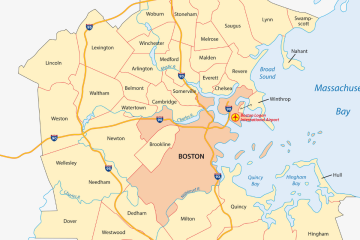
Authored by Ann Mantil of Brown University, the study examines a Boston-area program called METCO, named after the non-profit organization that administers it. For decades, this program has allowed Boston students to attend public schools in the suburbs without having to change their residence. Families apply to participate in METCO and school districts voluntarily accept non-resident pupils on a space available basis. The program today serves just over 3,000 students annually—roughly 4 percent of the city’s students—and more than 90 percent of its participants are Black or Hispanic.

To gauge program impacts, Mantil tracks ninth-grade METCO participants’ high school graduation and college enrollment rates and compares them to two groups: (1) Boston students who never applied to METCO and thus attended the city’s district or charter schools, and (2) Boston students who applied to the program but were not selected for participation. The first comparison includes a larger sample of students, but may not account for unobserved differences between the METCO and non-METCO students (e.g., parental motivation). The second comparison group is more limited in size, but the methodology better controls for unobserved variables. Regardless of the comparison, the results are overwhelmingly positive. Consider the following:

  • Controlling for pupil demographics, METCO students’ graduation rates were a whopping 35 percentage points higher than students attending Boston district schools, and their college enrollment rates were 32 percentage points higher. METCO participants also held a significant advantage in graduation rates relative to Boston charter students—30 percentage points higher—though their college enrollment rates were more comparable (an 11-percentage-point advantage). METCO students’ superior college enrollment rates were almost entirely driven by their higher rates of matriculation to four-year universities (rather than two-year colleges). 
  • Again controlling for demographics, METCO students registered significantly higher graduation and college enrollment rates relative to students who applied but were not accepted into the program. In terms of high school graduation, METCO students’ rates were 18 percentage points higher than the comparison group and 17 points higher for college enrollment. For this analysis, no breakdown of results versus Boston district or charter school students were given, perhaps reflecting the smaller sample size.

Given these impressive benefits—which we also found for Ohio’s Black students who use interdistrict open enrollment—policymakers should consider ways to unlock opportunities in suburban public schools. One option is statewide open enrollment, something Ohio lawmakers should strongly consider. Absent that, local leaders could step up and create regional programs that coordinate interdistrict transfers such as the one in the Boston area. However accomplished, giving more inner-city children the chance to attend great schools and climb the social ladder is the right thing to do.

Source: Ann Mantil, “Crossing District Lines: The Impact of Urban-Suburban Desegregation Programs on Educational Attainments,” Educational Evaluation and Policy Analysis (2021).

view

Blinding ourselves to America’s achievement woes

Chester E. Finn, Jr.
9.16.2021
Flypaper

Much as happened after A Nation at Risk, the U.S. finds itself facing a bleak education fate, even as many deny the problem. Back then, however, the denials came mostly from the education establishment, while governors, business leaders, and even U.S. presidents seized the problem and launched the modern era of achievement-driven, results-based education reform. There was a big divide between what educators wanted to think about their schools—all’s well but send more money—and what community, state, and national leaders were prepared to do to rectify their failings. Importantly, those reform-minded leaders were joined by much of the civil rights community and other equity hawks, mindful that the gravest education problems of all were those faced by poor and Black and Brown youngsters.

Today, by contrast, we’re surrounded by denial on all sides, including today’s version of equity hawks, and we see little or nothing by way of reform zeal or political leadership, save for a handful of reddish states where school choice initiatives continue to flourish. We certainly see nothing akin to the bipartisan commitment to better school outcomes, higher standards, reduced achievement gaps, and results-based accountability that characterized much of the previous forty years.

Yet today’s core education problem is much the same as what the Excellence Commission called attention to way back then:

[T]he educational foundations of our society are presently being eroded by a rising tide of mediocrity that threatens our very future as a Nation and a people. What was unimaginable a generation ago has begun to occur—others are matching and surpassing our educational attainments.... Our society and its educational institutions seem to have lost sight of the basic purposes of schooling, and of the high expectations and disciplined effort needed to attain them.

That was 1983. Today we find continued signs of weak achievement, arguably more menacing because, during the intervening decades, so many other countries, friend and foe alike, have advanced much farther in education, while the U.S., with a few happy exceptions, has either run in place or slacked off. If you don’t believe me, check any recent round of TIMSS or PISA results.

As other countries’ children surpass ours in core skills and knowledge, we face ominous long-term consequences for our national well-being, including both our economy and our security. But what’s even more worrying than the achievement problem is the loss of will to do much about it and the creative ways we’re finding to conceal from ourselves the fact that it’s even a problem—and doing that without necessarily even being aware of the concealment. These strategies take five main forms.

First, we change the subject. Instead of focusing on achievement failings, academic standards, and measurable outcomes, we’ve been redirecting our attention and energy to other aspects of education and schooling, such as social-emotional learning, and to beefing up inputs and services, such as universal pre-K and community college.

Second, we’ve been denouncing and canceling the metrics by which achievement (and its shortfalls and gaps) have long been monitored, declaring that tests are racist, barring their use for admission to selective schools and colleges, and curbing their use as outcome measures (e.g., states scrapping end-of-course exams) without substituting any other indicators of achievement. I understand the ESSA testing “holiday” as Covid-19 raged and schools closed in spring 2020. But why did the College Board abruptly terminate the “SAT II” tests that for many college applicants served as a great way to demonstrate their mastery of particular subjects? Combine what was already a teacher-inspired (and parent-encouraged) “war on testing” with the allegation that tests worsen inequity and you have a grand example of executing the messenger.

Third, we’ve been monkeying with the measures themselves, usually in the name of making them “fairer” and broadening access to them. Policymakers have built innumerable workarounds for kids who struggle with high school graduation tests, such as MCAS, third grade “reading gates,” and the remaining end-of-course exams. The College Board has twice “renormed” the SATs to bring the median back up to 500, and that practice has been joined by other score boosters, such as the invitation to mix and match one’s top scores from the verbal and math sections on different test dates rather than simply adding the scores that one earns on a given day.

Less noticed, I think, is how the gold-standard Advanced Placement program has also been getting easier to do well on. It’s true that AP minders at the College Board and ETS have striven to maintain their scoring standards from year to year within each AP subject, even when transforming the exams to align with new subject “frameworks.” But what’s also happened over time is that the number of AP subjects (and exams) has grown—now it’s a whopping thirty-eight—and many of the newer arrivals are known to be easier things to learn and easier exams to take. The internet abounds with lists of which are the hard and which are the easy AP exams and advice as to which ones you should take to maximize your odds of scoring well. These, typically, are isolated single-year subjects, often new to the AP portfolio, such as psychology, “human geography,” and environmental science, although the most popular exam on the “easy” lists is the long-time stalwart called “U.S. Government and Politics,” i.e., AP’s version of civics.

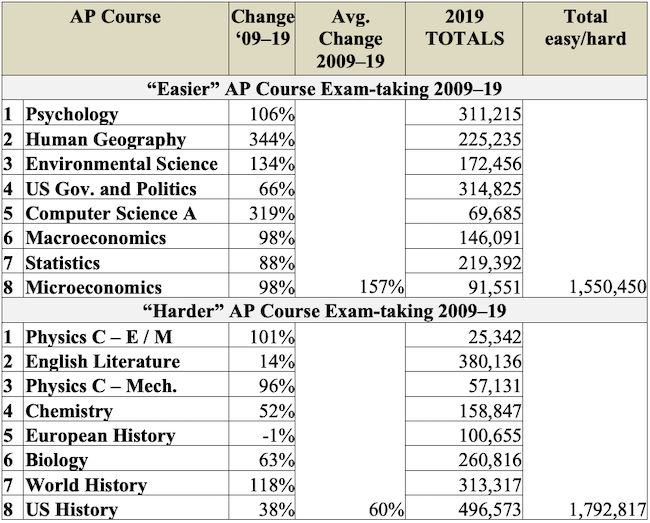
Moreover, participation in the easier APs has been rising much faster than the harder ones. With my colleague Pedro Enamorado’s help, we gauged the rate of increase (in one case a slight decline) over the decade 2009–19 in AP exam-taking in eight of the toughest and eight of the easiest AP courses. We found an average growth rate during that period of 60 percent in the former versus 157 percent in the latter. While the overall rise in AP participation is a bright spot in American education, within it we see this hint that today’s high school students are gradually reaching for the less demanding forms of it.

Table 1. Change in Advanced Placement exam-taking, 2009–19, by exam difficulty and subject
1222

Fourth, we’re inflating grades and scores to make things look better than they are. Grade inflation in high schools and colleges is widespread and well documented, now exacerbated by “no zero” grading policies and suchlike at the elementary- and middle-school levels. Standardized tests, too, can subtly be made to show higher scores—as many states did by setting their proficiency cut-points low—and even the National Assessment will gradually raise all boats as it supplies more “universal design” assists to test takers. (It may also artificially reduce learning gaps.)

Fifth and finally, we’re scrapping consequences. In a no-fault, free-pass world that scoffs at both metrics and merit and practices the equivalent of social promotion and open admission for students, teachers, and schools alike, results-based accountability goes out the window. Out with it goes the central action-forcing element of standards-based education reform. Which is, in a sense, the ultimate erasure of achievement-related education problems and their replacement by an all’s-well-and-don’t-bother-telling-me-otherwise-much-less-doing-anything-about-it attitude. Which, let me say again, is pretty much what we faced from the education establishment after A Nation at Risk. The difference is that now it’s coming from the political system, the culture, and many onetime reformers, too, and we don’t appear to have any leaders pushing back against it. Instead, they’re fussing about how many trillions more to pump into the schools.

Not a good prospect. Call me an old fuddy-duddy and you won’t be wrong. But close your eyes to America’s achievement problems and their denial and you will be very wrong.


view
OH Gifted Report banner

Do Ohio’s early high achievers stay strong?

9.7.2021
Event

VIRTUAL EVENT - VIA ZOOM

Too often, high-achieving students get lost in the shuffle in debates about improving education for all. Overlooking their talents is troubling. To keep the U.S. and Ohio competitive on a global scale, we need to nurture a next generation of inventors, scientists, and business leaders. Recent debates about race and equity have shown the importance of ensuring that high-achieving children from all backgrounds have ample opportunity to reach the highest rungs of the social ladder.  

The Ohio Association for Gifted Children and the Fordham Institute invite you to an online event to discuss how to improve education for academically talented students. Dr. Scott Imberman of Michigan State University will present findings from a forthcoming Fordham study where he tracks the long-term outcomes of Ohio children who scored in the top 20 percent on third grade state tests. How many early high achievers go on to pass AP tests or ace their college entrance exams? What percentage enroll in four-year colleges? Are there gaps between talented children from less advantaged backgrounds and their peers?

Join us on September 28th to get answers to these questions, and for a lively panel discussion and audience Q&A.

September 28, 2021 at 9:00am ET

Fordham Logo

© 2026 The Thomas B. Fordham Institute
Privacy Policy
Usage Agreement

National

P.O. Box 110
Burke, VA 22009

202.223.5452

[email protected]

Ohio

P.O. Box 82291
Columbus, OH 43202

614.223.1580

[email protected]

Sponsorship

130 West Second Street, Suite 410
Dayton, Ohio 45402

937.227.3368

[email protected]