Mobile Navigation

  • National
    • Policy
      • High Expectations
      • Quality Choices
      • Personalized Pathways
    • Research
    • Commentary
      • Gadfly Newsletter
      • Flypaper Blog
    • Events
    • Scholars Program
  • Ohio
    • Policy
      • Priorities
      • Media & Testimony
    • Research
    • Commentary
      • Ohio Education Gadfly Biweekly
      • Ohio Gadfly Daily
  • Charter Authorizing
    • Application
    • Sponsored Schools
    • Resources
  • About
    • Mission
    • Board
    • Staff
    • Career
Home
Home
Advancing Educational Excellence

Main Navigation

  • National
  • Ohio
  • Charter Authorizing
  • About

Ohio Menu

  • Topics
    • Accountability & Testing
    • Advanced Education
    • Career & Technical Education
    • Charter Schools
    • Curriculum & Instruction
    • ESSA
    • Evidence-Based Learning
    • Governance
    • Personalized Learning
    • Private School Choice
    • School Finance
    • Standards
    • Teachers & School Leaders
  • Research
  • Policy
  • Commentary
    • Ohio Gadfly Newsletter
    • Ohio Gadfly Blog
    • Events

The Education Gadfly Weekly

Sign Up to Receive Fordham Updates

We'll send you quality research, commentary, analysis, and news on the education issues you care about.
Thank you for signing up!
Please check your email to confirm the subscription.

Ohio Gadfly Biweekly—High school diplomas aren’t enough

Volume 14, Number 12
6.3.2020
6.3.2020

Ohio Gadfly Biweekly—High school diplomas aren’t enough

Volume 14, Number 12
view
Why Ohio needs readiness measures blog image
Standards & Accountability

High school diplomas aren’t enough

A couple years ago, a district superintendent gave an astonishing quote to his local newspaper stating his belief that the only relevant measure for school quality and the evaluation of school districts is the high school grad

Aaron Churchill 6.3.2020
OhioOhio Gadfly Daily

High school diplomas aren’t enough

Aaron Churchill
6.3.2020
Ohio Gadfly Daily

Escaping from education’s prison of time

Chad L. Aldis
6.8.2020
Ohio Gadfly Daily

The impact of coronavirus on Ohio’s private schools

Jessica Poiner
6.4.2020
Ohio Gadfly Daily

Ohio needs flexible and affordable school choice, especially under COVID-19’s ongoing threat

Greg R. Lawson
6.8.2020
Ohio Gadfly Daily

The educational cost of coronavirus

Jeff Murray
6.5.2020
Ohio Gadfly Daily

Broadening CTE to include middle schools

Jessica Poiner
6.2.2020
Ohio Gadfly Daily

Portrait of the teaching force in America

Jeff Murray
6.1.2020
Ohio Gadfly Daily
view
Seat time blog image

Escaping from education’s prison of time

Chad L. Aldis 6.8.2020
Ohio Gadfly Daily
view
Private schools and COVID blog image

The impact of coronavirus on Ohio’s private schools

Jessica Poiner 6.4.2020
Ohio Gadfly Daily
view
Flexible affordable education after COVID-19 guest blog image

Ohio needs flexible and affordable school choice, especially under COVID-19’s ongoing threat

Greg R. Lawson 6.8.2020
Ohio Gadfly Daily
view
Cost of COVID school closures SR image

The educational cost of coronavirus

Jeff Murray 6.5.2020
Ohio Gadfly Daily
view
Design principles for MS CTE SR image

Broadening CTE to include middle schools

Jessica Poiner 6.2.2020
Ohio Gadfly Daily
view
Teacher characteristics SR image

Portrait of the teaching force in America

Jeff Murray 6.1.2020
Ohio Gadfly Daily
view
Why Ohio needs readiness measures blog image

High school diplomas aren’t enough

Aaron Churchill
6.3.2020
Ohio Gadfly Daily

A couple years ago, a district superintendent gave an astonishing quote to his local newspaper stating his belief that the only relevant measure for school quality and the evaluation of school districts is the high school graduation rate. The section from the article reads:

“’The only research finding about school accountability that has been true ever since we started school research is that young people with a high-school diploma have a vastly, vastly improved opportunity for success than young people without them,’ Wood said. That’s the only metric that matters in the evaluation of school districts, he argued.”

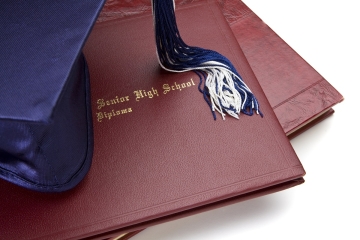
He is right, of course, that a diploma remains a gateway to opportunity and that students who drop out are sure to face immense challenges. But to suggest that graduation rates are all that matter is madness. What the superintendent seems to neglect is that a high school diploma—as a “terminal degree”—doesn’t get young people all that far either.

Consider data from a recent report published by our national office on college “earnings premiums.” Conducted by John Winters of Iowa State University, the analysis finds that Americans with bachelor’s degrees as their highest credential earn on average about $93,000 per year compared to $50,000 for adults with only a high school diploma[1]—a difference that is equivalent to an 85 percent earnings premium. Among those with an associate degree as their highest credential, the premium is predictably smaller at just 19 percent, but is still nothing to scoff at, especially considering the lower cost of obtaining a two-year degree.

Here in Ohio, Winters uncovers similar results. Statewide, those with bachelor’s degrees earn salaries that are 78 percent higher than adults with only a high school diploma (about $85,000 versus $48,000 per year), while the earnings premium for individuals with an associate degree clocks in at 17 percent. In the two metropolitan areas analyzed, the premiums for bachelor’s and associate degrees in Cincinnati are 90 and 24 percent, respectively, and in Cleveland, 77 and 14 percent.

These findings, of course, follow a long line of research showing that post-secondary credentials pay off. Over the course of an entire career, these premiums amount to huge differences in lifetime earnings. While money isn’t everything, the financial implications are not hard to imagine: the ability to purchase a home of one’s own, invest in children’s education, and occasionally take a nice vacation. As we’ve seen during the current economic crisis, those with college degrees are more insulated from layoffs. Why such differences surface remains an important question, but the bottom line is that college educated adults command higher wages in today’s economy and enjoy more financial security.

The clear implication of these data is that schools must continue working to prepare students to succeed in post-secondary education, whether that’s completing two- or four-year degrees or earning technical credentials. Just getting students to the high school finish line doesn’t cut it anymore. This has concrete policy implications, too, particularly when it comes to gauging school performance and reporting student outcomes. More specifically, Ohio should:

1. Maintain its “prepared for success” report card component. This relatively new report card dimension offers a necessary complement to graduation rates by including more rigorous measures of post-secondary readiness. Within this component, schools receive credit when high school students achieve remediation-free scores on the ACT or SAT, earn industry-recognized credentials, or meet honors diploma standards. They also receive extra points when students pass Advanced Placement or International Baccalaureate exams or earn dual-enrollment credits. Despite the importance of including such measures, some have criticized the component, and the state’s superintendents association has argued for its elimination. Following that path, however, would weaken the public’s understanding of readiness for post-secondary education—where the real payoff lies. Instead of hiding the ball, Ohio should seek ways to improve the measure but continue to shine a light on student readiness through this component of the state report card.

2. Align its proficiency standard with college and career ready benchmarks. Proficiency rates have long been the most prominent yardstick of pupil achievement. But many are likely unaware that scoring proficient on the state test does not indicate being on-track. Rather, as the state itself acknowledges: “The accelerated level [i.e., one level above proficient] suggests that a student is on track for college and career readiness.” To erase confusion about the meaning of proficient, Ohio should match its proficiency standards with college and career ready standards, something that other states have accomplished. For instance, Massachusetts ensures that “meeting expectations” target indicates that students are “on track to be ready for success in college and careers.” 

3. Report college completion rates by bachelor’s and associate degrees. Though adults with either two- or four-year degrees enjoy significant earnings premiums over those with a high school diploma only, differences remain between the two college degrees. To its credit, Ohio already reports college completion rates for each district and high school on their report card (for information purposes, not for calculating ratings). While this is an excellent start, we don’t know how many students completed an associate versus bachelor’s degree. All that’s available is a combined rate. Reporting completion rates separately by degree type would enhance transparency, giving parents and the public an even sharper picture of success after high school.    

Young people who complete college have vastly superior economic outcomes than their peers whose last stop in the education system is the twelfth grade or less. That’s not to say that individuals holding high school diplomas, or even dropouts, cannot live productive, fulfilling lives. But these earnings premium data should make us pause and rethink whether it’s fair to say that a high school diploma is enough.

[1] The study focuses on average (mean) incomes rather than median incomes. Both are valid statistics, but average incomes are significantly higher than the median. In an appendix, the study shows that earnings premiums for bachelor’s degrees are somewhat smaller using median incomes (e.g., 85 to 71 percent nationally), while associate degrees are more similar.

view
Seat time blog image

Escaping from education’s prison of time

Chad L. Aldis
6.8.2020
Ohio Gadfly Daily

As the economy slowly reopens and Ohio returns to something resembling normalcy, it’s a nice opportunity to reflect on what we’ve learned during the pandemic. For me, time itself became very different, both in practice and in concept. The plague rid our daily lives of conventional time constraints—and freed us to use our days differently. From long morning walks to family dinners to evenings playing board games with kids, many of the changes were rewarding.

In K–12 education, however, traditional uses of time continue to be, well, stuck in time. Experts are analyzing how far behind students will be next fall, trying to figure out how to help them catch up and pondering how many should be retained in grade. Isn’t it possible that our conventional construct of the role of time in education is magnifying the problems created by the virus and our response to it?

Consider the typical K–12 education. The overwhelming majority of students will spend thirteen years in school before receiving a diploma. That’s a long time.

If every year is divided into four quarters, that’s fifty-two quarters of schooling. When schools shut down in March, most districts had about a quarter of the school year left. That’s one fifty-second—not even 2 percent—of a student’s total K-12 experience.

Two percent of a student’s educational journey isn’t nothing. But it shouldn’t generate sky is falling rhetoric, especially since schools (at least in Ohio) were still expected to make a “good faith effort” to continue educating their pupils from afar.

Students will be “behind” this fall, not because two months is insurmountable, but because our education system insists that they move ahead in lockstep instead of picking up where they left off. It’s time to adjust our view. The ambitious outcomes we want from schools—good citizens, preparedness for college or career, strong values—argue for viewing education as a marathon instead of thirteen year-long sprints. 

What needs to change?

First, while recognizing that everyone can and should complete the marathon, let’s acknowledge that finish times are going to vary. Students deserve to have the time they need to leave K–12 ready to face the world. That means some students will finish high school at age fifteen and others at twenty.

Second, because a marathon is a very long haul, with many turns and hills, it’s critical to know how far along each child has come, how much distance remains to be covered, and what adjustments and intervention may be needed to keep him or her on track. That requires a few checkpoints. For example, children are much less likely to reach the finish line in a reasonable period of time if they’re not in decent shape at the start. Kindergarten readiness is critical. Students unable to read well by nine or ten years old are going to struggle as they enter late elementary and middle school. And those who struggle in middle school math are less likely to complete high school.

Third, let’s experiment more with multi-age classrooms and decoupling age from grade levels—our current default checkpoints. Just as we don’t expect all runners to reach the ten-mile marker at the same time, we shouldn’t expect every kid to reach each checkpoint in the same amount of time. Anyone with more than one child already understands this. Sadly, however, grade levels in U.S. schools are driven not by what students know, but by their age and the number of hours they’ve sat at desks.

Fourth, we need to adapt to our environment. Just as a runner may face rain, headwinds, or heat, we’ll have to figure out how to run classrooms and facilitate learning to allow students to proceed as they master material. We’ll also need to get smarter about doing assessments when students have mastered the relevant learning standards and not just during state testing time in April.

Finally, we’ll need to support kids as they adapt to changing circumstances. Just as a runner may experience blisters, cramps, or an energy wall, we have to help students persevere in the face of illness, family challenges, and, yes, even pandemics. Sometimes this means counseling and medical or mental-health care. Often, though, what they need is additional time. That means an extra year, summer classes, or after-school tutoring.

Let’s free our students, teachers, and schools from the prison of time. Instead of panicking about a couple months of lost learning, let’s use one of the lessons from the pandemic and recognize that time can be used differently. Let’s do what countless others have already recommended and give every child the time and help they need to reach the K–12 finish line. Yes, this transformation is a very big deal. But every marathon begins with a single step.

view
Private schools and COVID blog image

The impact of coronavirus on Ohio’s private schools

Jessica Poiner
6.4.2020
Ohio Gadfly Daily

As schools across Ohio stagger toward the finish line of a bizarre and difficult school year, educators, parents, and state and local leaders are beginning to turn their attention toward the uncertainties of the future. There are plenty of analyses about how schools will attempt to cope with the fallout of coronavirus. The “brutal math of a massive economic downturn” and the possibility of enrollment shifts seem to be top of mind for both the traditional public and charter school sectors.

But Ohio-specific analyses on how coronavirus might affect private schools are far harder to come by. That’s not surprising, given their small share of the state’s student population. Chartered private schools educate approximately 169,000 students, compared to the 1.5 million children enrolled in traditional public districts, or about 11 percent of the total. Private schools—likely surprising to some—educate a larger share of students than charter schools, which are responsible for educating approximately 103,000 Ohio youngsters. Charter schools tend to draw considerable media and public attention because they are publicly funded and subject to the state’s accountability system, whereas private schools are not. (Their share of enrollment in urban districts is also much higher.) Unless there’s a debate over vouchers, private schools typically fly under the radar.

COVID-19 could change that. Like their traditional district and charter school counterparts, private schools are facing financial stress and enrollment shifts that could alter their operations. But unlike their public peers, private schools aren’t financially backstopped by taxpayer dollars. Instead, most of their funding comes from student tuition, fundraising, and philanthropic support.

In a healthy economy, private schools can more easily rely on tuition and donations. But in the midst of an unprecedented economic crisis, this funding model becomes a liability. In a recent survey of private school employees, 44 percent of respondents said they are “very” or “extremely worried” about drops in philanthropic support. Forty-one percent reported similar levels of concern about collecting tuition for the remainder of the year, as well as the possibility that the crisis would extend into next year. Sixty-five percent of respondents are “very” or “extremely worried” about students’ families struggling financially. And 51 percent are worried about losing enrollment next year.

The recently passed CARES Act offers private schools a few forms of financial reprieve, such as allowing them to participate in the Paycheck Protection Program. But those funds won’t be enough in the long run. Over a million Ohioans have filed for unemployment since the pandemic started. Some families that could previously afford tuition are now dealing with job losses and salary cuts. Even if they can get back to work, many of them will have significant financial holes to dig out of and may be forced to withdraw their children from private schools.

Philanthropy and fundraising could also take a hit. Religious schools that depend on weekly donations are likely suffering after months of cancelled services. Spring fundraising events like festivals and alumni gatherings were cancelled by public health orders, and summer camps and programs may not go on as scheduled. These various funding losses could add up. Many of Ohio’s private schools were already operating on razor-thin margins prior to the pandemic. The fallout of COVID-19 could be the final straw that forces them to close their doors.

A spike in such closures would have a rippling impact across Ohio’s education sector. Obviously, private school students and families will bear the most direct impact. Transferring to a new school is stressful and disruptive in normal circumstances, let alone in the midst of a pandemic. It’s also important to recognize that families don’t enroll in private schools by default; they specifically choose their schools for academic, cultural, religious, and other reasons. Being forced out of these chosen schools due to closure or a sudden inability to pay is a serious loss. The staff and teachers at these schools will also be forced to find new jobs, which is no small feat in the midst of an economic downturn where millions of others are also searching for work.

A sudden influx of transfer students will also cause serious problems for districts and the state. In a recent analysis, ExcelinEd points out that even if a small percentage of private school students return to districts, they could be facing millions of dollars in new costs. Based on average per-pupil expenditures, if only 5 percent of Ohio’s private school students return to district schools in the fall, the fiscal cost to public schools could be over $166 million.

In an ideal world, the state would send additional funds to districts to cover the cost of educating transfer students. But Ohio’s current economic circumstances are far from ideal. K–12 public schools are already facing $300 million worth of cuts. Additional cuts are likely next year. Even if state leaders empty the rainy day fund and the economy miraculously rights itself in record time, Ohio’s current funding system wouldn’t drive additional aid to district schools. The budget Governor DeWine signed into law last summer suspended the state’s funding formula, so Ohio is currently funding schools in accordance with what they received last year, rather than their enrollments. Returning students who were using a performance-based voucher will bring those funds back to districts, but voucher dollars are only a small percentage of the total per-pupil educational cost. For the most part, districts that see an influx of private school students won’t see any additional state aid.

The upshot? A sudden spike in private school closures won’t just hurt the students, families, and staff who attend them. Traditional public schools will pay a hefty price too, and so will the state as it tries to play catch up. There are no easy answers for how lawmakers should address these issues. But seriously considering the negative impacts on students and families—and taking steps to mitigate those impacts where possible—would be a good place to start.

view
Flexible affordable education after COVID-19 guest blog image

Ohio needs flexible and affordable school choice, especially under COVID-19’s ongoing threat

Greg R. Lawson
6.8.2020
Ohio Gadfly Daily

Editor’s Note: The Thomas B. Fordham Institute occasionally publishes guest commentaries on its blogs. The views expressed by guest authors do not necessarily reflect those of Fordham.

The COVID-19 pandemic has created unprecedented disruption for Ohio students across the state. Schools closed for most of the second semester, proms and graduations were cancelled, and plans for returning to classrooms and cafeterias next year remain murky at best.

Now is the time for Ohio to make it easier—not harder—for parents to meet the educational needs of their children. The state’s school choice options, including charter schools, voucher programs, open enrollment, and scholarships like EdChoice, have proven overwhelmingly popular with parents and students. By contrast, the public school system’s bureaucratic, one-size-fits-all approach continues to trap thousands of students in schools ill-suited to meet their unique needs.

Now is the time to build on the success of Ohio’s school-choice initiatives, not tear them down. As families adjust to education’s “new normal” and look for the best educational environment for their child’s growth, Ohio should continue pursuing commonsense reforms and alternatives to the public school model. Unfortunately, school-choice opponents have threatened to pursue a misguided lawsuit challenging Ohio’s voucher programs that seeks to strip parents and students of their learning options, eliminate Ohio’s successful EdChoice initiative, and erode support for future pro-education solutions.

Instead of squashing learning opportunities, Ohio should bolster and expand school-choice programs that will help families afford better, more effective schooling. Especially now, as we adjust and warily reopen schools despite the virus’s ongoing threat, educational dollars should follow students, not simply flow to preordained school districts. In addition to the school-choice options already available, policymakers should explore state and federally funded education savings accounts, or ESAs, that can help families purchase educational alternatives and learning support services. 

Unlike vouchers, ESAs do more than cover school tuition. ESAs are specialized accounts administered by the state that, much like a debit card, parents may spend on educational products or services. These accounts boast several significant advantages. They help families pay for educational resources, textbooks, online courses, tutors, private music or art lessons, and curriculum enhancements—regardless of whether they enroll their children in public or private schools or homeschool them. They give parents control over how to spend the state-paid share of their child’s education funding. They create incentives to find the best education options at competitive prices. And they give families and educators more flexibility to design and afford personalized learning programs to augment traditional K–12 classrooms. Such resources and flexibility may prove particularly critical as “normalcy” remains elusive, and families, teachers, and administrators grapple with the threat of another wave of COVID-19.

Several states already use ESAs effectively to help families and educators better meet the individual needs of students. Ohio should join states like Arizona, Nevada, Florida, Mississippi, and Tennessee in the burgeoning ESA initiative. Waiting to create feasible educational funding sources that support alternatives to public education will only make the festering problem worse. 

The COVID-19 pandemic has led families to carefully scrutinize their educational choices and take charge of their children’s schooling. Creating ESA options for a more customized education would transition Ohio away from funding bureaucratic education, and would allow funding to flow more freely to families and students. Instead of merely inflating state education spending, Ohio could better serve families by empowering them to decide how and where their education tax dollars are spent.

Now more than ever Ohio needs well-designed ESA and school-choice programs that foster flexibility and affordability. Ohio doesn’t need regressive lawsuits and anti-education efforts designed to wrest control away from parents, limit learning options, and further empower the public school monolith that has failed our children for too long. 

Greg R. Lawson is a research fellow at The Buckeye Institute and the author of Giving Families Certainty: Enhancing Education with Education Savings Accounts.

view
Cost of COVID school closures SR image

The educational cost of coronavirus

Jeff Murray
6.5.2020
Ohio Gadfly Daily

As unprecedented as our current times may appear to be, large scale disasters and emergencies such as those provoked by the global spread of COVID-19 are not new. Crises as diverse as World War II, the Cultural Revolution in China, and years of political and social unrest in Argentina in the 1990s have been studied extensively in terms of their long-term impact on citizens who experienced them as children or teenagers. All of these events resulted in systemic education disruptions for various lengths of time, and led to persistent earnings declines that often lasted decades. For instance, research suggests that the negative economic impacts of the 1918 influenza pandemic—the closest cousin to today’s—were felt into the 1980s. Predictive research on the topic has been done in recent times as well. Modeling in the U.K. and U.S. found that closing all schools—for any reason—for just four weeks (far shorter than what most countries are currently experiencing) would cost between 0.1 and 0.4 percent of gross domestic product (GDP) just in the short term.

With these precursors to build from, a new working paper from the policy research arm of the World Bank takes a look at the potential cost of school closures in response to the current pandemic. Lead researcher George Psacharopoulos and his team estimate the GDP losses globally and across countries due to prolonged school closures—four months in the case of this initial formula—as well as assessing the cost to affected students in terms of expected lifetime earnings.

Two variables are key to their formula. The first is the rate of return on education, which research pegs at about 9 percent over an individual’s lifetime. That is, every additional year of schooling equates to about 9 percent in additional future earnings. This varies from country to country, but the outputs of the formula are reported globally and then by three country-income groups (low-, middle-, and high-income countries) to account for this variation. The second variable, however, is the most important. It is a mitigating factor against learning loss generated by distance learning during the period of school closure. More on that in a moment.

The estimated present value loss in lifetime earnings at the individual level is $612 in low-income countries, $4,425 in middle-income countries, and $37,982 in high-income countries. At the global level, the loss is $9,787 per student. Perhaps not a terrible outcome per person, but the global totals—from $78 billion in low-income countries up to $8.8 trillion in high-income countries—are staggering. With 1.5 billion students across the globe experiencing educational disruption of some length this year, projected losses from school closures hover around 15 percent of a given country’s annual GDP, depending on the wealth group of the country.

Not only are these outcomes unsurprising, given the structure of the modeling, but they have also been borne out by history. The Argentinian example is particularly instructive, as the negative financial impacts fell almost entirely upon the lowest income levels of society. In fact, the prolonged nature of the crisis there appeared to allow higher-income families time to adapt to the new reality—finding their own means to continue educating their children in spite of systemic educational disruption.

And this is where the second variable comes in. The researchers categorize their mitigation variable as an “optimistic” one. In it, only 10 percent of students suffer learning loss; the other 90 percent continue to learn at their regular rate due to distance learning opportunities. The research team adopted this mitigation factor—and their putative four-month school closure—based on UNESCO estimates in the early days of the pandemic, but the realities of both are likely far too volatile and fast moving to determine a real picture of closure length or learning loss mitigation now. For every country, state, district, or school doing well generally by its students, there is at least one whose efforts are patchy and another struggling mightily. If in reality there is less mitigation than this optimistic formula presents, the poorer mitigation efforts disproportionally affect low-income students, and the closures continue into next school year, the educational and economic losses from the COVID-19 pandemic will be far worse than even the most clear-eyed analysts are yet predicting.

SOURCE: George Psacharopoulos, et. al., “Lost Wages: The COVID-19 Cost of School Closures,” World Bank Policy Research (May 2020).

view
Design principles for MS CTE SR image

Broadening CTE to include middle schools

Jessica Poiner
6.2.2020
Ohio Gadfly Daily

High-quality career and technical education (CTE), which teaches students both the academic and technical skills needed for a variety of in-demand careers, is a promising pathway for millions of young people. Perhaps understandably, the majority of the nation’s CTE programs happen at the high school and postsecondary levels. However, many CTE experts and advocates warn that waiting until high school to educate students on their career options is a mistake.

There isn’t a broad consensus about what CTE and career awareness programs should look like in middle school. So Advance CTE, with support from the Association for Career and Technical Education, gathered a workgroup of national, state, and local leaders to pinpoint the key aspects of a quality CTE experience in the middle grades. The end result—a paper titled Broadening the Path: Design Principles for Middle Grades CTE—offers state and local leaders suggestions on how to design new programs and policies, as well as how to improve existing initiatives.

The paper covers three main areas: student outcomes, design principles, and core program elements. In terms of student outcomes, it’s critical for leaders to establish clear goals that are firmly rooted in student learning and incorporate rigorous standards and curricula. An effectively implemented middle school CTE program would accomplish several important outcomes, including awareness of and exposure to a wide variety of careers; the development of employable skills, such as problem solving, time management, and self-advocacy; the development of foundational technical skills, like understanding industry-specific terminology; and an actionable next-steps plan for a student’s transition to high school. This last outcome is particularly important, as it can help middle schoolers identify which courses to take.

To achieve these learning outcomes, state and local leaders must design and implement effective programs and policies. This paper offers several principles for doing so, though they are not intended to be prescriptive. First and foremost, programs must be equitable and inclusive. To have maximum impact, CTE programs in the middle grades should not be limited to a single elective course, even though carving out dedicated instructional time might affect master schedules and teacher availability. The paper also warns against tracking students into certain courses based on their gender, race, or ethnicity, and against making CTE courses a “dumping ground” for certain students.

It is also vital for programs to be anchored in careers. Students should be able to explore a vast range of occupations, the knowledge and skills needed to pursue them, and associated labor market information. They should also have access to hands-on experiences, like project-based and work-based learning. Effective programs should strike a careful balance between breadth (exposing students to many careers) and depth (allowing students to explore their unique interests). Employers should be included in intentional and meaningful ways. Aligning middle school offerings to high school, college, and career advising and clearly communicating CTE options to students and their families are also crucial. Finally, to gauge student success, the paper recommends focusing on growth validated by educators and employers. Coursework, work-based learning, and competitions for career and technical student organizations (CTSOs) would give students an opportunity to demonstrate their learning.

The final section explores six core elements of CTE programs: standards, curricula, and assessments; course and activity structure and scheduling; career advisement; experiential learning; teachers and leaders; and data and measurement. Implementing these elements effectively will determine a program’s overall quality. For example, the majority of information collected on CTE programs and students occurs at the high school and postsecondary level. To build effective CTE programming in the middle grades, state and local leaders will need to determine how and when to measure whether middle school students have achieved learning outcomes.

Overall, this paper is an informative look at how to extend the benefits of CTE into the middle grades. State and local leaders looking to expand CTE programming would be wise to use this roadmap as a guide.

Source: “Broadening the Path: Design Principles for Middle Grades CTE,” Advance CTE and the Association for Career and Technical Education (March 2020).

view
Teacher characteristics SR image

Portrait of the teaching force in America

Jeff Murray
6.1.2020
Ohio Gadfly Daily

The National Center for Education Statistics (NCES) recently published the latest data from the National Teacher and Principal Survey (NTPS), conducted during the 2017–18 school year. It gives us an important snapshot of today’s teaching force in both public and private schools.

The 2017–18 NTPS uses a nationally representative sample of public and private schools. The teacher side of the survey sample includes about 60,000 public school teachers working in 10,600 traditional district and charter public schools and roughly 9,600 private-school teachers working in 4,000 private schools.

The main finding is a portrait: The average American teacher across all school types is non-Hispanic white, around forty years of age, holds a bachelor’s degree, and has at least ten years of experience. She earns in excess of $51,000 per year in base salary, leads a classroom of about twenty-one students, and reports having been evaluated at least once in the last year in a manner that’s had a positive impact on her teaching.

Digging down a bit further, charter school teachers are more racially diverse than those in traditional public schools, which in turn are more diverse than those in private schools. Whites account for 85.1 percent of teachers in private schools, 80 percent in district schools, and 68 percent in charter schools. Just less than 7 percent of all district school teachers are black, and 9.3 percent are Hispanic. However, charter schools have notably higher percentages of teachers who are black (10.4 percent), Hispanic (15.6), Asian (3.0), and mixed-race (2.3) than do their traditional district counterparts (6.5, 9.0, 2.1, and 1.7 percent, respectively). The tenure data reported in the survey includes a caveat that the response rate was very low, and thus the results are not as clear cut as other data. Charter school teachers report having, on average, ten years of experience, as compared to traditional district and private school teachers’ approximately fourteen years of experience.

Twenty-one percent of private school teachers report having additional income from jobs outside their school system during the school year, versus 19 percent of charter school teachers and 17.8 percent of traditional district teachers. Most in both sectors also report earning additional income above their base salary from other within-system sources, largely in the realm of overseeing extracurricular activities. But far more charter school teachers (15.8 percent) report receiving performance bonuses than do their peers in traditional district (7.7 percent) and private (a mere 0.6 percent) schools. A striking 49.2 percent of public school teachers have a master’s degree (49.8 percent for traditional district teachers to 38.6 percent for charter school teachers), while 40 percent of private school teachers have master’s degrees.

For veterans working in education policy, some of the data provided in this snapshot are unsurprising. But they’re important for properly framing a number of ongoing discussions around teacher diversity, educator pay, and differences across the public, private, and charter sectors. Having basic information such as this should help keep such discussions grounded in reality rather than myths.

SOURCE: Soheyla Taie and Rebecca Goldring, “Characteristics of Public and Private Elementary and Secondary School Teachers in the United States: Results From the 2017–18 National Teacher and Principal Survey First Look,” National Center for Education Statistics (April 2020).

Fordham Logo

© 2026 The Thomas B. Fordham Institute
Privacy Policy
Usage Agreement

National

P.O. Box 110
Burke, VA 22009

202.223.5452

[email protected]

Ohio

P.O. Box 82291
Columbus, OH 43202

614.223.1580

[email protected]

Sponsorship

130 West Second Street, Suite 410
Dayton, Ohio 45402

937.227.3368

[email protected]