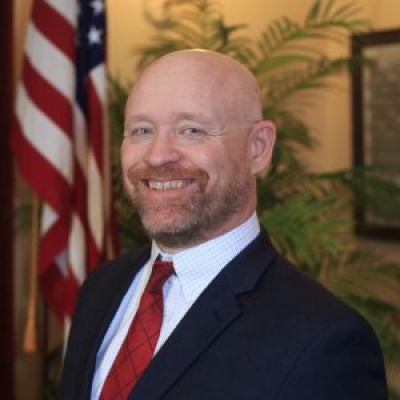
NOTE: Today, the Ohio Senate’s Primary and Secondary Education Committee heard testimony on Senate Bill 178 which would make important changes to the governance structure of K-12 education in the state. Fordham’s Vice President for Ohio Policy provided proponent testimony before the committee. These are his written remarks.
I am here today to testify in support of Senate Bill 178. This legislation would represent a major restructuring of education governance in Ohio and would move the state toward a more coordinated, coherent approach to K-12 and workforce-development policy implementation.
Why is a change necessary? To be blunt, Ohio students today encounter challenges that they are too often ill-equipped to face. We’ve all heard the data on K-12 education. But since the pandemic, it’s gotten even worse. On Ohio’s state tests only 53 percent of eighth grade students are proficient in English and only 43 percent are on grade level in math. Using the higher—college ready—NAEP standards, Ohio 8th grade proficiency numbers dip to 33 percent in reading and 29 percent in math. Low-income students and students of color post even lower scores. It’s clear that we must find ways to improve student achievement in K-12 education.
Our challenges though aren’t limited simply to math and reading assessments. Consider the following statistics:
- College remediation: It’s no secret that too many college-going freshmen require remediation before taking credit-bearing courses. According to the most recent data from the Ohio Department of Higher Education, 19 percent of students attending a public college or university require remediation in either English or math. Disappointingly, but not surprisingly, research indicates that students needing remediation when entering college are far less likely to earn a degree.
- College readiness: While around 53 percent of Ohio high school graduates enroll in a college or university, only about 30 percent actually go on to earn two- or four-year degrees. Various reasons could explain the disparity between matriculation and completion rates. But the fact that only 22 percent of Ohio high school students meet the ACT’s college readiness benchmarks has to be a big factor.
- Work-ready credentials: As most of you have heard from constituents, Ohio still has thousands of “good jobs” available—careers that pay respectable wages but don’t require four-year degrees. Yet data indicate that only 6.6 percent of the high school graduating class of 2021 left with industry-recognized credentials—certifications that can open doors to meaningful employment.
To reiterate, too many students leaving high school today are ready for neither college nor work. Ohio’s economic future and—just as important—the lives and long-term happiness of our citizens demand change.
I’ve testified before and interacted with members of the state board of education—both past and present. I have deep respect for them personally and their efforts. In many ways, it’s a thankless job. It’s also a board that is designed in a way that—through no fault of its members—prevents it from functioning efficiently and implementing the education laws that the legislature passes. Nineteen voting members—split between appointees and elected members—is a recipe for gridlock, discord, and a lack of accountability. And anyone paying attention over the past few years has seen that and more. From two-hour discussions on parliamentary procedure, to months of debate on policy issues that are under the purview of the General Assembly, to drawn out deliberations on how to hire a state superintendent—Ohio students don’t have time for this.
That’s why we stand in support of SB 178. It would allow Ohio governors to take on a stronger leadership role in agenda setting, policy design, and the implementation of initiatives aimed at improving readiness for college or career. In the realm of K–12, Ohio has a fragmented system in which governors rightly run for office on how to improve education but an almost anonymous state board of education—with less accountability overall—actually exerts the most influence over policy implementation. When the governor and state board are aligned and work in harmony, it’s fine. But other times, they work either in silos or at cross-purposes. The result has been pedestrian academic achievement which creates hardships for our students. By granting the governor greater leadership over education, we will finally have some semblance of accountability for education outcomes.
SB 178 would also create conditions that allow education and workforce initiatives to be vigorously implemented. The bill’s more unified approach—including creating a deputy director for career and technical education—is critical as data continue to show that too many young people struggle to make transitions from high school to career. The improved alignment of K–12 and career and technical education systems should help to set consistent expectations, align policy development and information systems, and create a culture of shared responsibility for the well-being of young people from elementary school to their first jobs.
Governor DeWine and future governors—regardless of party—should be allowed to oversee a unified state education and workforce agency. SB 178 would significantly improve the likelihood that initiatives are faithfully carried out. This is surely why governors of both parties, including Governors Voinovich, Strickland, and Kasich, have at times sought more formal authority in primary-secondary education. It is also likely the reason that many states grant governors appointments over state education boards and/or education agency directors. This is not to say that governors should always get what they want: Checks and balances are essential to any governing model. But the check on the governor should come primarily via the legislature and, of course, through the will of the people who ultimately hold him or her accountable at the ballot box.
The time is right to make these changes. Post-pandemic, Ohio students are facing tremendous challenges to get back on track. We need strong, aligned, bold leadership to improve our education system. Unfortunately, our current governance structure for K-12 education has proven not to be up to the task. While restructuring alone may not deliver the results Ohio needs to secure its future prosperity, the changes proposed in SB178 would create conditions that promise more seamless transitions for students and a renewed accountability around academic achievement. To remain internationally competitive as a state, we can’t afford to lose talent and human potential simply because of incoherent and misaligned policy making.
Thank you again for the opportunity to speak with you today. I am happy to answer any questions that you may have.