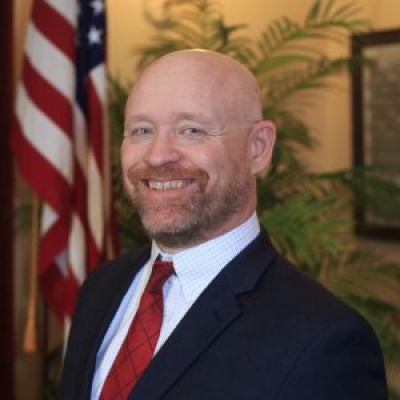
Note: Today the Ohio Senate Education Committee heard testimony on Senate Bill 158. It proposes sharp limits on the use of cellphones by students during the school day. Fordham’s Vice President for Ohio Policy provided the following proponent testimony on the bill.
I want to begin with an undeniable reality: cellphones have become a major problem in our classrooms. While technology can be a powerful learning tool, personal smartphones are doing far more harm than good during the school day. They fracture students’ attention, disrupt lessons, and create an environment where true engagement with learning becomes much harder. A recent Common Sense Media study found that 97 percent of students aged 11 to 17 use their phones during the school day, even when rules technically prohibit it. The median student spent about forty-three minutes a day on their phone between 8:00 a.m. and 3:00 p.m., checking it roughly thirteen times. And most of that time isn’t devoted to educational pursuits; instead, students are absorbed in social media, YouTube, and gaming.
Educators are not blind to this issue. They see the impact firsthand and overwhelmingly support stronger limits on student cellphone use. A recent Pew/RAND survey revealed that nearly three out of four high school teachers view cellphone distraction as a significant challenge in their classrooms. Similarly, a National Education Association survey showed that 90 percent of teachers favor prohibiting phones during instructional time. The message is clear: teachers want to teach, and students need to learn—but the constant presence of phones undermines both.
The academic consequences of unchecked cellphone use are significant and well-documented. Research indicates that even the mere presence of a smartphone can diminish cognitive capacity and reduce focus. A large-scale study conducted in England found that schools implementing a cellphone ban experienced an overall improvement in student test scores, with the most pronounced gains seen among low-achieving students—those who arguably stand to benefit the most from a focused learning environment. Reducing distractions through a cellphone ban is a common sense, research-backed way to strengthen academic outcomes and give every student a better shot at success.
Yet the problem goes beyond academics alone. We are living through a national youth mental health crisis. Rates of anxiety, depression, and loneliness among adolescents have soared in the era of smartphones and ubiquitous social media. Researchers such as Jonathan Haidt and Jean Twenge have extensively documented how these technologies have reshaped adolescent development, often with detrimental effects. School should offer students a reprieve—a place to be present, connected to each other, and focused on learning. Unfortunately, smartphones constantly pull students away from those essential experiences.
Recognizing these challenges, the legislature took an initial step last year with the passage of House Bill 250, which required districts to establish a policy on cellphone use during the school day. However, while the hope was that local policies might resolve the issue, the reality is uneven at best. Inconsistent rules and sporadic enforcement have left teachers struggling. A state survey released in December found that only 41 percent of districts currently prohibit phones throughout the school day. Many others have adopted partial measures that are difficult to enforce and confuse students and staff alike. Teachers should not have to fight uphill battles every day simply to maintain basic classroom norms. It has become clear that a statewide solution is necessary.
Senate Bill 158 answers this need by providing clarity and support to our schools. The bill sets consistent expectations across the state, while still including commonsense and necessary exceptions for medical needs and individualized education plans. It reflects a thoughtful, balanced approach—one that prioritizes learning while recognizing that students’ diverse needs must be accommodated.
Finally, I want to thank Governor DeWine for starting this important conversation and Senator Timken for championing this legislation. Senator, I appreciate your leadership and look forward to working with you to see this effort through.