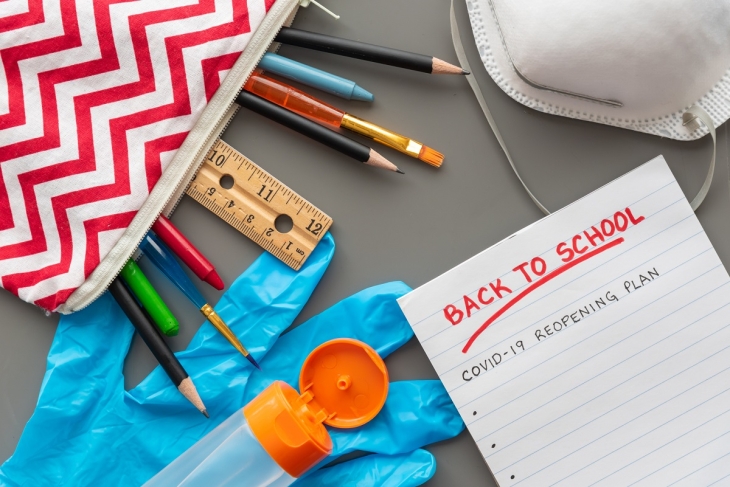
To go back or not to go back? That’s the question on everyone’s mind as we inch closer to August and the beginning of a new school year. A recent Ohio survey found that 67 percent of parents support—and only 15 percent oppose—students returning to classrooms in the fall for in-person learning. While some national polls have found very different results, Buckeye State parents are on to something. We should follow their lead and do everything possible to get kids back in school buildings this fall.
First and foremost, that’s because “remote learning” did not go well, to put it politely. To be sure, many districts made heroic efforts to educate students, ensuring they had WiFi and internet-compatible devices, and even delivering lunches. Parents have also done yeoman’s work to support their children’s learning needs while trying to balance their many other responsibilities during this very challenging time. Yet there’s growing evidence that efforts varied greatly between districts, and from student to student, with most kids not getting close to what they needed.
The Center for Reinventing Public Education (CRPE) examined a nationally representative sample of 477 school districts to see how remote learning was implemented this spring. The findings were sobering. Only one in three districts expected teachers to provide remote instruction. As for tracking attendance or engaging in one-on-one check-ins to monitor pupil engagement, less than half of districts required it. And just 42 percent of them mandated teachers to collect and grade student work, then account for them in course grades. Parents, more than anyone else, are acutely aware when their children have minimal interaction with teachers, little homework, and receive passing grades without much effort.
Some experts estimate that the resulting learning loss (combining spring with the normal summer loss) will be a jaw-dropping 50 percent in math and 30 percent in reading, and even worse for our most disadvantaged students. Parents dreaming of a college education for their children have to be very concerned about the long-term costs that will arise from even more time out of the classroom.
Nor do we see many districts taking steps to fill in the gaps going forward. While summer school is probably a no-go given the virus’s recent uptick, how many districts will start classes early? Establish tutoring programs? Extend the school day or 2020–21 school year? Such catch-up options seem obvious, but it’s hard to find Ohio school systems that have vowed to embark on them. Perhaps the expected budget crunch is making such aggressive efforts impossible for districts to fathom. Instead, some district leaders are urging the state to limit the number of academic standards that schools are expected to teach and students are expected to learn during the 2020–21 school year. Students didn’t have the opportunity to learn last year’s standards, so the solution is to teach them fewer standards this year, too. Talk about “defining deviancy down”! Argh.
So, it’s really important to get students back into the classroom with their teachers, but it also needs to be done as safely as possible. Governor DeWine and the Ohio Department of Education haven’t released their final “Reset and Restart” guide for opening schools yet, but we must hope that they’ll strike the right balance between safety and academic necessity. The good news is that it can be done. The American Academy of Pediatrics (AAP), for instance, just released guidance saying, “the AAP strongly advocates that all policy considerations for the coming school year should start with a goal of having students physically present in school.” The doctors’ guidance spells out the negative impacts on children in a host of areas when they aren’t in school and acknowledges that, regardless which approach is taken, risk is being mitigated rather than eliminated.
Furthermore, the AAP notes, while children and adolescents play “a major role in amplifying influenza outbreaks,” the same does not appear to be true for Covid-19. In fact, “children may be less likely to become infected and to spread infection.” This is consistent with the experience in many countries that have reopened schools and not seen a virus surge.
August will be here in a few weeks. Many Ohio parents, at least for now, are making clear that they want their children back in the classroom. Given what we know about kids’ learning losses, the paucity of plans to help students catch up, and the evolving science on the risk to children of being in school, we can’t fault them. The challenge now moves to state and district leaders to figure out how to best serve the many families that are counting on their schools to reopen while still providing a quality education to those parents feeling compelled to keep their children at home until the virus subsides.