
Today, the Ohio Department of Education and Workforce released school report cards for the 2025–26 school year. Data include state math and reading exam results as well as high school graduation and chronic absenteeism rates. They also feature star ratings that summarize schools’ performance through an “overall” rating and six “component” ratings.
“The state’s report card has long provided a vital checkup on the academic progress of Ohio students,” said Aaron Churchill, Ohio Research Director at the Thomas B. Fordham Institute. “This year’s edition reveals encouraging signs of academic improvement, particularly in third grade reading and high school algebra I. But with proficiency rates still generally lagging pre-pandemic marks, state policymakers must continue their push for stronger math and reading instruction.”
The figures below display statewide proficiency rates in selected grades and subjects, with 2018–19 scores (pre-pandemic) shown as the baseline. In three of the four grade-subject combinations, proficiency rates in 2025–26 fell below pre-pandemic marks, with only algebra I proficiency exceeding it.
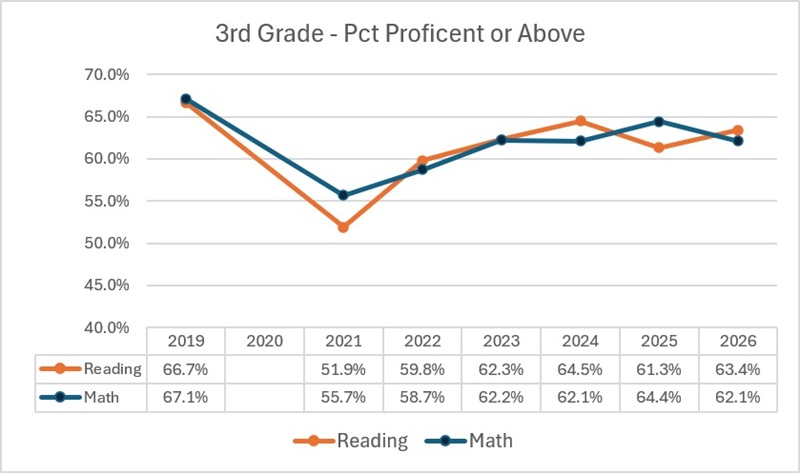
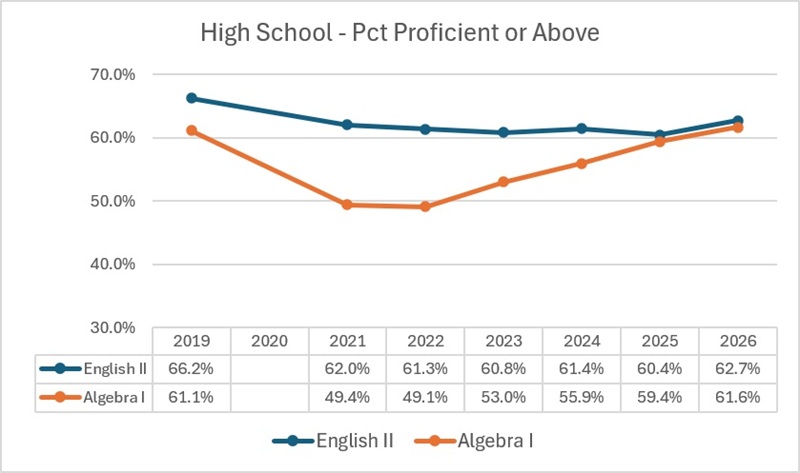
Note: 2019-20 data are omitted due to the test cancelations.
Another closely-watched indicator is chronic absenteeism—defined as missing more than 10 percent of the school year for any reason. The chart below shows that the percentage of chronically absent students continued to decline from the pandemic-era high of 30 percent in 2021–22. Nevertheless, absenteeism remained stubbornly high compared to pre-pandemic levels and still exceeded 50 percent in nine school districts during 2025–26 (Cleveland, Columbus, Lorain, and Youngstown among them).
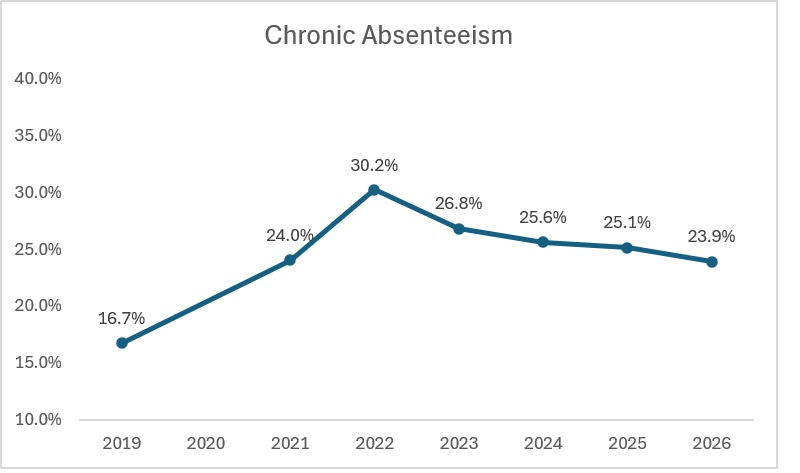
“Widespread absenteeism continues to undermine academic improvement, particularly in Ohio’s highest-need communities,” continued Churchill. “While state policymakers have touted the importance of attendance, it’s time for Ohio to take a stronger stand against chronic absenteeism. At its current rate of improvement, Ohio will return to pre-pandemic chronic absenteeism rates sometime during the 2030s. That is unacceptable. State policymakers must take more aggressive steps, including a stronger report-card mechanism, to ensure daily attendance.”