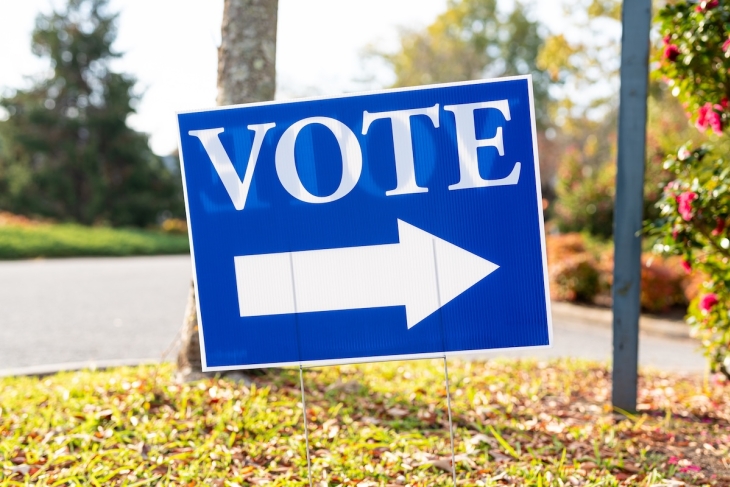
Election day is upon us—today, for those who may have forgotten! Despite being a sleepy “off-cycle” election, citizens will be asked to vote on weighty matters of local governance, including their school board members. As a reminder, these boards set the overall direction and tone for districts by carrying out responsibilities that include:
- Hiring the district superintendent and treasurer, and holding them accountable.
- Negotiating and approving union contracts, which include salary and benefit provisions and other stipulations that impact the culture, effectiveness, and fiscal health of the district.
- Selecting the textbooks and curricula used in classrooms (not all programs are equally rigorous, and these decisions bear on instructional quality).
- Ensuring strong internal accountability by supporting efforts to rigorously evaluate teachers and dismissing underperformers, if necessary.
- Deciding whether the district takes a positive or negative stance on parental rights, including their ability to choose non-district options such as public charter and private schools;
- Choosing to put tax requests before local voters, a decision that directly impacts citizens’ wallets.
- Pursuing financial efficiencies through, e.g., closing half-empty schools, scaling back master’s degree “bonuses,” and implementing other sensible cost-containment measures.
Given the importance of school boards, Ohio should have policies that empower local citizens to hold these elected bodies accountable. Two ways to encourage this is by maximizing voter participation and promoting transparency at the ballot box. Yet on both counts, the state falls short.
Off-cycle elections and lackluster voter participation
Ohio, by virtue of its constitution, holds school board elections in odd-numbered years when far fewer Ohioans are paying attention to politics and going to the polls. The odd timing changes the makeup of the electorate. One analysis, which includes data from Ohio, finds that school employees—people voting for their bosses—comprise a larger portion of voters in off-cycle elections. On the other hand, low-income citizens and parents are less likely to vote in these elections—not necessarily a surprise given their time and resource constraints.
The electoral skew has implications for district governance. Most notably, the outsized influence of district employees, who can vote en bloc for candidates endorsed by their unions, raises concerns about board members’ allegiances and priorities. When push comes to shove, will they put union interests first—e.g., hiring more staff, providing more generous salaries and benefits, and shielding employees from accountability? Or will school boards prioritize students, parents, and taxpayers? Given their electoral incentives, the answer is clear: School boards are more likely to pursue union-friendly policies, ones that tend to drive up costs, hinder academic excellence, and stymie school choice.
Moving school board elections “on-cycle,” as suggested by several scholars and education reformers, would boost voter turnout and ensure a more representative electorate. With broader participation, school board members will have to weigh others’ voices, including parents’, when they make decisions. Changing Ohio’s electoral calendar would require a constitutional amendment, which is a heavier lift than revising state law. But lawmakers are not entirely hamstrung. They can and should initiate the process to put a statewide referendum before Ohioans to amend the constitution and move school board elections on cycle.
Nonpartisan ballots and paltry voter information
The other challenge with school board elections is the anonymity of most candidates, made worse because party labels do not appear on the ballot. In the absence of this information, the burden falls on voters to find out about candidates, so they can cast ballots in ways that are congruent with their values and preferences.
But, if my experience is representative, this is no easy feat. Here in our small-town district in Northeast Ohio, we have four candidates running for three seats this fall. In an hour or so of Googling, I learned that one is an incumbent but nothing else, and came up empty on the others. No public events were posted online where community members could meet and ask candidates questions. No interviews were found in my hometown paper. I haven’t seen a single notice in parent emails from our district on where to find information about the candidates. Without a clue who these people are, this voter intends to leave the school board section of the ballot blank.
Other Ohioans may be equally perplexed. Some may vote based on which name sounds the most trustworthy or what yard sign they liked the best. Others might pick the name that appears at the top of their ballot. Still others might select based on the assumed gender or ethnicity of the candidate. Many others will simply choose to not mark their ballot, even if they vote on other matters, or just sit out the elections altogether.
As a service to citizens, Ohio should require party identification to appear next to candidates’ names on the ballot. Though not a perfect method—some have argued it could encourage even more culture war fights—party affiliation is the time-honored way that candidates for many elected offices are identified. It would give voters a general sense of how candidates might approach important education issues where there are partisan differences (e.g., unions, taxes, and choice). It would also make it more transparent to communities the political composition of their overall school board—and hold its members more accountable if they stray too far. Finally, it could also reduce the shadowy practice in some places whereby partisan groups line up behind a slate of candidates, even in these outwardly “nonpartisan” elections. Why not take the masks off?
Several years ago, Ohio lawmakers added partisan labels for judicial elections, information that has increased transparency about who sits on our benches. Earlier this year, state lawmakers also attempted to shift to partisan ballots for school board elections via the state budget legislation. Unfortunately, Governor DeWine vetoed the changes. Lawmakers should continue to pursue election reform, whether through an override or attempting to pass another bill.
* * *
Healthy democracies depend on an informed and engaged electorate. But structural impediments, such as electoral timing and ballot (non)transparency, weaken the democratic process for choosing local school boards. What we end up with are low-turnout, low-information elections. This dynamic opens the door to union capture of the school board and associated dysfunctions such as spending problems, weak accountability, or cultural battles. As public school advocates like to remind us, most Ohio students still attend district-run schools. Let’s make sure they are led and overseen by individuals known by their communities and held accountable at the ballot box.