Mobile Navigation

  • National
    • Policy
      • High Expectations
      • Quality Choices
      • Personalized Pathways
    • Research
    • Commentary
      • Gadfly Newsletter
      • Flypaper Blog
    • Events
    • Scholars Program
  • Ohio
    • Policy
      • Priorities
      • Media & Testimony
    • Research
    • Commentary
      • Ohio Education Gadfly Biweekly
      • Ohio Gadfly Daily
  • Charter Authorizing
    • Application
    • Sponsored Schools
    • Resources
  • About
    • Mission
    • Board
    • Staff
    • Career
Home
Home
Advancing Educational Excellence

Main Navigation

  • National
  • Ohio
  • Charter Authorizing
  • About

Ohio Menu

  • Topics
    • Accountability & Testing
    • Advanced Education
    • Career & Technical Education
    • Charter Schools
    • Curriculum & Instruction
    • ESSA
    • Evidence-Based Learning
    • Governance
    • Personalized Learning
    • Private School Choice
    • School Finance
    • Standards
    • Teachers & School Leaders
  • Research
  • Policy
  • Commentary
    • Ohio Gadfly Newsletter
    • Ohio Gadfly Blog
    • Events

The Education Gadfly Weekly

Sign Up to Receive Fordham Updates

We'll send you quality research, commentary, analysis, and news on the education issues you care about.
Thank you for signing up!
Please check your email to confirm the subscription.

Ohio Gadfly Biweekly—Ohio puts education accountability on pause

Volume 14, Number 9
4.16.2020
4.16.2020

Ohio Gadfly Biweekly—Ohio puts education accountability on pause

Volume 14, Number 9
view
Ohio puts education accountability on pause image
Standards & Accountability

Ohio puts education accountability on pause

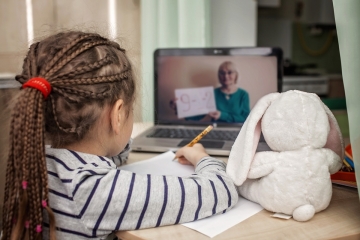
These are unprecedented times. COVID-19 has greatly altered or paused much of what we do on a daily basis, including education. Governor DeWine has suspended in-person classes in K–12 schools statewide from March 17 until at least May 1. While most schools are attempting to offer some type of distance learning, it’s decidedly not business as usual.

Chad L. Aldis 4.16.2020
OhioOhio Gadfly Daily

Ohio puts education accountability on pause

Chad L. Aldis
4.16.2020
Ohio Gadfly Daily

Three ways Ohio schools can use this summer to stem learning loss from the coronavirus pandemic

Jessica Poiner
4.16.2020
Ohio Gadfly Daily

Education during a pandemic: Lessons to be learned

Chad L. Aldis
4.23.2020
Ohio Gadfly Daily

NCTQ shines a light on teacher contracts, licensure during the pandemic

Jessica Poiner
4.24.2020
Ohio Gadfly Daily

The nudge: Financial incentives and educational effort

Amber M. Northern, Ph.D. | Jeff Murray
4.22.2020
Flypaper
view
COVID and summer school

Three ways Ohio schools can use this summer to stem learning loss from the coronavirus pandemic

Jessica Poiner 4.16.2020
Ohio Gadfly Daily
view
Pandemic education lessons blog image

Education during a pandemic: Lessons to be learned

Chad L. Aldis 4.23.2020
Ohio Gadfly Daily
view
NCTQ teacher policies and COVID SR image

NCTQ shines a light on teacher contracts, licensure during the pandemic

Jessica Poiner 4.24.2020
Ohio Gadfly Daily
view

The nudge: Financial incentives and educational effort

Amber M. Northern, Ph.D., Jeff Murray 4.22.2020
Flypaper
view
Ohio puts education accountability on pause image

Ohio puts education accountability on pause

Chad L. Aldis
4.16.2020
Ohio Gadfly Daily

These are unprecedented times. COVID-19 has greatly altered or paused much of what we do on a daily basis, including education. Governor DeWine has suspended in-person classes in K–12 schools statewide from March 17 until at least May 1. While most schools are attempting to offer some type of distance learning, it’s decidedly not business as usual.

In response to the pandemic, the legislature passed much-needed emergency legislation, HB 197, on March 25. The bill includes a variety of education provisions that essentially put school accountability on hold. This includes waiving state testing for 2020, suspending state report cards, permitting on-track seniors to graduate without completing all requirements, allowing local schools to determine whether third graders read sufficiently to advance to fourth grade, and making teacher evaluations optional.

In a normal year, these changes would be a big deal, especially as some violate federal education law. Nevertheless, pressing pause on accountability is absolutely the right thing to do. The governor and General Assembly deserve credit for taking this action.

Given that Fordham is a staunch advocate of school accountability, our support for this pause merits an explanation. There are three main reasons this was a good idea.

First, state tests are, at their core, designed to measure a student’s academic achievement. Did Suzie learn what fourth graders are supposed to learn? This year, schools stopped in-person instruction after about 75 percent of the year. It stands to reason that there are a number of concepts in both math and reading there just wasn’t time to cover. Suzie would inevitably—through no fault of her own—perform worse than she otherwise could have.

That’s only half the story, though. It’s easy to focus on the pandemic-forced changes in education, like the difference between in-person and online learning. But that’s shortsighted. With 22 million Americans and more than 850,000 Ohioans joining the ranks of the unemployed in just the last four weeks, the impact on family life will be significant. Such abrupt changes, combined with concerns about the virus itself, are extremely likely to increase fear and uncertainty at an unparalleled scale for a significant number of students. And we know from many years of data that students facing these types of challenges are likely to perform more poorly on state assessments. It will tell us little about a school or district’s academic achievement when an abrupt shock to the system—like this pandemic—occurs. This doesn’t diminish the importance and value of testing. It just isn’t important or particularly useful given our current context.

Second, accountability systems are supposed to be fair. This is a key principle for advocates on both sides of the accountability debate. We may disagree—and often do—as to whether a particular report card component is calculated properly or is important to measure, but we don’t disagree that fairness is imperative. Even if it were possible to administer state assessments this year—and there are some arguments as to why it might not be a bad idea—it simply wouldn’t be fair to pretend that it was a typical year.

The issue of fairness goes beyond the district and school ratings captured by state report cards. The legislature was smart to recognize that students and teachers are also impacted. Third grade students missed out on important opportunities to strengthen their reading skills and meet the state’s threshold for promotion to fourth grade. Seniors, in addition to missing prom and spring sports, also missed the chance to take or retake end of course exams and demonstrate they’ve met the state’s graduation requirements. Similarly, to the extent teacher evaluations are still using student learning as a factor, there’s no reasonable way to assign a rating. And that’s OK. These measures, while intended to incentivize and prioritize student achievement, should be placed on hold.

Finally, the governor and legislature rightfully limited the pause to just one school year. This is especially important given the ongoing discussions around how to improve the state report card. Lawmakers could have opportunistically attempted to pause accountability for an extended number of years or even pressed stop. They didn’t and deserve credit for this. That doesn’t mean lawmakers won’t be discussing report cards and accountability later this year. Fordham has been recommending ways to improve state report cards for more than two years now, and the debate is most certainly going to continue. But now, lawmakers will also need to have important conversations about how to restart the accountability system after a year without testing. 

This pandemic has been tough for everyone. Ohio, thanks to strong leadership and a little luck, has weathered the storm much better than many places. The storm clouds will pass, and we’ll eventually get back to some measure of normalcy. When we do, we’ll need to assess the damage, see where we are, and decide how to move forward. But for now, Ohio was right to pause accountability.

view
COVID and summer school

Three ways Ohio schools can use this summer to stem learning loss from the coronavirus pandemic

Jessica Poiner
4.16.2020
Ohio Gadfly Daily

EDITOR'S NOTE: On April 20, 2020, Governor DeWine ordered that schools should remain closed to in-person learning for the rest of the 2019-20 school year. Thus, the first option presented here has been rendered unfeasible.

As COVID-19 related closures stretch into the sixth week, students are now facing the threat of significant learning loss. A recent study by NWEA found that if students return to school in the fall having not experienced continuous instruction during the extended closures, they might make only 70 percent of their reading progress compared to a normal year. The numbers are worse in math, where students in some grades could return to school with less than 50 percent of their typical learning gains.

As of publication of this piece, Ohio schools are physically closed through May 1. No one is quite sure what will happen after that, but given that twenty-three states have ordered or recommended school building closures for the rest of the year, it wouldn’t be surprising to see Ohio follow suit. For school leaders and parents, the loss of learning time should be causing a lot of heartburn. What to do to get kids back on track?

One possibility is to ditch the traditional summer break and replace it with some type of instruction. Prominent education advocates and several districts in other states have started to consider such a possibility. Furthermore, the $489 million dollars headed to Ohio’s K–12 schools via the federal stimulus package explicitly allows funds to be used for summer instruction.

It goes without saying that if it’s unsafe to reopen schools, then state leaders should keep them closed. As a recent piece in The Atlantic points out, it’s important for folks to recognize that “snapping back to business as usual” rather than slowly and judiciously easing restrictions “could be catastrophic.” Governor DeWine recently noted that we must be “deliberate, careful and thoughtful” about getting things back to normal. Even if schools do reopen soon, a typical school day may look very different and might require social distancing measures. The health and safety of students should always be our primary concern.

But if there’s one thing that the past few weeks have made clear, it’s that we must be ready to adapt to any situation. It’s important for state leaders to be prepared for all possibilities, and that includes reopening schools and addressing learning loss. With that thought in mind, here are three summer school options that local leaders could consider, along with their pros and cons.

Option 1: Extend the 2019–20 school year into the summer months

If by some miracle Ohio sees a drastic and consistent drop in new COVID-19 cases over the next two weeks, and health officials give DeWine the all clear, it’s possible (but not probable) he could allow schools to reopen for the remainder of the year. If they do reopen, many of them will have a month or two of instructional time remaining before their scheduled summer breaks. Since they’ll be up and running already, they could choose to add another month to the end of the year. For example, instead of Columbus City Schools closing its doors on May 28, it could extend the school year for another month and offer instruction through June 26.

Such a decision would likely have to be made at the local level. The governor could use the bully pulpit to call for schools to stay open, but he likely can’t force them to do so. Obviously, the primary benefit of having schools stay open into the summer months would be extra instructional time. Teachers and staff would have an opportunity to remediate learning losses that occurred during the closures and prevent an unprecedented summer slide. They could offer enrichment for students who are on track or ahead. And the extra time would give schools an opportunity to gather data that could help them plan more efficiently and effectively for the fall.

But the complexities of this option are significant. For starters, it’s doubtful that schools will get the all clear to safely reopen so soon. There’s also a significant amount of funding issues. Keeping schools open and running for an extra month will take money. Schools haven’t technically been out of session for the past month. The governor closed their physical locations, but they were ordered to continue providing some type of instruction. That means that, although teachers have been working in different ways over the last few weeks, they have indeed still been working and getting paid. Any money districts “saved” in operational costs is unlikely to be much. In addition, teachers unions have been clear that one of their primary concerns surrounding summer school is amending this year’s collective bargaining agreements to accommodate the additional hours. Such negotiations can drag on for months, and may make a quick turnaround impossible.

There are also additional costs to consider. Earlier this year, schools in Columbus closed when high temperatures and a lack of air conditioning made conditions inside schools unbearable. Extending the school year into June might require some schools to spend a considerable amount of money to purchase or update air conditioning systems and run them consistently.

Overall, given the current state of the economy and the impending budget crunch, adding another month to the 2019–20 school year is highly unlikely.

Option 2: End the 2019–20 school year on May 1, and bring schools back a month early

Governor Mike DeWine could give Ohio schools the option to close—not just physically but operationally—on May 1 under the condition that they reopen a month early for the 2020–21 school year. For example, rather than opening on August 24, Cincinnati Public Schools could open its doors around July 27. The benefits of this are similar to what was discussed above: making up for lost instructional time, an opportunity to provide remediation, and extra time to gauge where students are and adjust curricula and instruction accordingly.  

Starting the next school year early, rather than dragging out the current year, could ease some of the concerns around collective bargaining and staffing. If districts end the 2019–20 school year early—an actual closure, with no distance learning—teachers and staff would still get a break. They would end up working the same amount of time overall, just on a different type of calendar. This would also give districts and unions far more time to negotiate any needed changes to employee contracts. Additionally, an early end to this challenging school year could allay concerns brought about the quick pivot to distance learning. For every charter school, STEM school, or district whose previous experience or extensive planning allowed for a smooth transition, there are many who struggled for weeks with ramping up meaningful learning opportunities. Not to mention the concerns of special needs families.

But many of the logistical problems remain. As was the case with extending the current year, the governor can’t order schools to do this. It would be a local decision, and it would take a lot of work to get districts and unions to reach agreements by August. Contracts for food services, transportation, and other necessities would need to be adjusted. Some schools will still need to solve the air conditioning problem. And many curricula and instructional materials are designed for a nine-month year, not a ten-month one. Schools would need to get creative and come up with an extra month of learning materials that will address the remediation needs of students.

The upshot? This is a far better option than extending the current school year, as it solves some of the financial barriers. But it will still take a lot of work to pull it off.

Option 3: Offer summer school to students who choose to enroll

The third and final option is to offer beefed-up summer school. Unlike current versions, which are typically reserved for a small percentage of students, this new version would be available to any student who wishes to enroll. Schools could hold a brief enrollment period in the waning days of May, and then get schools up and running for the summer months.

Unlike the previous two options, which are extensions of an actual school year, focusing on summer school programs would sidestep some logistical difficulties. For instance, most schools already have summer programs and procedures in place. That means collective bargaining, contracts for food service and transportation, and other logistical details have already been negotiated. Obviously additional negotiations and adjustments will need to take place, since this version of summer school will be much bigger and broader than previous years. But such adjustments will be occurring from already-in-place plans rather than from scratch.

Another benefit of offering summer school rather than extending the traditional year is that districts could be strategic about which buildings they open. Even if they provide a summer school option to all their students, it’s unlikely that all of them will enroll. Once district leaders know how many students to expect and where they live, they can select centralized locations to offer programming, much like they did with food services during coronavirus closures. School leaders could also leverage philanthropies and nonprofits the same way they do during traditional summer school timelines. Science centers, zoos, and museums that have been closed for weeks could get back in gear by teaming up with schools to offer programming. This type of community involvement is clearly aligned with the #InThisTogetherOhio mentality encouraged by state leaders over these last few weeks. And with many traditional summer camps and recreation center programs likely to be cancelled or scaled back, parents will be looking for productive ways for their kids to occupy themselves.

But there are some drawbacks, too. Offering summer school to students who choose to enroll, rather than mandating it for everyone, could result in thousands of kids falling through the cracks. Districts would need to be very intentional about making sure disadvantaged and at-risk students are aware of the opportunity and have every chance to enroll. Some districts may also struggle to find enough teachers and staff to work through the summer. Overall, though, this seems like the least disruptive option.

***

When it comes to addressing learning loss brought about by the coronavirus, summer school is a solid option. It takes advantage of time that students traditionally have off, can be partially funded through the federal stimulus package, and could give schools a head start on remediation efforts in the fall. But along with these benefits, each implementation option has some downsides. Ohio leaders should carefully consider the pros and cons of each opportunity before deciding on the path that’s best for Ohio’s students.  

view
Pandemic education lessons blog image

Education during a pandemic: Lessons to be learned

Chad L. Aldis
4.23.2020
Ohio Gadfly Daily

In the face of a public health crisis, Ohioans have risen to the occasion. While images of heroic deeds by health care workers and grocery store employees come immediately to mind, there’s no shortage of positive stories from the education community as well. Many are the heart-warming tales of creative efforts to provide meals to students who might otherwise go hungry, complicated logistical plans to distribute computers and learning materials, and public and private action to increase high-speed internet access. Truly, there is much to be proud of.

Yet, if we look closely, there are also worrying signs.

All around the state, high-poverty schools have faced a daunting challenge trying to get both digital devices and internet access into students’ homes. In a story on Cleveland.com, district CEO Eric Gordon estimated that 25,000 of Cleveland’s 38,000 students lack devices. The situation is similar in Toledo and Columbus, where thousands of students lack internet access. Districts were forced to dip into their own coffers to buy internet hot spots, boost their schools’ Wi-Fi signals, and send Wi-Fi-equipped buses into neighborhoods. Despite these stopgap efforts, a stark digital divide remains.

Whether students are connected electronically or not, engagement is a critical component of effective education. In Cincinnati, after a few weeks of distance learning, the district still hasn’t connected at all with 5,000 of its 36,000 students. Nearby, Mt. Healthy faced similar challenges, with one elementary school reporting that only 25 percent of students had completed any work, while another of its schools reported a better but still troubling 45 percent.

Even where students have internet access and are signing in regularly, significant changes in district policies are likely having an impact on student learning. Examples include districts declaring that remote learning can help your grade but not hurt it, moving to a pass/fail grading framework for the fourth quarter, and making official that students aren’t expected to “complete all of the curriculum.” These efforts seem to be affecting some students’ motivation. As one junior at Walnut Hills High School put it, “I think a lot of people quit school, basically.” She indicated that at least some of her peers have lost the motivation to complete assignments because they aren’t being graded.

These anecdotes paint a worrisome picture of learning during the pandemic. But unfortunately, little data exist about what is and isn’t happening in Ohio schools. State policymakers could change that by requiring districts and charter schools to provide more information to the public about their efforts and how they are going. Reporting information on remote learning will help us move beyond anecdotes, identify education gaps, improve equity, provide an incentive for schools and districts to continue to improve services, and give everyone an opportunity to learn from the experiences of others.

A good place to start might be to borrow from Delaware. It’s requiring each district to submit a simple remote learning plan to its department of education—so simple that most components can be answered via yes-or-no questions. The plans are public, and DelawareCAN has compiled them for easy review and comparison. This is something Ohio can and should do immediately.

Remote learning plans are a good start, but they only reflect what schools intend to do. Ohio should also ask for information about how things are actually going. Here are some examples—a few borrowed from my colleague Checker Finn—of questions that the state should consider asking of districts and charter schools to help gain a better understanding as to how distance learning is working.

Let’s start with the key information that must be gathered to understand what’s actually happening in this time of remote learning. What percentage of students have been in contact with teachers? What percentage of students have direct communication with teachers at least weekly? What percentage of students have devices with internet access? These are core questions as we figure out the impact that distance learning is having on student achievement. The access question is especially important as policymakers discuss future priorities around the technology needs of K–12 schools and statewide broadband availability.

Given that the state could be forced to offer remote learning opportunities again this fall, there are additional questions, a little harder to answer, worth considering. What percentage of students are engaging in class work on a daily basis? What percentage of classes are being taught in real time? For classes that aren’t taught live, what percentage of classes have recorded lessons available? Being able to identify the districts that have successfully been able to adopt these types of distance-learning strategies creates learning opportunities for other districts.

Finally, if we really want to benefit from our forced statewide distance learning experiment, we’d be smart to survey parents and teachers. Miamisburg has already done something similar, partnering with Panorama Education to administer a community survey. This might be the hardest data to gather (especially parent responses), but if we don’t listen to this epidemic’s front-line educators (parents and teachers) on what worked and what didn’t, then we’ll have missed a tremendous opportunity. Their feedback can give us important information if we’re thrown into distance learning again and give us ideas on how to improve education generally.

One thing we do know right now: 2019–20 is not a normal school year. As such, Ohio has smartly paused traditional accountability via state assessments and report cards this year. But as Brian Gill, senior fellow at Mathematica and director of REL Mid-Atlantic, wrote in Education Next, “High-stakes testing is not the only tool in the accountability toolbox.” He argues compellingly that transparency “even without consequences” can play an important role in improving teaching and learning.

We’re all hopeful that, as our state gradually reopens for business and returns to some semblance of normalcy, we don’t encounter any setbacks. But we know it’s a possibility. If we fail as a state to get a handle on what distance learning has meant for our students, then we’ll have truly failed to learn our lessons. And it’s our students who will bear that cost.

view
NCTQ teacher policies and COVID SR image

NCTQ shines a light on teacher contracts, licensure during the pandemic

Jessica Poiner
4.24.2020
Ohio Gadfly Daily

In the last few weeks, schools have rightfully been focused on student nutrition, health, and the transition to distance learning. But flying under the radar—and of increasing importance to schools’ ability to serve students well—are teacher policy issues. How has the pandemic affected current and aspiring teachers, and what are states and local districts doing to respond?

The National Council on Teacher Quality (NCTQ) has been collecting, analyzing, and comparing teacher policies since 2007, so it should come as no surprise that they’ve been gathering data on how COVID-19 closures are impacting educators. In two recent blog posts, Nicole Gerber and Patricia Saenz-Armstrong share information on teacher work policies, student teaching, and initial licensure in the age of coronavirus. Their findings are summarized here.

First up, teacher contracts. Gerber and NCTQ staff analyzed existing agreements on teacher work expectations, pay, and leave in forty-one large districts across the nation to determine if and how they addressed these issues in the event of emergency school closures. Only six had policies that addressed work expectations for teachers, such as not requiring them to report during emergencies or requesting that they volunteer for additional duties. Eight had policies which affirmed that teachers would continue to be paid, and only one district—Anchorage—had a policy that allowed teachers to work remotely. Only two districts, Broward County (FL) and Wichita, had policies in place to grant additional leave to teachers during local, state, or national emergencies.

The majority of teacher work policies are determined through collective bargaining. Thirty-three districts from the sample collectively bargain, but Orange County (FL) is the only district with a collective bargaining agreement (CBA) that requires the district and union to establish new policies in the wake of an emergency closure. Another four districts have CBAs that require districts to consult or negotiate with unions prior to making emergency-related school calendar changes. As of NCTQ’s publication date, seven districts had entered into formal agreements with their teachers’ unions, two were in the process of bargaining, and another five were informally cooperating with their unions to address work policies during the pandemic.

To determine how districts are addressing the day-to-day work of teachers, NCTQ reviewed memorandums of understanding, online communication to teachers, and distance learning transition plans. Thirty-six districts have officially stated that their teachers will be paid during the emergency closures. The vast majority of districts in the sample have set clear work expectations, such as requiring educators to plan lessons and communicate regularly with students. Determining how to grade student work during distance learning appears to be one of the most controversial decisions. As of NCTQ’s publication date, sixteen districts announced that teachers in some grades would still evaluate student work. The exact details of grading policies vary. Minneapolis and Newark, for example, have said that teachers should maintain regular expectations. But Los Angeles, San Diego, and the District of Columbia have opted to implement “no penalty” grading, which means completed work during the shutdown can only be used to increase a student’s grade.

Current teachers aren’t the only ones affected by COVID-19 school closures. Prospective teachers, many of whom were in the process of completing student teaching and earning their initial licensure when schools suddenly closed, are also struggling to adjust. Unlike teacher work policies, which are mostly determined at the district level, licensure decisions are made at the state level.

Saenz-Armstrong identified two broad approaches that states are taking in response to student teaching. The first is to make student teaching experiences more flexible and accept non-traditional instruction, such as distance learning, as clinical experience. This approach is being used in California, Georgia, Kentucky, New Jersey, and New York. The second is to waive length requirements. States like Alabama, Michigan, Mississippi, Missouri, South Carolina, Texas, and Vermont are asking student teaching supervisors to assess teacher candidates based on information they already have. Other states, such as Virginia and Ohio, have adopted a modified version of the second approach and are allowing teacher preparation programs to apply for discretion in waiving certain student teaching requirements.

As for the certification exams and performance-based assessments needed to obtain initial licensure, some testing vendors are working on making it possible for candidates to take their exams at home. States, meanwhile, are taking two approaches to licensing. The first is to waive exam requirements and allow candidates to apply for licenses at the discretion of their preparation programs. Mississippi, for example, has suspended licensing criteria for a year and a half and is permitting teacher candidates who have not passed certification exams to apply for a five-year standard license. The second approach is to allow candidates who have completed most of their licensure requirements to obtain a one-year emergency license. This approach is being used in Alabama, Georgia, Michigan, New Mexico, and Washington.

In the coming weeks, districts and states will continue to adopt and implement policies regarding teacher work expectations, pay, and licensure. Interested parties would be wise to keep an eye on NCTQ’s blog for more analysis.

Sources: Nicole Gerber, “How are school districts adapting teacher work policies for emergency closures?” NCTQ (April 2020); and Patricia Saenz-Armstrong, “Student teaching and initial licensure in the times of coronavirus,” NCTQ (April 2020).

view

The nudge: Financial incentives and educational effort

Amber M. Northern, Ph.D. | Jeff Murray
4.22.2020
Flypaper

The evidence is mixed on whether we can motivate students to work harder by offering them financial incentives. California instituted a program as part of a group of demonstration projects across the country to determine if performance-based scholarships could be used to boost the quality and quantity of high school seniors’ academic effort. A recent study published in the journal Education Finance and Policy examines whether larger and longer scholarship payments impact how students choose to spend their time after they are enrolled in college.

Analysts Lisa Barrow and Cecilia Elena Rouse use data from the California Performance-Based Scholarship Demonstration (PBS) program. Participation in the program was not based on merit. The only requirements were that eligible students had to be high school seniors, meet the low-income eligibility standards, attend a Cash for College workshop where they got help with their FAFSA, submit their FAFSA to the federal government, and sign a consent form. Students completing these requirements were randomly assigned to multiple treatment groups with scholarships of differing durations and/or sizes, as well as a non-PBS condition (control group). Specifically, the scholarship incentive varied in length from one to four semesters and in size from $1,000 to $4,000. Additionally, some scholarship incentives included a performance requirement (students had to earn a grade of C or better in at least six credits). Treatment students received their scholarship directly while they were still seniors while the scholarships for control-group students were awarded directly to their colleges after enrollment ($1,000). Participants also completed surveys about a bunch of academic and non-academic questions like how they spent their time, how they were motivated to learn or not, and what they thought of their academic abilities.

The key finding is the treatment group was 5.2 percentage points more likely than the control group to enroll at a post-secondary institution. Survey responses also show that members of the treatment group were 7.3 percentage points more likely to report having been prepared for class in the last seven days, 6.7 percentage points more likely to have attended all of their classes in the last week, and reported studying about eight minutes more per day than members of the control group. The early financial incentives induced students to devote more time and effort to educational activities, and they self-reported spending less time on leisure activities (or “nights out for fun”).

Analysts also find that the scholarship program primarily affects behavior in the semester(s) in which the student is eligible for the funds. Incentives do not generate impacts after eligibility ends, nor do they increase students’ reported interest or enjoyment in learning. But there are also no negative impacts once the incentive is removed, nor is there lasting change in behavior as a result of prior eligibility for the scholarship. The data also provide some evidence that students whose incentives included a performance component (i.e., maintaining a C) were more motivated by that goal than they would be by a simple monetary award with no strings attached. Moreover, another study using the same data by MDRC tracked the students for longer and found that treatment students were more likely to matriculate, and that these gains were largely concentrated in community colleges and for students with lower high school GPAs.

Is such an incentive program a worthy use of scarce public funds? This study reveals that the timing and strings attached to the incentive matter. Analysts found that larger incentive amounts did not generate larger increases in effort. Perhaps that’s because the differences between lower and higher amounts were not sizeable enough to generate additional effort, but it is equally likely that it just doesn’t take much to encourage students to put in more effort. A reasonably-priced incentive such as this one—timed just as students are seeing the light at the end of the high school tunnel—could make a noticeable difference.

SOURCE: Lisa Barrow and Cecilia Elena Rouse, “Financial Incentives and Educational Investment: The Impact of Performance-Based Scholarships on Student Time Use,” Education Finance and Policy (September 2018).

Fordham Logo

© 2026 The Thomas B. Fordham Institute
Privacy Policy
Usage Agreement

National

P.O. Box 110
Burke, VA 22009

202.223.5452

[email protected]

Ohio

P.O. Box 82291
Columbus, OH 43202

614.223.1580

[email protected]

Sponsorship

130 West Second Street, Suite 410
Dayton, Ohio 45402

937.227.3368

[email protected]