
Charter reform in Ohio
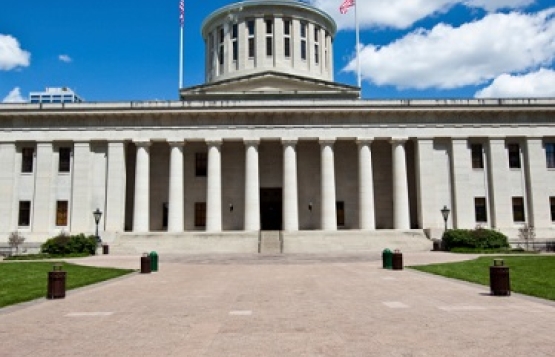
In December 2014, Ohio Governor John Kasich promised wholesale charter school reform in the new year. “We are going to fix the lack of regulation on charter schools,” Kasich remarked. Now, thanks to the fearless leadership of the governor and members of the legislature, Ohio has revamped its charter law. Most impressively, the charter legislation that overwhelmingly passed last week drew bipartisan support and praise from editorial boards across the state.
It’s been a long road to comprehensive charter reform in Ohio. When the Buckeye State enacted its charter law in 1997, it became a national pioneer in charter quantity. Disappointingly, it has not been a leader on quality. To be sure, there are examples of phenomenal charter schools. Yet too many have struggled, and a surprising number of Ohio charters have failed altogether. The predictable result is that on average, Ohio charter school students have fallen behind academically. A 2014 study by CREDO found Buckeye charter students losing forty-three days of learning in math and fourteen days of learning in reading relative to their district peers.
As regular Gadfly readers know, we at Fordham have consistently voiced concerns about our home state’s ailing charter sector. In our view, many of these woes can be traced to the state’s rickety charter law—one that has long been riddled with special exemptions and loopholes that needlessly protect bad actors within the charter system. In 2006, we partnered with the National Alliance for Public Charter Schools and the National Association of Charter School Authorizers and suggested ways to improve Ohio charter law. A few of our recommendations were adopted, but many remained unheeded.
After the high-profile flameouts of several start-up schools in fall 2013, we became convinced that the timing was ripe for another full-court press for reform. To set the table, we asked Andy Smarick and his colleagues at Bellwether Education Partners to conduct a deep-dive analysis of Ohio charter policy. The resulting report, released in December 2014, specified thirty-four statutory changes that, if enacted, could right the ship. The recommendations focused on purging misaligned incentives and conflicts of interest, while also creating policies and structures that promote educational quality (stronger authorizing and greater funding first among them).
Following up on Governor Kasich’s announcement that charter reform would be a major focus of his administration, Ohio lawmakers kicked off the 2015 session by unveiling a high-priority charter reform bill (House Bill 2, or HB 2). In the ensuing nine months, virtually every detail of Ohio charter law was laid on the table and publicly discussed. Despite some wrangling over the details, lawmakers on both sides of the aisle embraced a strong package of reforms in the bill that ultimately passed last week. These reforms—twenty-eight of them taken from the Bellwether report, by our count—insist upon good governance and are fundamentally geared toward promoting good practices among those who oversee and operate charter schools. Importantly, these reforms don’t interfere with the school-level autonomies that allow charters to operate differently than district-run schools.
Briefly, here are four of the bill’s key features (see here for a detailed list of provisions).
First, the legislation strengthens the hand of the state to crack down on poorly performing authorizers, the gatekeepers of overall sector quality. The bill adds teeth to Ohio’s authorizer-evaluation system by granting the state greater power to quickly close an authorizer that is neglecting its oversight role or allowing too many bad schools to remain open.
Second, the legislation addresses incentives that have weakened accountability at the authorizer level. For example, Ohio authorizers have long had financial incentives to be soft on underperforming schools, even when imposing tough sanctions is the right thing to do. The reforms in HB 2 mitigate these incentives. For example, authorizers must now disclose how they’re spending the fees generated from their schools; as a result, they’ll be less inclined to use authorizing as a way to subsidize other activities. Additionally, most authorizers will face strict prohibitions on selling services to their schools—transactions that can obviously compromise accountability. By limiting the financial motivations for authorizing, we expect authorizers to refocus on what matters most: Holding schools accountable for results.
Third, the bill empowers charter school boards to take charge of a school rather than serve as pawns of a domineering management company. Boards, for example, must now retain independent legal counsel when entering into contracts, and they’ll generally be required to hire independent fiscal officers. Previous law had also allowed management companies to appeal termination to their authorizers and, if successful, fire their board members. The new legislation eliminates this provision, giving boards leverage to terminate a management company without fear of retaliation.
Fourth, charter law will now expect management companies to operate in the light of day. While some companies are stellar outfits, others have failed to deliver for their schools; under the new law, Ohioans will know more about which ones are truly working toward the best interests of the schools they manage. The bill increases transparency by requiring a state report on each management company’s performance, a detailed accounting of their financial expenditures, and disclosures around any lease agreement they might have with their schools.
With legislative reform in the rearview mirror, the critical work of implementing these provisions begins in earnest. One facet of policy implementation deserves special mention: Many of the reforms hinge on the authorizer evaluations tasked to the Ohio Department of Education (ODE). Can the state agency safeguard the fidelity, rigor, and consistency of the evaluation process, especially in the face of political pressure either to weaken it or make it overly harsh? Can ODE maintain transparency around the evaluation procedures and results, which is essential to determining whether state authorities are evaluating authorizers diligently and fairly? Can the Herculean task of evaluating all authorizers—Ohio has seventy or so of them—be done in a timely fashion? Much depends on the answers to these questions.
Of course, the state alone doesn’t bear the responsibility of faithful implementation. Leaders at the authorizer, board, and school levels will need to follow and implement the new law as well. Will governing boards, for example, use their newfound leadership authority for the good of their schools? Will they enter into sensible contracts with management companies? Can they leverage objective information to make sound decisions about the financial and academic health of their schools?
In addition to the work on the implementation front, further reform still awaits. While some fiscal reforms helping charters did pass earlier this year, the state’s funding system still needs work to ensure that charter school students aren’t shortchanged. (The latest numbers show Ohio charters getting pennies on the dollar.) The Buckeye State also recently won a federal grant that should significantly improve the odds of success for start-up charters. That grant must be rigorously implemented and well-administered by state officials.
Perhaps most important in the days ahead is the critical need to repair the charter sector’s reputation—inside of Ohio and nationally. It’ll take the relentless work of policymakers and advocates of high-quality charters to keep the momentum going.
With the passage of landmark charter reform, Ohio lawmakers have steered the state’s charter sector in the right direction. They’ve created the conditions for a thriving charter sector that has the potential to compete with the very best in the nation. They have laid out a vision for how the sector ought to function from the state level down to the school board. Policymakers have made it very clear that bad actors in the charter sector will neither be tolerated nor welcomed. While the work is far from finished, we can now boldly proclaim that Ohio is on the road to redemption.
aceshot/iStock/Thinkstock

Ohio backpedaled on proficiency, but it's the exception
Editor’s note: This post originally appeared in a slightly different form on the Seventy Four; that one also lambasted Arkansas for backpedaling on its cut scores. Since then, Arkansas acknowledged that it had erred in how it described the state’s performance levels and clarified that it would use the rigorous standards suggested by PARCC.
Way back in 2007, we at the Thomas B. Fordham Institute published a landmark study with experts from the Northwest Evaluation Association: The Proficiency Illusion. It found that state definitions for reading and math “proficiency” were all over the map—and shockingly subpar almost everywhere. In Wisconsin, for instance, eighth graders could be reading at the fourteenth percentile nationally and still be considered proficient.
This was a big problem—not just the inconsistency, though that surely made it harder to compare schools across state lines. Mostly, we worried about the signals that low proficiency standards sent to parents: the false positives indicating that their kids were on track for success when they actually weren’t. How were parents in Madison or Duluth supposed to know that their “proficient” son was really far below grade level, not to mention way off track for success in college and career?
That was one of the main reasons we started pushing for national standards and tests (what would eventually become the Common Core). We wanted parents to know the truth about how their children were faring in school—and wanted educators to aim for higher expectations in their teaching. After years of lackluster progress with state-by-state standards, we thought an interstate approach might work better.
Fast-forward eight years; the scores from last spring’s Common Core-aligned tests are finally trickling in from states across the country. As Motoko Rich astutely pointed out in a New York Times article last week, Ohio fell short, setting a standard for proficiency that is well below “college and career ready.” The Ohio Department of Education and state school board claim that their hands are tied by a statute that requires reporting against five prescribed performance levels, and that does seem to be true. (But that just means that State Superintendent Dick Ross and his board members should demand that law to be changed and make sure parents get honest and transparent information about their kids’ performance.)
What Rich’s article didn’t make clear enough is that Ohio is the rare exception. The rule is that states are moving aggressively—and impressively—in the direction of higher standards and more honest definitions of proficiency. This was happening even before the introduction of tougher tests last spring. An analysis by Paul Peterson and Matthew Ackerman for Education Next found a significant closing of the “honesty gap” between 2011 and 2013. “Twenty states strengthened their standards,” they wrote, “while just eight loosened them. In other words, a key objective of the [Common Core] consortium—the raising of state proficiency standards—has begun to happen.”
State tests have only gotten tougher since then. Georgia’s fourth-grade reading proficiency rate dropped from close to 100 percent in 2013 to less than 40 percent in 2015—not because the kids were doing worse, but because the state’s measure of how they were doing was getting closer to the truth. Oregon went from having 70 percent of students on track in reading to around 30 percent. In Delaware, the math proficiency rate for eighth graders has gone from over 60 percent to below 40 percent. Similar trends can be seen in the other states that have published last year’s scores.
To be sure, we still need to keep a watchful eye. States using the Smarter Balanced exam, for instance, have been reporting that 50 percent or more of their students are on track in English. That is significantly higher than what the National Assessment of Educational Progress finds for the country as a whole. Policymakers in Florida are facing decisions on where to set cut scores, and there are reasons to fret that some might want to go wobbly. The reports that states plan to send parents are still way too confusing. And there are worrying indications that some reformers are too willing to use questionable data out of Kentucky (62 percent college ready!) to prove that Common Core is working when they might just as well show that another honesty gap is opening up. (Does anyone really believe that close to two-thirds of Kentucky’s kids are on track for college success when the national numbers haven’t reached 40 percent?)
But let’s not bury the lede. Outside of Ohio, most states are living up to their commitments to provide more honest information to parents. A key promise of the Common Core is being kept.
DigitalVision/Thinkstock

Finland's "joyful, illiterate kindergarteners"
A reader recently posed this question:
The Atlantic just published an article about the mistake American educators make by teaching reading in kindergarten. Shouldn’t we do what the Finns do: let kids learn to read when they want to and end up with high achievement?
This article is from the “Whistle a Happy Tune” School of Philosophy. It links one cultural input with one achievement output and assumes both a causal connection (not teaching reading in kindergarten will result in higher achievement) and that if this cultural input were adopted elsewhere, the same outcome would result there as well. This is the third or fourth such article that I have read about Finland in the Atlantic, and the tone of the pieces has been pretty consistent—they’re feel-good fantasies to help us ward off the blues as the days grow shorter and the verdant earth seems to die yet again. It sure is fun to think about how easily we could remake our society.
The problem with this dream, however, is that cultural change doesn’t work that way.
America, unlike Finland, is not a relatively simple society, small in population and low in diversity. Of the 5.5 million total Finns (fewer people than live in the Chicago area alone), few differ in race, ethnicity, language, income, or religion. It is estimated that there are eleven million undocumented immigrants in the United States (twice the total population in Finland), and those aspiring Yanks differ from the “average American profile” in countless ways. Finland receives few immigrants, and those they let in must bring skills and a secure, middle class income (ours, of course, often bring only what they carry).
The comparison of Finland with the United States would be like comparing Scarsdale, Winnetka, Piedmont City, and University Park with the United States. (The same goes for Denmark.) We’d all be amazed at how wonderful things are in those relatively wealthy communities and how little the schools there have to do to teach reading successfully to most kids.
What are the most pertinent differences between the Finns' situation and ours?
First, they teach the Finnish language. Finnish is reputedly the easiest language to learn to read (if I may link to yet another Atlantic piece on the subject). The relationship between spelling and pronunciation is highly consistent, making it especially easy to decode. Because the country is so small, there are few dialectical differences to complicate things. All things being equal, a Finnish child can learn to read Finnish much faster than an American child can learn to read English.
Second, most Finnish parents have college degrees or advanced degrees. If we can generalize from U.S. research, such children will have better health, nutrition, ability to concentrate, IQs, and vocabulary. With more adults available in the home to provide care, these kids are also more likely to be reading or to have learned a lot of pre-reading skills before they enter school. It would be the rare child who enters school without a big head start on literacy achievement. Most homes subscribe to newspapers, keep many books available, have a well-stocked public library close by, and make bedtime stories norm.
In fact, according to a study conducted by the Finnish government, more than one-third of children enter school already reading. That sure takes the pressure off those supposedly high-skilled Finnish teachers.
I would love to live in a community where everyone was well educated and enjoyed a substantial income. No doubt about it, my children and grandchildren would thrive there. But I live in a community where the majority of adults have not completed high school, libraries are sometimes located in gang territory, and mom and dad may not know how to speak English yet. (Even when they do, they may be speaking a dialect far removed from the one teachers are using.) Under the circumstances, preparing kids early to read a challenging language is a really good idea.
Another problem with the article is that it depicts the typical American kindergarten as teaching literacy with worksheets. I don't support such instruction, though it happens—in some cases. The silly dichotomy between play and academic instruction was made up by U.S. psychologists in the 1890s; it hangs on today among those who have never taught a child to read in their lives. Successful early literacy teaching is much more interactive and hands-on (and, perhaps, even more play-based) than its weird portrayal in the Atlantic.
The piece also requoted one of my least favorite claims: "'But there isn’t any solid evidence that shows that children who are taught to read in kindergarten have any long-term benefit from it,' Nancy Carlsson-Paige, a professor emeritus of early childhood education at Lesley University, explained in a video published by the advocacy group Defending the Early Years."
You can make that claim…as long as you don’t know the research. I chaired the National Early Literacy Panel. Unlike Dr. Carlsson-Paige, we had to look at the studies. And we absolutely found evidence of long-term benefits from early learning. But that inconvenient fact screws up the narrative: Finland is great, we are idiots, and teaching your children to read will make a mess of their idyllic lives. Sure, and I have some swampland in Florida that I can let you have for cheap. Honest.
Editor’s note: This post originally appeared in a slightly different form at Tim Shanahan's blog, Shanahan on Literacy. Tim Shanahan is a distinguished professor emeritus of urban education at the University of Illinois at Chicago.
iconogenic/iStock/Thinkstock

The Chicago way
- If there’s one thing we know about standardized testing, it’s that parents absolutely loathe it. With outrage building across the country over Common Core and its affiliated assessments, it’s no surprise that scads of irate parents have been pulling their kids out of tests. Why, just look at the public opinion polli—oh, that’s weird. According to a new survey conducted by the Education Post, parents aren’t actually incandescent with anti-assessment fervor. Forty-four percent of polled parents say that the tests are fair, versus 38 percent who claim that they’re unfair (18 percent say that they’re unsure). The results pretty closely track those of the 2015 Education Next poll, which found that two-thirds of both parents and the public at large support federally mandated testing. All polls come with caveats (a slight manipulation of wording can skew results dramatically), but reformers should greet these results as welcome evidence of parental patience and wisdom.
- Chicago was probably a lot more fun in the 1920s, when bootleg liquor flowed freely, gangsters and molls packed the speakeasies, and tough guys spontaneously broke into Bugsy Malone-style song. The good news is that the outlaw tradition carries on in the school district: Former schools chief Barbara “He Pulls a Knife, You Pull a Gun” Byrd-Bennett pled guilty yesterday to a federal charge of wire fraud, which will likely carry a sentence of seven and a half years in prison. Byrd-Bennett, who collected a paltry annual salary of $250,000, directed $23 million of no-bid administrator training contracts to SUPES Academy, her former employer. In exchange, she was plied with kickbacks and promised a lucrative consultant position with SUPES after leaving the district. The case against her hinged on a series of head-slappingly dumb emails she’d sent to her contacts at the organization, including one in which she copped to needing the money because she had “tuition to pay and casinos to visit.” That faint stirring sound you’re hearing right now is Al Capone rolling over in his grave.
- Massachusetts is a state that does a lot well, including two specific things that drive reform opponents up the wall: electing Republican governors and operating charter schools. Since their inception in 1992, the state’s choice sector has birthed some of the very best charters in the country, routinely producing better results than the Boston public school system. Unfortunately, local political realities have long imposed a cap of just seventy-two charters across the commonwealth. Politicians of both parties have labored to lift or remove the restriction, and a somewhat quixotic lawsuit against the state is now working its way through the courts; but for the thirty-seven thousand kids sitting on charter wait lists, there’s little time to marshal political consensus. Thankfully, they have a champion in Governor Charlie Baker, who announced legislation last week to permit twelve new or expanded charter schools each year in low-performing districts like Boston, New Bedford, and Salem. As a concession to potential allies in the legislature, the bill also empowers charters to weight their lottery systems toward students with special needs, low-income backgrounds, or English language difficulties. It may not be quite as good as eliminating the cap entirely, but this legislation is a more than worthy start.
School composition and the black-white achievement gap
A new study out by the National Center for Education Statistics uses data from the 2011 National Assessment of Educational Progress to examine the black-white achievement gap. Authors use the eighth-grade math assessment and evaluate how the size of the gap corresponds to a school’s percentage of black students (what they term “density”).
They find that on average, white students attended schools that were 9 percent black, and black students attended schools that were 48 percent black. The highest-density schools were mostly in cities and Southern states; low-density schools were mostly in rural areas. Seventy-seven percent of public schools qualify as “lowest-density” (0–20 percent black students), while 10 percent are designated “highest-density” (60–100 percent black).
After controlling for various school, teacher, and student characteristics, the authors found that only white and black male achievement was affected by black student density; black male outcomes were worse in the highest-density schools than the lowest. Interestingly, the average achievement for white males in moderate density schools (40–60 percent black) was higher than the average achievement of their peers in lowest-density schools. In the end, the black-white achievement gap for males is greatest in the highest-density schools; for females (regardless of race), the gap is unaffected by density
It should be noted that while researchers in a study of this kind can control for things like family income and teacher credentials, they cannot wipe out of the effects of self-selection bias. The black students in more segregated schools are almost surely different than those in integrated schools, even after various controls are applied. As with charter school parents, black parents who enroll their kids in integrated schools may be different in subtle ways that are not easily captured in a measured variable. Moreover, these are descriptive and correlational analyses, not causal, so the findings on achievement above are not etched in stone.
But the fact remains that we have worried in the past (and continue to worry today) about schools segregated by race. This particular research adds to that extensive literature. It does not, however, address solutions—which are difficult to devise for this especially complicated issue.
SOURCE: "School Composition and the Black-White Achievement Gap," U.S. Department of Education, National Center for Education Statistics (September 2015).
Peer effects at community colleges
In this study, authors Jonathan Smith (of the College Board) and Kevin Stange (University of Michigan) use PSAT scores from 2004 and 2005 and enrollment and completion data from the National Student Clearinghouse to estimate the contribution of “peer effects” to community college outcomes and to the documented gap between the bachelor’s degree completion rates of students who enroll at two-year versus four-year institutions.
Interestingly, they find considerable overlap between average PSAT scores at two- and four-year colleges (though the study doesn’t include older students or those attending for-profit institutions), suggesting that many students choose the former for financial reasons rather than academic ones. This is unfortunate, because they also find that students are thirty percentage points less likely to earn a bachelor’s degree if they enroll at a two-year college—even after their academic abilities and those of their peers are taken into account. This means that our current policy of making two-year colleges cheaper than their four-year counterparts may inadvertently lower some students’ odds of earning a bachelor’s degree.
According to the authors, roughly 40 percent of the degree attainment gap can be explained by average peer quality (which is lower at two-year schools); the rest is attributable to a combination of structural barriers (such as the difficulty of transferring credits from two- to four-year institutions) and a student’s own academic ability. Furthermore, though the academic ability of one’s peers matters most at four-year schools (perhaps because students there are more likely to live on campus with student roommates and enroll full-time), it also affects degree attainment at two-year colleges. Regardless of the institution, insufficiently prepared classmates lead to fewer graduates.
So what to make of this? Should we rethink open enrollment policies at community colleges, where the student body’s secondary school achievement is comparatively low? Perhaps we’d see more students succeed (not just a higher percentage) if we admitted fewer unprepared men and women in the first place, instead directing them down alternative paths like career academies and apprenticeships. Such a policy might not be popular, but it’s worthy of further research.
SOURCE: Jonathan Smith and Kevin Stange, "A New Measure of College Quality to Study the Effects of the College Sector and Peers on Degree Attainment," National Bureau of Economic Research, Working Paper No. 21605 (October 2015).