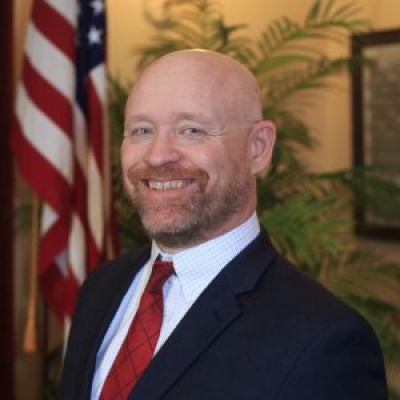
NOTE: Today, the Ohio Senate’s Education Committee heard testimony on Senate Bill 311. The legislation, if enacted, would make changes to the state’s laws regarding unused school facilities. Fordham’s Vice President for Ohio Policy provided the following proponent testimony.
I want to focus my testimony on one part of this bill that is both overdue and absolutely necessary: the provisions strengthening Ohio’s unused school facilities law.
Let’s be clear about the problem. Ohio already has a law on the books requiring school districts to make unused or severely underutilized buildings available to other public schools. That includes buildings that are sitting empty—or those operating at less than 60 percent capacity.
That 60 percent threshold is not new. It is not radical. It is existing law.
And yet, too many districts have treated that law as optional. They’ve slow-walked requests. They’ve redefined “use” to avoid triggering the law. They’ve warehoused half-empty buildings while denying access to public charter schools serving Ohio students. They’ve quickly torn down buildings to avoid making them available to charter schools.
This isn’t speculation—it’s well documented. Charter leaders have long reported that districts are “generally uncooperative” in making facilities available, and state officials have flagged similar concerns.
Put more bluntly: districts have been playing games.
That’s why the unused facilities language in SB 311 is so important. It doesn’t invent a new policy. It clarifies, enforces, and brings transparency to an existing one.
The bill tightens the definition of what it means for a building to be “less than 60 percent used,” tying it to real enrollment metrics instead of vague interpretations. It requires reporting, so the state and the public actually know which buildings qualify. And it ensures a clear, fair process for offering those facilities to other public schools.
In other words, it makes the law real. And that’s exactly why you’re hearing pushback.
Opponents will frame this as an attack on local control. It isn’t. Local control does not mean the ability to ignore state law. It does not mean sitting on taxpayer-funded assets while other public schools struggle to find space. And it certainly does not mean shielding anti-competitive behavior.
These are public buildings, paid for by taxpayers, intended for public education. When they sit empty—or half empty—while students elsewhere lack adequate facilities, something is wrong.
SB 311 begins to fix that.
Now, I also want to briefly address another provision in the bill: the allowance for remote administration of state assessments for e-school students.
I understand the rationale here, but I do have reservations—specifically around test security.
Even with guardrails like remote proctoring and training requirements, the risk of inconsistent conditions and potential improprieties is real. Maintaining the integrity of Ohio’s assessment system must remain paramount.
That said, I appreciate the committee’s inclusion of language requiring ongoing review and study of remote testing results. That is a prudent step. If remote testing is to continue, it should be accompanied by rigorous monitoring and transparency to ensure confidence in the results.
In closing, I’ll return to where I started.
The unused facilities provisions in SB 311 are not about creating new obligations. They are about enforcing existing ones.
For too long, the law has said one thing while practice has said another. This bill helps close that gap.
It sends a simple but important message: laws passed by this body are meant to be followed.
And in this case, following the law means putting publicly funded school buildings back to their intended purpose—educating Ohio’s students.
Thank you for your time.