Author’s correction (9/16/25): The original version of the press release inadvertently misstated the Algebra I proficiency rates for the Ohio Eight districts. The percentages displayed below are the correct ones.
Today, the Ohio Department of Education and Workforce published report cards for the 2024–25 school year. The data released today include state math and reading exam results in grades 3-8 and high school; they also feature one-to-five-star ratings for Ohio districts and schools.
“State exams and report cards continue to provide an important annual check on where students stand academically and what type of progress they are making,” said Aaron Churchill, Ohio Research Director for the Thomas B. Fordham Institute. “This year’s report cards make abundantly clear that Ohio must keep the pedal to the floor on policy initiatives aimed at effective instruction in math and reading, as too many students continue to struggle in these critical subjects. The Science of Reading initiative, for instance, promises higher long-term performance but only if policymakers stay patient and push hard for rigorous implementation.”
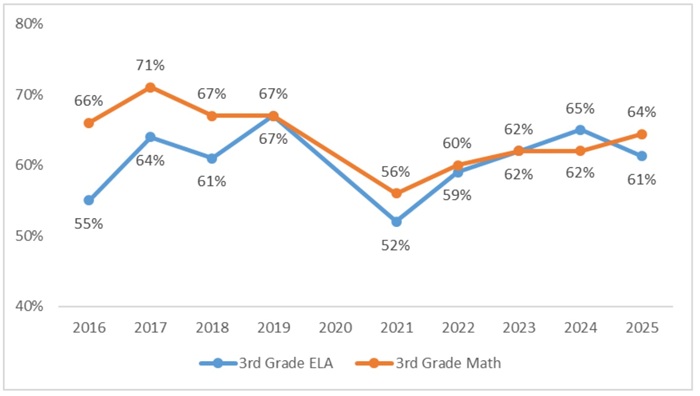
Across all tested grades, overall reading proficiency rates edged down from 60.9 to 60.4 percent in 2023–24 to 2024-25. As the figure below indicates, this decline includes a 3.2 percentage point dip in the key third-grade reading measure (64.5 to 61.3 percent proficient).
Third grade reading and math proficiency rates—statewide
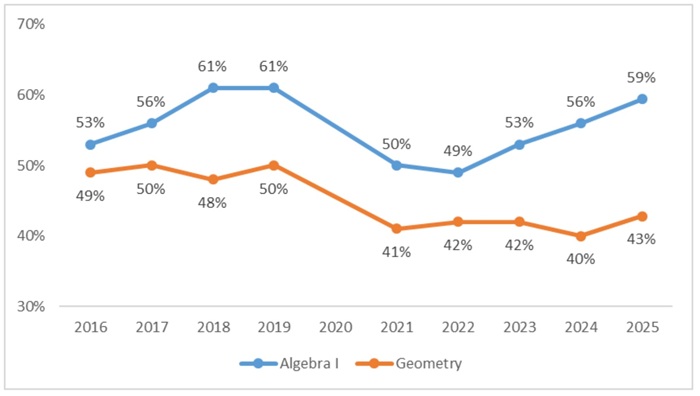
Math proficiency fell sharply during the pandemic across all grades. In high school math, scores still lag behind pre-pandemic levels but this year’s data reveal continuing signs of improvement. Algebra I proficiency rates rose from 55.9 to 59.4 percent from 2023–24 to 2024–25; Geometry also edged higher from 39.8 to 42.8 percent. Across all tested grades, math proficiency rates were up from 53.5 percent proficient in 2023–24 to 55.3 percent in 2024–25.
High school math proficiency rates, Algebra I and Geometry—statewide
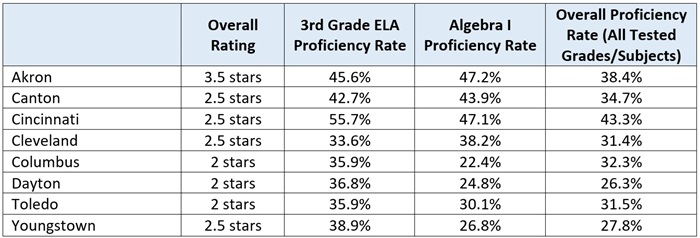
A closer look at academic performance in Ohio’s major urban districts shows alarmingly low proficiency rates. Just one in three students in Canton, Cleveland, Columbus, and Toledo achieve state proficiency standards. Less than 30 percent of students in Dayton and Youngstown score proficient.
Urban Districts’ Overall Ratings and Proficiency Rates
“No one should be satisfied with the results from this year’s report cards,” said Churchill. “Too many students across Ohio fall short of state academic standards, and achievement in our urban school systems remains tragic. Without ambitious efforts to improve our school systems, another generation of Ohio students will leave high school without the reading, writing, and math skills necessary to compete for the jobs of the future.”