Mobile Navigation

  • National
    • Policy
      • High Expectations
      • Quality Choices
      • Personalized Pathways
    • Research
    • Commentary
      • Gadfly Newsletter
      • Flypaper Blog
    • Events
    • Scholars Program
  • Ohio
    • Policy
      • Priorities
      • Media & Testimony
    • Research
    • Commentary
      • Ohio Education Gadfly Biweekly
      • Ohio Gadfly Daily
  • Charter Authorizing
    • Application
    • Sponsored Schools
    • Resources
  • About
    • Mission
    • Board
    • Staff
    • Career
Home
Home
Advancing Educational Excellence

Main Navigation

  • National
  • Ohio
  • Charter Authorizing
  • About

Ohio Menu

  • Topics
    • Accountability & Testing
    • Advanced Education
    • Career & Technical Education
    • Charter Schools
    • Curriculum & Instruction
    • ESSA
    • Evidence-Based Learning
    • Governance
    • Personalized Learning
    • Private School Choice
    • School Finance
    • Standards
    • Teachers & School Leaders
  • Research
  • Policy
  • Commentary
    • Ohio Gadfly Newsletter
    • Ohio Gadfly Blog
    • Events

The Education Gadfly Weekly

Sign Up to Receive Fordham Updates

We'll send you quality research, commentary, analysis, and news on the education issues you care about.
Thank you for signing up!
Please check your email to confirm the subscription.

Ohio Education Gadfly Biweekly--Volume 12, Number 17

Volume 12, Number 17
5.10.2018
5.10.2018

Ohio Education Gadfly Biweekly--Volume 12, Number 17

Volume 12, Number 17
view
School Choice

Pathway to Success: Sciotoville Elementary Academy focuses on meeting the needs of its rural community

As people in Sciotoville tell it, their children historically have gotten Portsmouth’s leftovers—from textbooks to sports uniforms and more. That belief, they say, was the impetus for creating Sciotoville’s two start-up charter public schools.

Ellen Belcher 5.10.2018
OhioReport

Pathway to Success: Sciotoville Elementary Academy focuses on meeting the needs of its rural community

5.10.2018
Report

Pathway to Success: KIPP Columbus takes seriously its mission to send kids to and through college

11.10.2016
Report

Pathway to Success: DECA prepares students for rigors of college, realities of life

5.24.2016
Report

The myth of Ohio's "for profit" charter school system

Aaron Churchill
8.10.2018
Blog

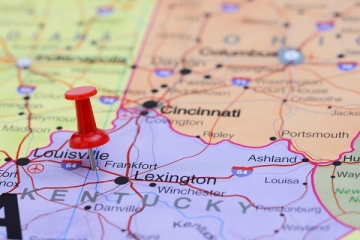
Ohio could learn from Kentucky’s newly proposed graduation requirements

Jessica Poiner
8.20.2018
Blog

Keeping up with Ohio education news

Ohio Education Gadfly
8.20.2018
Blog

When it comes to preparing teachers to teach reading, Ohio’s ahead of the pack

Jessica Poiner
8.13.2018
Blog

Pathway to Success: Near West Intergenerational School emphasizes relationships and rigor to ignite lifelong learning

7.12.2018
Report
view

Pathway to Success: KIPP Columbus takes seriously its mission to send kids to and through college

11.10.2016
Report
view

Pathway to Success: DECA prepares students for rigors of college, realities of life

Ellen Belcher 5.24.2016
Report
view

The myth of Ohio's "for profit" charter school system

Aaron Churchill 8.10.2018
Blog
view

Ohio could learn from Kentucky’s newly proposed graduation requirements

Jessica Poiner 8.20.2018
Blog
view

Keeping up with Ohio education news

Ohio Education Gadfly 8.20.2018
Blog
view

When it comes to preparing teachers to teach reading, Ohio’s ahead of the pack

Jessica Poiner 8.13.2018
Blog
view

Pathway to Success: Near West Intergenerational School emphasizes relationships and rigor to ignite lifelong learning

Lyman Millard 7.12.2018
Report
view

Pathway to Success: Sciotoville Elementary Academy focuses on meeting the needs of its rural community

5.10.2018
Report

As people in Sciotoville tell it, their children historically have gotten Portsmouth’s leftovers—from textbooks to sports uniforms and more. That belief, they say, was the impetus for creating Sciotoville’s two start-up charter public schools.

Sciotoville East Community Schools are unique among charter public schools in Ohio. Serving students and their families from Appalachia, they are two of the very small number of charters located outside of the state’s urban communities. They illustrate what’s possible when educators, families, and an entire community come together to save their schools by transforming them into public charter schools.

This profile of the staff, students, and families of one of these schools—Sciotoville Elementary Academy—will show you an entirely new view of what charters can do to meet the needs of their communities, and why we need more of them in rural areas.

view

Pathway to Success: KIPP Columbus takes seriously its mission to send kids to and through college

11.10.2016
Report

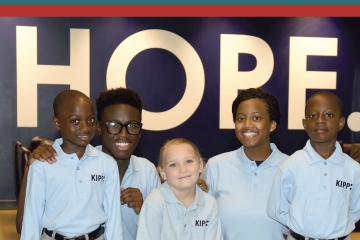
KIPP Columbus achieves extraordinary outcomes for its students, predominantly students in poverty and students of color. Led by Hannah Powell and a visionary board, the school has a rare knack for forging powerful partnerships at every turn—ones that strengthen KIPP students, their families, and the entire community near its campus. We invite you to read this profile of Steve, a KIPP graduate, an immigrant and first-generation college student now attending Vanderbilt University. Steve’s entire family has been uplifted by the school and his story shows powerfully what is really possible in a high-quality charter school.

view

Pathway to Success: DECA prepares students for rigors of college, realities of life

5.24.2016
Report

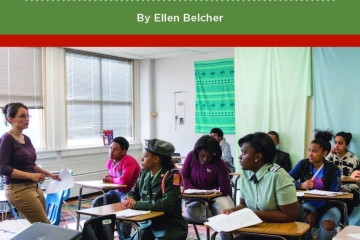
Too much of what we hear about urban public schools in America is disheartening. A student’s zip code—whether she comes from poverty or economic privilege—often predicts her likelihood of educational (and later-life) success. Motivated by this unacceptable reality, some schools have worked relentlessly against the odds to deliver excellent educational opportunities to students no matter their background. The Dayton Early College Academy (DECA) is an island of excellence in one of Ohio’s poorest and most academically challenged districts. The unique opportunities and supports it provides to students—both academic and personal—are showcased briefly through the story of Khadidja, an inspiring young woman whose experience at DECA has helped forge a very different future than the one facing many of her urban peers.

view

The myth of Ohio's "for profit" charter school system

Aaron Churchill
8.10.2018
Blog

Since the inception of Ohio’s charter school program in 1998, gallons of ink have been spilled documenting the missteps of a few charter operators. The most highly scrutinized have been the for-profit operators White Hat Management (R.I.P.), along with Altair Management and IQ Innovations, the companies with whom the felled ECOT contracted.

Unfortunately, the high-profile controversies surrounding these for-profit (and politically active) titans have stoked a narrative that paints all charters as “corporatizers” out to make a buck. With politicians routinely using this storyline to score political points, this notion has been amplified further. Just this week Ohio Democratic Chair David Pepper released a statement calling the state home to a “corrupt for-profit charter school system.”

There is no excuse for either corporate cronyism or government corruption. But these for-profit tall tales fail to tell the whole truth about charter schools. Let’s review the key points.

First, it’s inaccurate to call charter schools for-profits. Just like most museums, libraries, and hospitals, charter schools are organized as nonprofit organizations. In Ohio, all charter schools are officially considered public benefit corporations, which under state law must be a nonprofit entity. Moreover, charter schools are public schools—and, again, state law makes this abundantly clear: “A community school [a.k.a. a charter school] created under this chapter is a public school.” As public schools, charters do not charge tuition, are open to all students, and are held accountable for results using the same report card system as districts. Charter governing boards have the ability—should they so choose—to contract with management companies (or “operators”), some of which are for-profits. Though charter boards may hire (and can subsequently fire) for-profit organizations to run their daily operations, the schools themselves are always nonprofit.

Second, while for-profit operators grab the headlines, the large majority of charters do not contract with such entities. According to 2016–17 data from the National Alliance for Public Charter Schools, just 28 percent of Ohio charters contracted with for-profit management companies. Instead, most were either managed by non-profits (26 percent) or were completely independent schools with no management company at all (46 percent). Considering this breakdown, it’s an exaggeration (if not worse) to characterize Ohio as a “for-profit charter school system.”

Third, charter schools’ ability to contract with private organizations, including for-profits, is not unique to the charter sector. In fact, it happens all the time in government. For instance, Ohio districts spend millions on products produced by for-profit corporations—anything from textbooks (Pearson or Houghton Mifflin Harcourt), electronic hardware (iPads and Chromebooks), food services (Sodexo), and transportation services (Blue Bird). Of course, it’s not just educational institutions that contract with big  business; agencies such as the U.S. Department of Defense and the City of Columbus regularly contract with private companies to get the people’s business done.

Fourth, some critics have pointed to Altair’s Bill Lager as the worst sort of “crony capitalist” who abuses taxpayer funds for personal gain, and that’s not an unfair depiction. But let’s be clear: He does not represent the typical charter leader. The ones that I know are dedicated individuals who, while likely reasonably compensated, aren’t living in the lap of luxury. Rather, most charter leaders—whether a founder of a successful management organization or a school principal—are motivated by a deep desire to improve the educational outcomes of children, many of whom come from disadvantaged backgrounds. Just like those working in district schools, the vast majority of charter leaders work passionately to serve the families and children in their communities.   

Fifth, portraying all for-profit operators as low performers is misleading. Although this could be said of Altair and White Hat, there are also responsible, educationally sound for-profit management companies. Perhaps the most notable is the National Heritage Academies (NHA), which, according to a rigorous study undertaken by University of Michigan researchers, produced significant gains in math in its Michigan-based charters. Research from CREDO corroborates the positive effects of NHA schools across the nation, including the half-dozen or so in Ohio. It’s true that many of the finest charter management companies are non-profits, including well-known national outfits such as KIPP and Uncommon Schools, along with Ohio’s own Breakthrough Network, the Graham Schools, and United Schools Network. Nevertheless, the profit status of an operator doesn’t necessarily determine its ability to deliver a high-quality education.

The follies of a few of Ohio’s for-profit operators have left many people understandably angry. Throughout the years, we at Fordham have consistently pushed back when they’ve tried to use their political muscle to weaken accountability measures. We’ve also successfully advocated for reforms that enable charter boards to make key governing decisions independent of operators (as well as empower boards to separate from them should the need arise). The forces of competition and an improved accountability framework have taken their toll on the most notorious for-profit operators. Despite this bitter experience, we should continue to remain agnostic about the ways in which schools organize themselves. Great schools can be district schools governed by publicly elected boards, nonprofit charters that contract with management companies, or private schools, some of which have religious affiliations. Ultimately, organizational design should be left to school leaders. What matters most is that children receive a world-class education. 

view

Ohio could learn from Kentucky’s newly proposed graduation requirements

Jessica Poiner
8.20.2018
Blog

In Ohio, debate over high school graduation requirements has raged for over a year. At various points, policymakers have requested to know more about the graduation policies in other states. It’s worth noting, then, that the Kentucky Department of Education (KDE) recently announced a proposal to change minimum graduation requirements for students entering high school in the fall of 2019—and their proposal shares some similarities with Ohio’s hotly debated rules.

Our southern neighbor’s current high school graduation requirements are pretty traditional: Students must complete at least twenty-two credit hours, with a certain number of credit hours required in specific subject areas. Although there is testing—students are required to take the ACT and a writing assessment, and last year was the first year that newly designed and teacher-developed end-of-course assessments were field-tested for algebra II, biology, and English II courses[1]—results are only used for the state’s accountability system or, in the case of field-testing, for data-gathering purposes. The vast majority of Kentucky students take their classes, amass their credits, and earn their diplomas.

Under KDE’s recently proposed system, that would change. According to a video from Interim Commissioner Wayne Lewis, students would be required to pass new tenth grade reading and math assessments to graduate. Students would also be required to pass a civics test based on the U.S. Citizenship and Immigration Services test (they are not the first state to do so) and take state science and social studies assessments in eleventh grade. The new proposal maintains the twenty-two credit minimum threshold, but allows students more freedom to personalize their classes in certain subjects to align with their career interests.

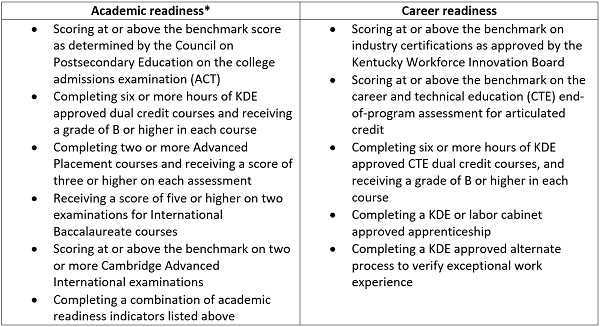
Another significant addition is a requirement for students to demonstrate academic or career transition readiness in order to graduate. Transition readiness is already part of Kentucky’s accountability system, and current state regulations outline how students can demonstrate the two types:

* Demonstration of academic readiness must include one quantitative reasoning or natural sciences learning outcome and one written or oral communication, arts and humanities, or social and behavioral sciences learning outcome.

Overall, Kentucky’s changes represent a significant rise in expectations for students. In his video, Interim Commissioner Lewis explains that the changes are necessary to bring the state’s standards for students into alignment with what businesses and higher education institutions have identified as the “profile” of a graduate. “Currently, our minimum requirements for high school graduation fall short of assuring that our graduates have reached even a basic level of competency in reading and mathematics,” he said. “Neither do our requirements ensure that our graduates are ready for college or the workforce. We can do so much better.”

This reasoning should sound familiar to Ohioans. The graduation pathways that have been the subject of so much controversy were also designed to address the mismatch in the knowledge and skills needed to graduate high school and those demanded by colleges and employers. There are also quite a few similarities between Kentucky’s proposed system and Ohio’s current one, including the use of college entrance exams, state assessments that measure basic academic competency, and industry credentials. Because of these similarities and each state’s unique context, there isn’t much within Kentucky’s new proposal that Ohio policymakers should consider adopting. But there are still valuable lessons to be learned from our neighbor to the south.

First, Ohio must realize that other states are recognizing the importance of high expectations. Although there are still places where diplomas don’t mean much, Kentucky is an example of a state where policymakers are making a serious effort to raise the bar by requiring students to demonstrate academic competency and readiness before they’re awarded a diploma. If Ohio backs down from its current pathways—or continues to enshrine workarounds into law—the consequences would be steep. Not only would businesses struggle to find well-prepared employees, Ohio graduates would struggle to compete with graduates from other states.

Second, we must realize that other states have also recognized the importance of college and career readiness. With a new Perkins law on the books and the rising popularity of CTE across the nation, Ohio must ensure that its CTE sector continues to grow and improve and that career readiness measures remain part of our graduation pathways.

When the General Assembly reconvenes this fall, lawmakers should resist calls to weaken graduation requirements again. Low standards might lead to more diplomas and a higher graduation rate, but they won’t help Ohio—or students and their families—in the long run.


[1] U.S. History end-of-course exams will be created once the state adopts social studies standards.

view

Keeping up with Ohio education news

Ohio Education Gadfly
8.20.2018
Blog

As the new school year gets underway across the state, there is a constant stream of news, views, and commentary on education issues. If you want to keep up, the Thomas B. Fordham Institute has you covered!

You can find almost everything we write on the Ohio Gadfly Daily blog. Updated numerous times each week, it’s a pretty good page to bookmark.

Don’t have time to check for updates? You can subscribe to one of our three regular Ohio email updates here. Here’s a quick look at each:

  • Fordham’s Ohio Gadfly Biweekly newsletter, our long-time flagship, is a compilation of our best work, delivered every other Monday.
  • Gadfly Bites is our long-running look at education news and opinion from media outlets across the state – brought to you with a little bit (sometimes more than a little bit) of attitude three times a week.
  • Interested in charter schools? Our newest feature is a weekly email blast—distributed every Friday—with state, local, and national charter “news you can use” along with a roundup of important events coming up for charter school professionals.

So what are you waiting for?

Sign up and keep up today!

view

When it comes to preparing teachers to teach reading, Ohio’s ahead of the pack

Jessica Poiner
8.13.2018
Blog

It’s no secret that teaching kids how to read is extremely important. Research shows that children who don’t read proficiently by the end of third grade are four times more likely to leave school without a diploma than proficient readers. And statistics on the impact of adult illiteracy are staggering: Low literacy costs the U.S. approximately $225 billion each year in crime, non-productivity in the workforce, and lost tax revenue due to unemployment.

The abundance of research on the importance of early literacy is the driving force behind policies like Ohio’s Third Grade Reading Guarantee. Under the guarantee, third graders who are unable to meet a minimum score on the state reading test are retained in third grade (with some exceptions) so they can receive extra support. The effectiveness of this policy depends greatly on the reading instruction that students receive, which in turn depends significantly on how well educators have been prepared to teach foundational reading concepts.

Although there’s no shortage of information about how best to teach reading—the Institute for Education Sciences (IES) released an important set of recommendations in July 2016, for example—teacher preparation programs aren’t necessarily integrating these methods into their training and development efforts. The National Council on Teacher Quality (NCTQ) has been evaluating the rigor and effectiveness of teacher training for years, and their teacher prep reviews include deep dives into early reading. They recently added to their impressive research portfolio with a small and concentrated data release that examines how states are pushing teacher prep programs to adopt reading instruction methods like those recommended by IES. Specifically, NCTQ considers whether states have a rigorous licensure test that evaluates prospective elementary and special education teachers’ mastery of evidence-based methods for teaching reading. (Special education teachers are included because reading disabilities are the primary reason that students are referred for special education services.)

According to NCTQ, the vast majority of states don’t require a sufficient test on the science of reading. Ohio, however, meets and even exceeds the bar. It’s one of only eleven states that require elementary and special education candidates to pass a high-quality test—which in Ohio’s case is called Foundations of Reading, and is part of the Ohio Assessments for Educators (OAE) licensure program for candidates seeking an initial state teaching license. Foundations of Reading is a computer-based assessment that comprises two written response questions and one hundred multiple choice questions covering four areas: 1) foundations of reading development; 2) development of reading comprehension; 3) reading assessment and instruction; and 4) integration of knowledge and understanding, which includes the written response questions. 

NCTQ also recommends that states “increase transparency regarding licensure assessment passage rates.” For the most part, Ohio does this, too. Its Department of Higher Education publishes educator performance reports each year that publicize statewide data on Ohio’s traditional teacher preparation, as well as individual reports on both public and private institutions.

Yet the Buckeye State falls short here in at least one important respect: The 2017 report, despite including passage rates for almost every OAE licensure test, is missing data on the Foundations of Reading assessment. It’s not clear why the test—required for eleven different teaching licenses, including every core subject license that’s offered in elementary and middle childhood education—was left off the list, but it’s a serious oversight that the state should remedy in this year’s report.

Overall, though, Ohioans should be proud of how their state prepares educators to teach reading. Its rigorous licensing requirements help ensure that teachers understand early literacy and the best methods for teaching it—knowledge and skills that are vital for effective instruction.

view

Pathway to Success: Near West Intergenerational School emphasizes relationships and rigor to ignite lifelong learning

7.12.2018
Report

No two charter public schools are alike and the guiding purpose of the Pathway to Success series is to highlight the breadth of quality options available to parents and students across Ohio. Our latest profile, featuring Near West Intergenerational School in Cleveland, is a perfect example of a charter school born from a community’s desire for something different.

Near West Intergenerational School serves an eclectic urban neighborhood that is one of Ohio’s most racially, ethnically, and socio-economically diverse. The intergenerational aspect is equally unique, as the school model intentionally connects its young students to adults in the nearby area who serve as mentors and tutors throughout their schooling.

Cleveland resident and author Lyman Millard of Bloomwell Group details the school’s formation and shares with readers a compelling real-life story about how Near West has deeply impacted one Cleveland family who was once at their wit’s end trying to find the right school for their son.

Fordham Logo

© 2026 The Thomas B. Fordham Institute
Privacy Policy
Usage Agreement

National

P.O. Box 110
Burke, VA 22009

202.223.5452

[email protected]

Ohio

P.O. Box 82291
Columbus, OH 43202

614.223.1580

[email protected]

Sponsorship

130 West Second Street, Suite 410
Dayton, Ohio 45402

937.227.3368

[email protected]