Mobile Navigation

  • National
    • Policy
      • High Expectations
      • Quality Choices
      • Personalized Pathways
    • Research
    • Commentary
      • Gadfly Newsletter
      • Flypaper Blog
    • Events
    • Scholars Program
  • Ohio
    • Policy
      • Priorities
      • Media & Testimony
    • Research
    • Commentary
      • Ohio Education Gadfly Biweekly
      • Ohio Gadfly Daily
  • Charter Authorizing
    • Application
    • Sponsored Schools
    • Resources
  • About
    • Mission
    • Board
    • Staff
    • Career
Home
Home
Advancing Educational Excellence

Main Navigation

  • National
  • Ohio
  • Charter Authorizing
  • About

Ohio Menu

  • Topics
    • Accountability & Testing
    • Advanced Education
    • Career & Technical Education
    • Charter Schools
    • Curriculum & Instruction
    • ESSA
    • Evidence-Based Learning
    • Governance
    • Personalized Learning
    • Private School Choice
    • School Finance
    • Standards
    • Teachers & School Leaders
  • Research
  • Policy
  • Commentary
    • Ohio Gadfly Newsletter
    • Ohio Gadfly Blog
    • Events

The Education Gadfly Weekly

Sign Up to Receive Fordham Updates

We'll send you quality research, commentary, analysis, and news on the education issues you care about.
Thank you for signing up!
Please check your email to confirm the subscription.

Ohio Education Gadfly Biweekly Volume 10, Number 18

Volume 10, Number 18
9.19.2016
9.19.2016

Ohio Education Gadfly Biweekly Volume 10, Number 18

Volume 10, Number 18
view
Quality Choices

Do high school courses prepare kids for college?

As students and teachers settle back into school routines, thousands of high schoolers are getting their first taste of classes that are supposed to prepare them for college. Some of them are sitting in Advanced Placement courses, while others have enrolled in district-designed advanced courses.

Jessica Poiner 9.19.2016
NationalBlog

Do high school courses prepare kids for college?

Jessica Poiner
9.19.2016
Blog

Measurement and policy problems in teacher compensation

Aaron Churchill
9.6.2016
Blog

America's most segregating school district borders

Jessica Poiner
8.31.2016
Flypaper

What charter school authorizers can teach states on ESSA: It's hard to find indicators of school quality that aren’t test scores

Kathryn Mullen
9.8.2016
Flypaper

What Trump’s visit to a Cleveland charter school really means

Aaron Churchill
9.9.2016
Blog

Ohio’s charter sector: Pains of the past are dampening innovation

Jamie Davies O'Leary
9.7.2016
Blog

Ohio's accountability system is the best in the country for high achievers. Here are 3 ways to keep that focus

Aaron Churchill
9.6.2016
The High Flyer
view

Measurement and policy problems in teacher compensation

Aaron Churchill 9.6.2016
Blog
view

America's most segregating school district borders

Jessica Poiner 8.31.2016
Flypaper
view

What charter school authorizers can teach states on ESSA: It's hard to find indicators of school quality that aren’t test scores

Kathryn Mullen 9.8.2016
Flypaper
view

What Trump’s visit to a Cleveland charter school really means

Aaron Churchill 9.9.2016
Blog
view

Ohio’s charter sector: Pains of the past are dampening innovation

Jamie Davies O'Leary 9.7.2016
Blog
view

Ohio's accountability system is the best in the country for high achievers. Here are 3 ways to keep that focus

Aaron Churchill 9.6.2016
The High Flyer
view

Do high school courses prepare kids for college?

Jessica Poiner
9.19.2016
Blog

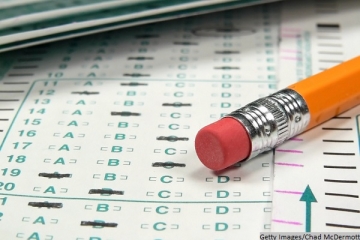
As students and teachers settle back into school routines, thousands of high schoolers are getting their first taste of classes that are supposed to prepare them for college. Some of them are sitting in Advanced Placement courses, while others have enrolled in district-designed advanced courses. In general, most people seem to take it for granted that high school courses that are labeled “advanced” are an effective preparation tool for college. A new analysis out of Brookings calls the conventional wisdom into question.

At issue is whether high school courses impact college performance at all. The Brookings authors point to a 2009 review of college preparation from the Institute of Education Sciences (IES) that found “low evidence” that academic preparation for college actually improved college classroom outcomes. Despite myriad college preparation methods reviewed, none of them—including advanced coursework like AP classes—was strongly predictive of college readiness.

The Brookings authors did some further analysis of their own on the impacts of high school course-taking. After examining a nationally representative database of U.S. students and controlling for academic, demographic, and individual-level variables, they found that, on average, advanced high school courses do little to prepare students to succeed in college courses.[1] Brookings also seems to have busted the myth that college students perform better in subjects that they first studied in high school. For example, students who took a year of high school economics earned a final grade in their college economics class that was only .03 points higher than students who had never taken the subject before—a “trivially small” difference that was true even between students who took the exact same college course.

These findings fly in the face of the common belief that taking certain high school classes is a vital part of college preparation. Brookings offers a few possible explanations, including that students are actually learning the “wrong” things in high school. Despite taking advanced courses, many students may not “sufficiently focus on the critical thinking commonly needed in college.” There is also the unfortunate possibility that students simply forget what they’ve learned, regardless of what kind of class they learned it in. Brookings’s analysis notes that the “very slight advantage from prior coursework” they detected could be explained by “the little information that is retained from high school.” The authors further note that, despite Common Core’s focus on nonfiction and argumentative writing, “at least some top universities doubt whether high schools have developed the capacity to train students for college-level writing.” As a result, some have refused to exempt students from entry-level writing requirements, even if they earned top scores on the AP English exam.

As for solutions, the Brookings authors recommend giving schools “more freedom to experiment with innovative and experimental courses that may be more useful to students in the long term.” This could mean career and technical education (which Ohio already does really well), but it could also include College Credit Plus (CCP). CCP is a relatively new program that offers students the chance to earn high school and college credit at the same time. All Ohio students are eligible to participate (provided that they have reached a college readiness benchmark), and students who choose to earn credits through a public college aren’t charged for tuition, textbooks, or fees.

Technically, CCP isn’t all that innovative—it’s merely a new and improved version of the dual enrollment of yesteryear. But given the Brookings findings, it’s worth questioning why we should push students to spend time (and money for test fees) to take an “advanced” preparation course that doesn’t add much value rather than an actual college course. The same is true for students taking AP courses for college credit: If the end goal is to earn college credit, why not skip the middleman—and the possibility that certain colleges won’t give credit for AP scores—and just take a real college class through CCP?

As it turns out, there are a few nuances to CCP that should force Ohio families to carefully weigh their options. First, CCP offers students three ways to earn college credit: by taking a course on a college campus, through a college course delivered at a student’s high school by a credentialed teacher, or via an online course. Unfortunately, the state currently has no oversight into the rigor of any of these three course pathways. It would be reasonable to assume that a class on a college campus is rigorous, but there are many who disagree. Until the state has some cold hard facts about student achievement and outcomes under CCP, it’s difficult to say that the program is a more rigorous option than typical college-prep courses.

Second, any college course that a student takes under CCP serves double transcript duty: An “A” on a student’s college transcript reflects an “A” on her high school transcript, and a failing grade in the college course will also result in a failing grade on the high school transcript. Advanced high school courses, on the other hand, impact only high school transcripts. For example, a student who doesn’t earn a high enough score on an AP test to obtain college credit (or earns a poor overall grade) doesn’t prematurely damage her college record; she just has to enroll in the class once on campus to receive credit. This is why the college readiness benchmark that’s currently mandatory for CCP participation is so crucial—it prevents academically unprepared students from damaging their college transcripts before they’re officially college students.

The bottom line is that the many college-prep pathways available to high schoolers—including College Credit Plus, Advanced Placement, career tech, and International Baccalaureate—offer different things for different students. While it’s important to carefully consider analyses that question the rigor and effectiveness of each program, it’s equally important to maintain several unique options for Buckeye students and families. Selecting which preparation pathway to follow should be like selecting a school—students and families should be empowered to choose the best fit.

NOTE: This piece has been revised from an earlier version—published under a different title—to better reflect the findings of the Brookings analysis.


[1] The authors note one exception: Students who take calculus “mildly” benefit from high school courses in the subject. This is most likely because calculus “is based on cumulative learning to a greater extent than other subjects.”

view

Measurement and policy problems in teacher compensation

Aaron Churchill
9.6.2016
Blog

How does teaching stack up to other occupations in terms of compensation? A recent analysis from the Economic Policy Institute (EPI), an organization with union ties, has gained attention for its findings on the growing teacher “wage gap.” Using data from the Bureau of Labor Statistics Current Population Survey (BLS-CPS), the EPI analysts report a 17 percent disparity between teachers’ weekly wages relative to other college-educated workers. When they add generous benefits on top—including health care and pensions—that gap shrinks to 11 percent. These differences in wages and total compensation, the authors find, are much wider than what teachers faced in mid-1990s. Based on their analysis, they suggest raising teacher wages and benefits across the board.

Do the EPI authors get it right? There are a few problems with their analysis: They chose a questionable comparison group by looking at other college-educated workers, and they don’t account for summers off. (Also see economist Michael Podgursky’s Flypaper article, which argues that BLS benefits data undervalue teacher pensions, leading EPI to overstate the gap in total compensation.)

Let’s start with the problem of EPI’s comparison group—workers holding a college degree. By using this group as a benchmark, the analysts don’t factor in the different labor market values of the skills and abilities associated with education majors versus other university degrees. As Andrew Biggs points out, “all bachelor’s degrees aren’t the same.” For instance, though they hold equivalent degrees, an engineer may possess skills that the broader labor market values differently than those obtained by most university-educated teachers. Unfortunately, this important nuance isn’t captured in the EPI analysis. Without attempts to control for the various skill levels among college-educated workers, wage comparisons become highly tenuous.

Turning now to the question of summer vacation: Comparisons of relative wages should account for the shorter work year and, consequently, the fewer number of annual work hours for teachers. The EPI analysts, however, evade this issue by using weekly wages. They write, “Attempts to compare the hourly pay of teachers and other professionals have resulted in considerable controversy by setting off an unproductive debate about the number of hours teachers work at home versus other professionals.” As a result, the authors “elect to use weekly wages to avoid measurement issues regarding differences in annual weeks worked (teachers’ traditional ‘summers off’) and the number of hours worked per week.”

Should they have avoided this issue and assumed that teachers work similar hours as their non-teaching counterparts?

Probably not. In an article recently published in Education Finance and Policy, Kristine West takes a closer look at teacher wages by relying on self-reported estimates of hours worked, including those worked over the summer. She uses the same BLS survey data on wages but supplements her analysis with data from the American Time Use Survey. This survey is administered to a subset of the BLS-CPS respondents, asking them to report how they’ve spent their time over the past twenty-four hours. Such “time diaries,” West maintains, “provide a clearer picture of hours of work for teachers and non-teachers than either administrative data or recall data from surveys.”

Averaged over the calendar year, West finds that teachers work five fewer hours per week than non-teachers (39.8 versus 34.5 hours). When basing pay comparisons on hours worked, she finds that elementary and middle school teachers are actually paid slightly higher wages relative to similar workers—evidence that contradicts EPI’s assessment. (That being said, her analysis reveals that high school teachers face a 7–14 percent wage gap.) West’s study does not include benefits—it looked at wages only—so it probably underestimates the relative advantage in total compensation that elementary and middle school teachers enjoy. Of course, teachers aren’t necessarily to blame for working fewer hours; summer vacation is a longstanding tradition, though one that is changing in some places. But West’s study does indicate that ignoring summer in pay comparisons, as EPI did, is a questionable and perhaps political choice.

EPI’s greatest shortcoming isn’t faulty measurement, but rather its policy conclusion that raising compensation for each and every teacher would greatly improve American education.

Merely boosting teacher salaries on the backs of taxpayers is unlikely to advance student outcomes. The reason is that today’s teacher compensation structures don’t link pay to increased achievement. In virtually every U.S. school district, a single-salary schedule based on degrees earned and seniority dictates wages. But research has consistently failed to uncover a relationship between degrees and teachers’ contribution to learning. Meanwhile, the link between experience and achievement largely dissipates after a few years in the classroom. Michael Podgursky explains the problem in the Handbook of the Economics of Education: “The single salary schedule suppresses differences between more effective and less effective teachers.” Given this compensation policy, there is no reason to believe that blanket pay raises will do much good for American students.

To be certain, top-performing teachers deserve greater pay, as do educators in high-need subject areas or those working in tougher conditions. Meanwhile, the compensation of poorly performing teachers is incongruent with their meager contributions to student learning. Instead of inefficient salary schedules, school leaders should have the flexibility to allocate pay strategically—just as managers do in many other parts of our economy. So yes, teacher compensation policies need a fundamental overhaul in the U.S. But not in the way that EPI and the teachers’ unions would have you believe.

view

America's most segregating school district borders

Jessica Poiner
8.31.2016
Flypaper

Although recent analyses show that the child poverty rate isn't as high as many people believe, the fact remains that millions of American students attend under-resourced schools. For many of these children, well-resourced schools are geographically close but practically out of reach; high home prices and the scarcity of open enrollment policies make it all but impossible for low-income families to cross district borders for a better education.

Some research shows that low-income children benefit from attending school with better-off peers. Middle- and upper-income children may also benefit from an economically diverse setting. In short, income integration is a win-win for everyone involved. So why do the vast majority of school districts in the United States remain segregated by income? The answer isn’t much of a mystery: Schools are mainly funded by locally raised property taxes, which functionally “give wealthier communities permission to keep their resources away from the neediest schools.”

In order to examine just how isolating school district borders can be for low-income students, a relatively new nonprofit called EdBuild recently examined 33,500 school borders for school districts in 2014 and identified the difference in childhood poverty rates between districts on either side of the boundary line. (For poverty rates, the report uses the Census Bureau’s Small Area Income and Poverty Estimates, also know as SAIPE.) While a typical school district border has a student poverty rate difference of seven percentage points, EdBuild identified fifty school district borders where the difference ranged from thirty-four to forty-two percentage points. These fifty districts are located in just fourteen states, and Ohio claims nine spots in the top fifty—more than any other state.

The top four most segregated borders are between: 1) Detroit and Grosse Pointe, Michigan; 2) Birmingham and Vestavia Hills, Alabama 3) Birmingham and Mountain Brook, Alabama; and 4) Clairton and West Jefferson Hills, Pennsylvania. Clocking in at number five is Fordham’s hometown of Dayton, which has a 40.7 percent difference in student poverty rate from neighboring Beavercreek. Dayton shows up again in the seventh spot with a 40.3 percent difference from neighboring Oakwood. An interesting caveat to Dayton’s story is that Ohio actually has an inter-district open enrollment program. State law permits kids in Dayton—many of whom are enrolled in schools that aren’t just under-resourced but also academically failing—to enroll in one of the surrounding suburban school districts, but only if the receiving district chooses to allow it. Unfortunately, though not surprisingly, both Beavercreek and Oakwood have declined to accept open enrollment students.

The overall picture presented by the fifty most disparate district borders is bleak. For instance, the poorer of these districts have an average poverty rate of 46 percent compared to their wealthier neighbors’ average of just 9 percent. The average home in the affluent districts is worth approximately $131,000 more than the average home in the neighboring high-poverty district; as a result, wealthy districts are able to generate more local funds via property taxes—about $4,500 more per student. This disparity exists despite the fact that several high-poverty districts tax themselves at a higher rate than their affluent neighbors.

EdBuild’s report doesn’t offer any specific policy recommendations. However, in a related piece in the Atlantic, the organization’s CEO, Rebecca Sibilia, calls for decreasing the importance of district boundaries by “creating a larger tax pool that can fairly resource schools.” These ideas are undoubtedly horrifying to defenders of the public district monopoly and champions of so-called local control, but EdBuild’s report already offers its response to such opposition: “School district boundaries have become the new status quo for separate but unequal. It’s time to rethink the system.”

SOURCE: “Fault Lines: America’s Most Segregating School District Borders,” EdBuild, (August 2016).

view

What charter school authorizers can teach states on ESSA: It's hard to find indicators of school quality that aren’t test scores

Kathryn Mullen
9.8.2016
Flypaper

The Every Student Succeeds Act requires states to use “another indicator of student success or school quality,” in addition to test scores and graduation rates, when determining school grades. This is in line with the commonsensical notion that achievement in reading, writing, and math, while an important measure, surely doesn’t encapsulate the whole of what we want schools to accomplish for our young people. Reformers and traditional education groups alike have enthusiastically sought to encourage schools to focus more on “non-cognitive” attributes like grit or perseverance, or social and emotional learning, or long-term outcomes like college completion.

We at Fordham wondered whether charter schools might have something to teach the states about finding well-rounded indicators of school quality. After all, when charter schools first entered the scene in the pre-No Child Left Behind era, the notion was that their “charters” would identify student outcomes to be achieved that would match the mission and character of each individual school. Test scores might play a role, but they surely wouldn’t be the only measure.

As the head of Fordham’s authorizing shop in Dayton, I set out to determine which indicators the best charter school authorizers in the nation were using—measures that transcended test scores. Surely, I reasoned, a quarter-century of chartering must have turned up promising approaches.

Well, there’s good news and bad news.

The good news is that it’s common for authorizers to use parent or student satisfaction survey data as one of many pieces of information in school accountability plans. (In fact, we include family survey results in the accountability plans with our schools as well.) Some authorizers also look at student retention from year to year as a proxy for family satisfaction.

The bad news is that I couldn’t find a single authorizer using measures of non-cognitive skills or social and emotional learning for its entire portfolio of schools. And that should be instructive.

The reason is that authorizers use accountability plans to make high-stakes decisions—such as school corrective action, non-renewal, revocation, and closure—that directly impact the hundreds or thousands of families whose children are enrolled in their charter schools. Consequently, it is imperative that those decisions be defensible and grounded in the most objective outcomes possible. And to date, measures of grit et al. aren’t ready for prime time. There’s simply not enough evidence that they are valid and reliable.

I did find a few authorizers that allow schools to develop school-specific accountability criteria. One authorizer’s schools developed metrics regarding student connectivity, character self-assessments, and the degree to which students made positive contributions to their schools and communities. Student surveys are administered to gather this data.

Another authorizer has some of its schools develop program-specific indicators related to environmental education. These include awareness, knowledge, attitudes, skills, and actions. Tools used to evaluate these indicators vary by school and may include student written work, hands-on experiences with natural systems and processes, completion of student questionnaires, and scores achieved during a Socratic seminar.

At present, non-cognitive measures are certainly helpful and informative—a piece of the overall picture. However, they simply are not far enough along to be major factors in accountability decisions. Perhaps ESSA will help drive efforts to more fully develop these types of indicators. For now, though, we should acknowledge that there’s a reason we use test scores and graduation rates as the primary measures of school quality: They are the best we’ve got. 

view

What Trump’s visit to a Cleveland charter school really means

Aaron Churchill
9.9.2016
Blog

GOP presidential candidate Donald Trump recently visited Cleveland Arts and Social Sciences Academy, a charter school educating predominately minority and low-income children. I write not to comment on Mr. Trump’s candidacy, his thoughts on education policy, or even Ohio’s charter schools. Rather, this is my takeaway from the whole brouhaha—and be forewarned, it’s a wonky one: Ohio needs to return to a multi-year value-added measure.

Here’s why. Charter critics, media, and even a respected education reform group were quick to label Cleveland Arts and Social Sciences Academy a “failure.” They relied on the school’s 2014–15 school report cards, which indeed showed low A–F grades. One glaring rating was the school’s F on Ohio’s value-added measure—not good at face value, because the measure is generally uncorrelated with student demographics and is therefore a metric that high-poverty schools can and do succeed on. (Value added gauges growth over time, regardless of students’ prior achievement.)

Keep in mind, however, that Ohio is presently basing value-added rating on one year of data—and those ratings can swing quite dramatically from year to year. Consider, for example, that Toledo Public Schools received an A rating on value added in 2013-14. But in 2014-15, the district received an F. Did the district’s performance suddenly collapse? Probably not. The same phenomenon has happened to other schools and districts in Ohio; in fact, we once called this the “yo-yo effect.”

This means that when it comes to value-added ratings, we need to take stock of multiple years of data. One year doesn’t tell the entire story. When we consider the longer track record of Cleveland Arts and Social Sciences Academy in the table below, we actually see that it has performed pretty well on the state’s value-added measure, save for 2014–15 and 2010–11.

[[{"fid":"117134","view_mode":"default","fields":{"format":"default"},"type":"media","attributes":{"style":"width: 700px; height: 109px;","class":"media-element file-default"},"link_text":null}]]

Notes: Prior to 2012–13, Ohio rated schools on a three-tier system for value-added: Above, Met, or Below. Starting in 2012–13, the state moved to an A–F rating system. In 2013–14, the state rated schools on value-added based on a three-year rolling average (if the school had three years of data). With the transition in state exams, it discontinued the multi-year approach and rated schools on one-year of data in 2014–15. Ohio will again rate schools on one year in 2015–16 due to another transition in testing.

As I’ve argued before, because value-added scores—and their ratings—tend to fluctuate from year to year, we need to smooth out the volatility to gain a clearer understanding of school performance. It’s similar to how economists make “seasonal adjustments” to annual employment data due to, e.g., spikes in retail jobs around the holidays. The state should do the same with value added so as not to mislead the public into believing that a school is a massive failure (or resounding success) based on just one year of data.

At the end of the day, Cleveland Arts and Social Sciences Academy may indeed have experienced a “bad year” in 2014–15. To be sure, that rating should not be excused, and there is some reason for concern. But the preponderance of value-added data indicate that the school has been modestly successful over the longer haul, and certainly not an organizational failure in my view. So let’s call this a lesson learned: When it comes to value-added ratings, base them on multiple years of data.

view

Ohio’s charter sector: Pains of the past are dampening innovation

Jamie Davies O'Leary
9.7.2016
Blog

There are emerging signs, as I’ve written, that Ohio’s charter law overhaul (HB 2) is working. Significant numbers of poorly performing schools were closed last year, and Ohio’s charter school opening rate has slowed to an unprecedented crawl—both of which serve as evidence that the reforms are influencing sponsor behavior. This tightening of the sector on both ends, while painful for advocates, is absolutely necessary to improve quality overall and tame Ohio charters’ undeniably poor reputation.

It may seem odd that some Ohio charter school advocates are touting the sector’s contraction or this year’s stunted growth (an all-time low of eight new schools). It’s a form of cognitive dissonance shared by those of us who ardently support a family’s right to choose a school but are tired of watching the sector strain under the weight of its own terrible reputation and inflict collateral damage on those high-performing, achievement-gap-closing charter schools that first drew us to the cause.

Cognitive dissonance occurs when reality doesn’t sync up with theory, and when evidence points to something not working as well as the lofty idea of it. For instance, Ohio is a far different place than Massachusetts, where the current cap on charter schools holds hostage children of color who sit at the bottom of waitlists to attend some of the Bay State’s very highest performing schools. Students attending Massachusetts’ charters are unequivocally better off than their district peers. The same cannot be said of their counterparts in Ohio.[1] While there is evidence that Cleveland charters do well and that charters do particularly well with African American students (no small feat—and a statistic that I wish would impress civil rights groups and progressives), the sector has long struggled with quality.

This temporary stalling-out period is a painful reboot for the sake of the 120,000 students currently attending Ohio charters, as well as for future generations of young people who desperately need innovative, yet-to-be-developed options. Therein lies my biggest fear. 

There are hundreds, thousands, maybe tens of thousands of Ohio students for whom regular educational programs just aren’t working. The majority of these kids are enrolled in schools that, for one reason or another, are simply a bad fit. Some are hidden on the margins: students who are homeless, adjudicated, in foster care, bullied, or struggling with addiction.

I met a woman who had a powerful vision for struggling teens in our area. A social worker by trade, she envisioned a charter school for students trying to get sober. I loved the idea, but I also had to wonder what authorizer would willingly take on the unpredictable test scores of substance-dependent students in an era of heightened accountability, when schools’ academic performance counts for one-third of an authorizer’s rating. (That rating, in turn, directly impacts the authorizer’s ability to open future schools). I also wondered how such a school could ever secure start-up funds like federal CSP dollars, which are increasingly reserved for models with proven track records. To be clear: We should absolutely be funneling money toward replicating what works. But we also need to create space for educational entrepreneurs with innovative ideas (and, of course, solid business and academic plans to back them up).

As my colleagues Checker Finn and Brandon Wright have rightly pointed out, for all its successes the current state of chartering is still too narrow. Many states, like Ohio, limit start-up charters to only the most academically (and, by default, economically) challenged areas. It may be true that the “sector’s most significant accomplishment has been extricating disadvantaged children from bleak prospects in dire inner-city schools”; but chartering is too seldom being used to provide options to other kinds of students, in spite of its potential to do just that. Finn and Wright suggest more specialized schools, such as “those that focus on STEM, career and technical education, high-ability learners, special education, socioeconomic integration,” and more. Their vision for broader, bigger, bolder chartering—also echoed in a recent Mind Trust report—is on-target. But the reality on the ground in Ohio is one where geographic caps on charter schools, limited start-up funds, and a risk-averse environment make it unlikely for such a vision to unfold in the foreseeable future.  

Ohio’s mishaps have made it doubly hard for the sector to tolerate risk at the moment—and impossible for schools that want to operate outside of Ohio’s urban neighborhoods. Oh, we could try to lift the geographic cap in statute, which limits charters to a handful of “challenged districts.” We could push for better facilities and start-up funding to attract new models to our state, or grow them organically. We could talk about what it would take to create charter schools for imprisoned teenagers, for gifted kids in suburban communities, and everything in between. But the sins of our collective past keep making those conversations nearly impossible. It’s a heavy political lift to remove caps while we are still mired in debates about whether online schools need to “offer” (versus actually deliver) learning opportunities to students; while we delay the authorizer ratings around which our accountability system revolves almost exclusively; and while we refuse to hold ourselves to higher standards than the public districts from which charter families have departed.

This is truly depressing. The children and adolescents for whom Ohio schools aren’t working could be well served by alternative charter models of all stripes—the likes of which we’ve never seen here before. But there is hope. In order to pave the way for that to occur, Ohio’s sector must go through a serious reboot—and that work has just begun. It can’t be done alone, however; it is the duty of today’s charter advocates to repair the sector, earn the trust of lawmakers and the public, and hold our schools to a higher standard. If we can do this, the pendulum should swing back toward a reasonable middle ground where there’s a greater tolerance for risk taking and entrepreneurship—for opening the field to new innovative models that reach a broader set of Ohio students. Too many kids in Ohio are still in need of an extraordinary, custom-tailored education. It’s time that Ohio’s charter advocates accept the challenge of much higher expectations and get that pendulum moving. 


[1] It’s worth noting that a recent study of Ohio e-schools found that when online charters were removed, Ohio’s brick-and-mortar charter schools did slightly outperform traditional district schools.


view

Ohio's accountability system is the best in the country for high achievers. Here are 3 ways to keep that focus

Aaron Churchill
9.6.2016
The High Flyer

Last week, several of my Fordham colleagues published a fantastic fifty-state review of accountability systems and how they impact high achievers. Lamentably, they found that most states do almost nothing to hold schools accountable for the progress of their most able pupils. There are several reasons for this neglect, as the report’s foreword discusses; but with states now revamping their school report cards under the new federal education law, they have a great chance to bolster accountability for their high-achieving students.

How did Ohio fare? We’re pleased to report that the Buckeye State is a national leader in accounting for the outcomes of high-achieving students. As the Fordham study points out, Ohio accomplishes this in three important ways. First, to rate schools, the state relies heavily on the performance index. This measure gives schools additional credit when students reach advanced levels on state exams, encouraging them to teach to all learners and not just those on the cusp of proficiency. Second, Ohio utilizes a robust value-added measure that expects schools to contribute to all students’ academic growth, including high achievers (and regardless of whether they come from low- or higher-income backgrounds). Third, state report cards include results for gifted students—a feature that only four other states have worked into their accountability systems. In sum, Ohio earns three out of three stars on accountability for high flyers, a feat matched by only two other states, Arkansas and Oregon. (They both earned three out of four stars, having been eligible for four stars because they award “summative” school ratings, a policy that Ohio does not currently feature.)

Three cheers to Ohio policy makers for shining much-needed light on the outcomes of its top students. As the state transitions to post-NCLB accountability, it should stay the course on the policies discussed above. Naturally, we shouldn’t rest on our laurels; Ohio can and should do more. Here are a few starter ideas.

  1. We need more research. What types of gifted programs are most effective? What are the post-secondary outcomes of our most able kids—are they earning college degrees and are some attending prestigious universities, as one might hope? Having firmer answers to questions such as these would reveal strengths and weaknesses, ultimately helping identify ways to improve our policies and practices.
  2. State policy should empower the families of high-achieving students, especially those who are dissatisfied with their current schooling arrangements. Among other things, this could include support for schools with a special focus on high-achieving or gifted students (akin to the “exam schools” that Checker Finn and Jessica Hockett have written about). Per House Bill 64, Ohio is currently studying whether to start sixteen regional, gifted-focused charter schools. Let’s hope these schools become a reality.
  3. Lastly, though not necessarily a policy initiative per se, we can always do more to celebrate the success of students who are going above and beyond. This could include cheering on Ohio’s Mathletes, geography and spelling bees competitors, mock trial teams, and top musicians. We regularly lavish praise on our best athletes; why not extend that treatment to our most studious and motivated pupils?

Ohio is a national leader in incorporating high achievers into school report cards. We should take pride in that because accountability for results is a key way to drive improvement. As they should, state policy makers will continue to debate policy around gifted and talented education—the gifted operating standards, for example, have become a hot topic in the past year. While the details of these standards are important to iron out, students and their outcomes should stay at the center. When it comes to lifting up high achievers, Ohio has made a great start. Now it’s time to push the envelope even further. 

Fordham Logo

© 2026 The Thomas B. Fordham Institute
Privacy Policy
Usage Agreement

National

P.O. Box 110
Burke, VA 22009

202.223.5452

[email protected]

Ohio

P.O. Box 82291
Columbus, OH 43202

614.223.1580

[email protected]

Sponsorship

130 West Second Street, Suite 410
Dayton, Ohio 45402

937.227.3368

[email protected]