In the latest saga at Columbus City Schools, district officials are mulling the elimination of busing for high school students as a cost-cutting measure. State law doesn’t require districts to transport high school students—the state mandate applies only to K–8 students—so the district could legally take this step. But just because something is permissible doesn’t mean it’s wise.
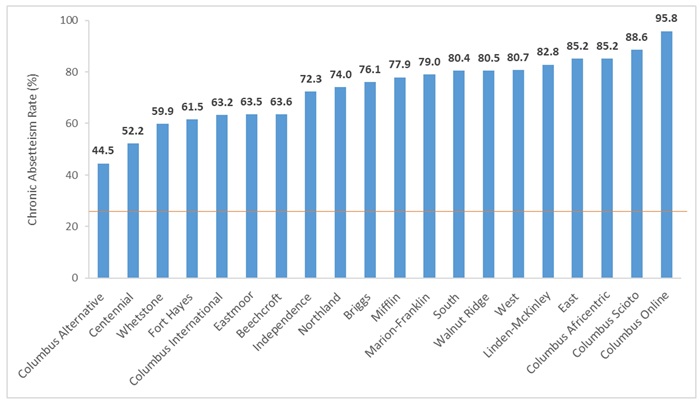
As they consider transportation changes, district leaders should consider the attendance crisis rolling through the city's schools. Figure 1 shows the chronic absenteeism rates of Columbus high schools during the 2024–25 school year. Every high school save one reported that more than half their students were chronically absent. Rates top 70 percent in most of the schools. Such astronomical numbers easily double the statewide absenteeism rate and exceed the districtwide chronic absenteeism rate of 52.6 percent (for all K–12).
Figure 1: Chronic absenteeism rates at Columbus City Schools’ high schools, 2024–25
Chronic absenteeism is linked to academic problems, which also happen to be widespread in Columbus high schools. Last year, only 22 percent of district students achieved proficiency on the state Algebra I exam, and even fewer did so in geometry (13 percent). Just one in three scored proficient on the state’s high school English exam. Less than one in ten Columbus students met Ohio’s college remediation-free benchmarks on the ACT or SAT.
District leadership has argued that cutting bus routes would allow it to devote more funds towards classroom instruction. That’s a nice thought, and Columbus should be exploring ways to drive dollars into classrooms, including pay raises for its most effective teachers. But it’s also hard to move the achievement needle when students are MIA. Even the best teacher, with a world-class curriculum in hand, will struggle to deliver solid outcomes when attendance is poor. Worsening attendance might also require more high-cost remediation and intervention programs, additional expenses that could easily swamp the savings associated with cutting bus routes.
There are surely other expenditures more deserving of cuts than transportation. That might include an afterschool or tutoring program that is poorly attended or ineffectual. Professional development that does little to sharpen teachers’ skills. Overly generous benefits. Closing half-empty schools. Or cutting administrative fluff. (Columbus had 388 administrators in 2024—25 percent more than a decade ago—even though district enrollment declined by 15 percent over this period.) Meanwhile, district officials should also consider discontinuing programs paid for by its roughly $500 million in federal emergency Covid funds. The expiration of these one-time dollars is likely contributing to its current budget woes.[1] Transportation shouldn’t be a casualty in efforts to revert to pre-pandemic budgetary norms.
Providing reliable transportation is one tool in the ongoing battle against chronic absenteeism—and its harmful impacts on academic performance. Families and students, including high schoolers, count on school districts for busing. When that doesn’t happen, it’s too easy for students to give up on getting to school and stay home instead. Lack of school-provided busing also raises questions about safety getting to and from school (will students have to walk through dangerous neighborhoods or resort to risky ridesharing?). It could also increase students’ commute times and cause headaches for public transit systems, if Columbus decides to rely on COTA for transportation.
Transportation should be a priority in school budgets, not just in Columbus, but other districts, as well. Ohio sends hundreds of millions to districts to help cover the expense, as do local funds in our shared funding model. Columbus should do the right thing and ensure that all students receive busing service. If it doesn’t, lawmakers should consider adding a requirement for high school transportation (at least in districts with high absenteeism). When students aren’t in school, they won’t learn much. Let’s make sure every student who needs a ride gets one.
[1] Columbus City Schools’ local funding increased by $82 million from FY22 to FY25, and its state revenues increased by $12 million during this same period.