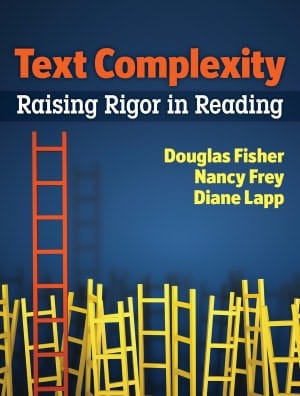
 As Common Core implementation heats up, a fiery debate is emerging among reading specialists. It is stoked by the books we assign students who are below grade level—whether we ask them to read “just right” texts (those at a student’s individual reading level) or “grade-appropriate” texts. For years, teachers have been assigning the former, working to ensure that struggling students can read without getting too frustrated. The Common Core now asks teachers to assign grade-appropriate texts (and offer as much scaffolding as needed for below-grade readers). This book from the International Reading Association offers convincing support for this new approach. It argues that our current focus on “just right” books undermines student learning in three ways. First, assigning these texts makes reading too easy. Students will not improve their reading skills if they aren’t challenged and given above-level texts. Second, the “just right” theory overlooks the important role that instruction should play in improving comprehension and building knowledge. Students learn more—and their comprehension improves more dramatically—when they read more challenging and difficult texts with appropriate scaffolding and support from the teacher. Third, the “just right” strategy focuses on teaching skills rather than teaching texts. In isolation, reading skills are pointless. The only way to develop these is to use them while actually struggling through texts. Unfortunately, while the book’s first chapter offers a fantastic framing of this timely and volatile issue, the guidance found in chapters two and three is overly complicated—and may end up undermining the Common Core’s emphasis on improving the quality and rigor of the texts students are reading. Still, kudos to the International Reading Association for breaching the subject.
SOURCE: Douglas Fisher, Nancy Frey, and Diane Lapp, Text Complexity: Raising Rigor in Reading (Newark, DE: International Reading Association, 2012).