
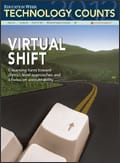
 This year’s Technology Counts (the fifteenth of its kind from Education Week) is a handy guide to the latest issues surrounding digital learning and will serve both novice and wonk. The collection of ten articles (plus a nifty infographic detailing student, parent, and teacher views on digital ed) covers the major policy issues faced by this nascent movement. (These are mirrored by our own work in this arena.) One article addresses the need for a new funding model for online learning: Most state-run schools, for example, are paid for via a line item on the legislative budget—leaving year-to-year financing subject to politics (and meaning that funding is based on estimated rather than actual enrollments). Others probe issues of governance in online learning. Single-district digital education is on the rise, Ed Week reports—a worrying trend, especially if it hinders students from accessing the best content from other state, national, or international providers. Still others take on the need for more robust data systems and stronger accountability for digital learning. On that front, the authors offer four recommendations: require students to test in person; frequently assess course efficacy, intervening when necessary; collect more data; and use the same accountability measures for both traditional and virtual students in order to allow for side-by-side comparisons. Sensible (if obvious) solutions—but none that aren’t already being implemented by some of digital education’s strongest providers.
Education Week, Technology Counts 2012: Virtual Shift (Bethesda, MD: Editorial Projects in Education, March 2012).
