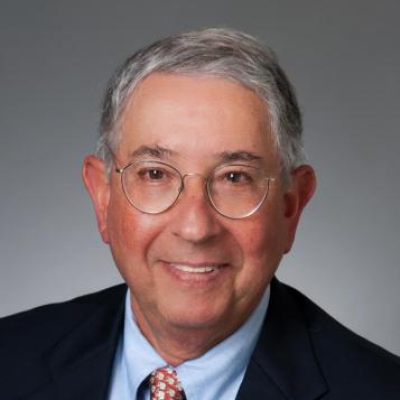
William G. Ouchi
Simon & Schuster
2009
U.C.L.A. business professor Bill Ouchi has authored another valuable contribution to the education-reform literature. (We reviewed his last big book, here.) “TSL” stands for “total student load” and refers to the number of students that a teacher is responsible for and also to the number of students in a school. He contends, plausibly enough, that small schools are easier to lead and manage than big ones and that they’re more likely to be managed successfully by principals who are competent but not necessarily superstar executives. He also contends, again plausibly, that a teacher responsible over the course of a day or week for 80 or so students is far more effective with them than one who must contend with twice that number.. But this useful book isn’t ultimately about class or school size. Befitting a scholar of management, it’s really about effective school and district organization. He sets out five “pillars of school empowerment” and “four freedoms” that actually give principals the capacity to lead their schools. Along the way, he does an admirable job of explaining how districts should be decentralized and why they work better when they are. Taken seriously, Ouchi’s analysis would do important good for American K-12 education, particularly in big cities and large districts. It’s not the whole story, however. Important as it is, for example, for schools to control their curriculum, that doesn’t get us very far if it’s a loopy, flabby, trendy or ineffectual curriculum, or one taught by instructors who don’t know their stuff. Nor must one buy Ouchi’s assumption that districts are forever. Is it not possible that the geographically-based district itself is an obsolete management structure and that U.S. education would be better off with a direct relationship between states and a host of fully empowered charter-like schools, CMOs, EMOs, and other operators, some of them virtual, some of them national? Still, as long as we have the structure we have, wise policymakers and state and district leaders would do well to heed Bill Ouchi’s findings and sage advice. You can find the book here.