
Mobile Navigation

  • National
    • Policy
      • High Expectations
      • Quality Choices
      • Personalized Pathways
    • Research
    • Commentary
      • Gadfly Newsletter
      • Flypaper Blog
    • Events
    • Scholars Program
  • Ohio
    • Policy
      • Priorities
      • Media & Testimony
    • Research
    • Commentary
      • Ohio Education Gadfly Biweekly
      • Ohio Gadfly Daily
  • Charter Authorizing
    • Application
    • Sponsored Schools
    • Resources
  • About
    • Mission
    • Board
    • Staff
    • Career
Home
Home
Advancing Educational Excellence

Main Navigation

  • National
  • Ohio
  • Charter Authorizing
  • About

Ohio Menu

  • Topics
    • Accountability & Testing
    • Advanced Education
    • Career & Technical Education
    • Charter Schools
    • Curriculum & Instruction
    • ESSA
    • Evidence-Based Learning
    • Governance
    • Personalized Learning
    • Private School Choice
    • School Finance
    • Standards
    • Teachers & School Leaders
  • Research
  • Policy
  • Commentary
    • Ohio Gadfly Newsletter
    • Ohio Gadfly Blog
    • Events

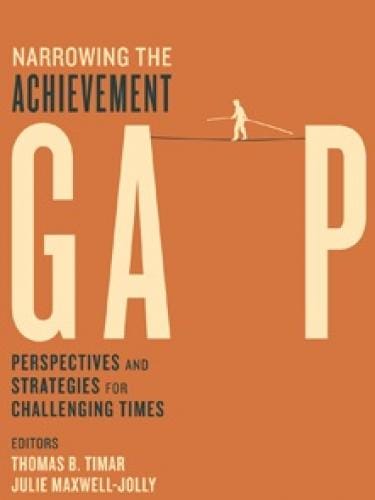
Narrowing the Achievement Gap: Perspectives and Strategies for Challenging Times

Layla Bonnot
2.8.2012

Carrots, Sticks, and the Bully Pulpit cover

Since the 1966 Coleman report, pundits and policymakers have thrown theories, programs, and umpteen dollars at the wall separating black and white student achievement. Yet the divide between the two (as well as those we find between other key demographic groups) remains just as firm as ever. This edited volume from Harvard Education Press offers an overview of the societal and educational factors that have created the achievement gap—and some tepid potential solutions. Much of what the book presents is old hat to the weathered edu-reformer: Schools are not solely to blame and no single solution exists, for example. Still, the volume offers a few refreshing ideas. One chapter, for example, expends much ink dispelling the unyielding belief that more money pumped into education coffers leads to better student outcomes. Instead, W. Norton Grubb offers cost-cutting strategies meant simultaneously to narrow the achievement gap, eliminate waste, improve resource allocation, and identify and replicate successful state policies. While not profound, this is a worthy message, indeed.

Thomas Timar and Julie Maxwell-Jolly, Narrowing the Achievement Gap: Perspectives and Strategies for Challenging Times (Cambridge, MA: Harvard Education Press, 2012).

Tags: Harvard Education Press

Layla Bonnot is a research intern at the Thomas B. Fordham Institute. She graduated from the College of William and Mary with a Bachelor of Business Administration in 2006. She was a consultant for various agencies of the Federal government including Department of Energy, Veterans' Affairs, and Homeland Security. She is currently concluding a master’s program in public policy at George Mason University with an…

View Full Bio
Fordham Logo

© 2026 The Thomas B. Fordham Institute
Privacy Policy
Usage Agreement

National

P.O. Box 110
Burke, VA 22009

202.223.5452

[email protected]

Ohio

P.O. Box 82291
Columbus, OH 43202

614.223.1580

[email protected]

Sponsorship

130 West Second Street, Suite 410
Dayton, Ohio 45402

937.227.3368

[email protected]