Mobile Navigation

  • National
    • Policy
      • High Expectations
      • Quality Choices
      • Personalized Pathways
    • Research
    • Commentary
      • Gadfly Newsletter
      • Flypaper Blog
    • Events
    • Scholars Program
  • Ohio
    • Policy
      • Priorities
      • Media & Testimony
    • Research
    • Commentary
      • Ohio Education Gadfly Biweekly
      • Ohio Gadfly Daily
  • Charter Authorizing
    • Application
    • Sponsored Schools
    • Resources
  • About
    • Mission
    • Board
    • Staff
    • Career
Home
Home
Advancing Educational Excellence

Main Navigation

  • National
  • Ohio
  • Charter Authorizing
  • About

The Education Gadfly Weekly

Sign Up to Receive Fordham Updates

We'll send you quality research, commentary, analysis, and news on the education issues you care about.
Thank you for signing up!
Please check your email to confirm the subscription.

Hell yes we want instructional change

Volume 13, Number 44
10.22.2013
10.22.2013

Hell yes we want instructional change

Volume 13, Number 44
view
High Expectations

Common Core in the Schools: A First Look at Reading Assignments

In Common Core in the Schools: A First Look at Reading Assignments, researchers analyze what texts English teachers assign their students and the instructional techniques they used in the classroom.

Tim Shanahan, Ann Duffett 10.22.2013
NationalReport

Common Core in the Schools: A First Look at Reading Assignments

10.22.2013
Report

Hell yes we want instructional change. Don’t you?

Michael J. Petrilli
11.13.2013
Flypaper

Back to Basics

5.29.2007
Blog

Over- and underachievers

The Education Gadfly
11.14.2013
Blog

The early holidays edition

11.14.2013
Resource

Common Core & Curriculum Controversies

10.24.2013
Video

Common Core Meets Education Reform: What It All Means for Politics, Policy, and the Future of Schooling

Victoria McDougald
11.14.2013
Blog

Access to Effective Teaching for Disadvantaged Students

11.14.2013
Blog

Philanthropy, Fall 2013

11.14.2013
Blog
view

Hell yes we want instructional change. Don’t you?

Michael J. Petrilli 11.13.2013
Flypaper
view

Back to Basics

5.29.2007
Blog
view

Over- and underachievers

The Education Gadfly 11.14.2013
Blog

The early holidays edition

Dara Zeehandelaar Shaw, Ph.D., Amber M. Northern, Ph.D., Pamela Tatz 11.14.2013
Resource
view

Common Core & Curriculum Controversies

10.24.2013
Video
view

Common Core Meets Education Reform: What It All Means for Politics, Policy, and the Future of Schooling

Victoria McDougald 11.14.2013
Blog
view

Access to Effective Teaching for Disadvantaged Students

11.14.2013
Blog
view

Philanthropy, Fall 2013

11.14.2013
Blog
view

Common Core in the Schools: A First Look at Reading Assignments

10.22.2013
Report

Press Release

As forty-six states and the District of Columbia implement the Common Core State Standards, questions abound regarding implementation, including the implications for curriculum and pedagogy. In Common Core in the Schools: A First Look at Reading Assignments, researchers analyze what texts English teachers assign their students and the instructional techniques they used in the classroom. This study is meant to serve as a “baseline” that shows what the very early stages of CCSS implementation look like. This “baseline” study—with a follow-up slated for 2015—shows what the very early stages of CCSS implementation look like:

Most teachers believe that the new standards promise better learning for their students, and an overwhelming majority of teachers say that their schools have already made significant progress toward implementing the standards, including relevant curriculum changes and professional development.

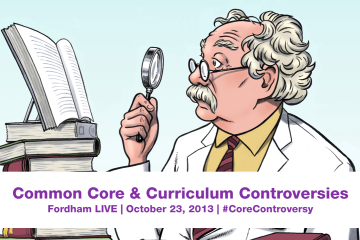
Watch our Fordham LIVE event, Common Core & Curriculum Controversies

But findings from this survey also show that, for the most part, the heavy lifting of aligning curriculum and instruction to the rigor of the CCSS still lies ahead:

  • The CCSS emphasize the centrality of texts in the English language arts curriculum. Yet the majority of teachers still report that their lessons are dominated by skills and are more likely to try to fit texts to skills than to ground their skills instruction in what is appropriate to the texts they are teaching. Indeed, an astonishing 73 percent of elementary school teachers and 56 percent of middle school teachers place greater emphasis on reading skills than the text; high school teachers are more divided, with roughly equal portions prioritizing either skills or texts.
  • The Common Core asks teachers to assign texts that provide language complexity appropriate to the grade level, but significant proportions of teachers—particularly in the elementary grades—are still assigning texts based on students’ present reading prowess. Specifically, the majority of elementary teachers (64 percent) make substantial efforts to match students with books that presumably align with their instructional reading levels. This happens less often in middle and high school, with approximately two in five middle school teachers selecting texts this way. This means that many youngsters are not yet working with appropriately complex language in their schoolbooks.
  • The CCSS call for students to have substantial experience reading informational texts (including literary nonfiction such as speeches and essays). Despite some public controversy over this, most of the teachers indicated that they are already devoting significant proportions of time to teaching such texts in their classrooms. Nevertheless, many English language arts teachers (including 56 percent at the middle school level) assign none of the literary or informational texts listed in the survey, which represent both CCSS exemplars and other high-quality texts. 
view

Hell yes we want instructional change. Don’t you?

Michael J. Petrilli
11.13.2013
Flypaper

It’s silly season for the Common Core debate, and I’m not referring to the latest outlandish claims from folks on the far right. It appears that Common Core Dystopia Disorder has infected some of our usually rational and levelheaded friends in the think-tank community, too.

Jay Greene, I’m talking first and foremost about you. Jay thinks he’s found a smoking gun, proof that we supporters of the Common Core, especially those of us at Fordham, have been dishonest when we’ve claimed that the standards don’t “prescribe” a particular curriculum, because of a recent report in which we fret that educators aren’t embracing the “instructional shifts” promoted by the Common Core:

Common Core doesn’t dictate curriculum or pedagogy Checker assured us, it only requires that “everybody’s schools use the same academic targets and metrics to track their academic performance” and “then those schools can and should be freed up to ‘run themselves’ in the ways that matter most: budget, staffing, curriculum, schedule, and more.”

Also,

These were the promises the Fordham folks made when they were courting us on adopting Common Core, but now that we’re married, they’ve changed their tune. No longer do they bring us flowers, write love-poems, or assure us that Common Core in no way dictates how schools should teach or what they should teach — their pedagogy and curriculum. Instead, Fordham and their friends are now judging schools on whether they are properly implementing ”instructional shifts—ways in which the Common Core standards expect practice to differ significantly from what’s been the norm in most American classrooms.”

(Or, as Jason Bedrick—cleverly, I must admit—accused us of implying, “If you like your curriculum, you can keep your curriculum.”)

Rick Hess tweeted that he found Jay’s critique “devastating” to our case. Later, when Kathleen Porter-Magee rightfully (and respectfully) responded that there’s a world of difference between “prescribing a curriculum” and encouraging “instructional shifts,” Rick called it “a pol’s answer,” and Jay gleefully agreed, with a cheeky reference to Bill Clinton’s deceitful disassembling for good measure.

To which I say: Dude, guys, get a grip.

Are we hoping that Common Core will lead to instructional change in the classroom? Hell yes! If “instructional change” isn’t what we’re all working toward, through any of our reform efforts, what’s the point? How else do we expect to see improved student achievement?

This isn’t just true for standards-based reform. I assume Jay still supports school choice because he thinks it will lead to improved student outcomes—more learning. And how is that supposed to happen? Kids don’t learn how to write better via the invisible hand of the market, though I certainly agree that market forces could push public schools to make changes they otherwise would resist—changes that would result in stronger teaching (i.e., instruction) in the classroom. And THAT would lead to improved student results. No?

Rick likes to pretend that he’s above making policy pronouncements, though in recent years he’s promoted, among other things, cage-busting leadership, principals as learning engineers, and gold-star teachers. Toward the end of his theory of action for any of these reforms, I assume, are better interactions between kids, teachers, and content. In other words, improved instruction.

And let’s not just pick on Jay and Rick. Russ Whitehurst and Tom Loveless have been coy about the Common Core too, fairly pointing out that there’s never been a relationship between the quality of states’ content standards (as measured by Fordham’s reviews) and improved student achievement. We know; we’ve looked for such a relationship for years. It’s not hard to understand why it doesn’t exist: Few states did the hard work of driving instructional change from the standards to the classroom. They bought assessments that measured just a fraction of their standards, set their cut scores too low, or skimped on teacher training.

So standards—words on paper—don’t matter, at least in isolation. But Russ and Tom have also been big advocates for the importance of curriculum and instruction. Russ, for instance, has eloquently written that “leaving curriculum reform off the table or giving it a very small place makes no sense.”

I agree wholeheartedly. Here’s the conundrum for state policymakers: How do you encourage local school districts to make smart curricular decisions? Standards-based reform is one possibility. Set clear standards, align assessments to those standards, hold educators accountable, and help them find solid curricular materials that sync with the standards. If there are better ways, I’m open to them. Russ? Tom?

***

As this point I can hear Jay saying, “See, this isn’t tight-loose, this is tight-tight. Sucka!”

But let me ask you, Jay: Is anyone proposing that states hire Common Core Cops who go to school districts and inspect their curricular choices? To check on their alignment with the standards and penalize them if they don’t? Nope. Under Common Core, states will continue to hold schools accountable for student results—and that’s as it should be. If some schools teach yoga all day and the kids do well on the tests, it won’t matter a lick to the states.

A different question—a good think-tank question—is how social scientists can determine, in the initial stages of a major reform like the Common Core, whether the “theory of action” is playing out as expected. (I believe you fancy pants call this “formative evaluation.”) That’s where our recent reading study comes in. We wanted to know, in these early years of implementation, whether schools are making changes as a result of adopting the Common Core—changes that might result in improved student achievement. For English language arts, we thought a good indicator would be the rigor of the books teachers are assigning to their students. (We’d love to do a similar study for math, perhaps looking at whether elementary school teachers are teaching traditional arithmetic again, as the standards expect.)

Is this reneging on our tight-loose promise? Our courtship love songs? Hardly. Nobody is going to be sanctioned as a result of our study. We believe that schools will do better on the Common Core–aligned assessments if they ask students to read challenging texts, rather than books that are relatively easy for them. (We’d also love to see schools adopt a content-rich curriculum like Core Knowledge.) But guess what? If schools continue to assign kids “just right” texts at their current reading levels and those kids still pass the Common Core assessments—great! From the perspective of the public, that’s what counts.

But if we see a lot of failure on the Common Core assessments in 2015 and 2016 and little movement on NAEP, we’ll now have a reasonable hypothesis to explain it: Schools didn’t change their instructional practices, at least as they relate to assigning students more challenging texts. That’s a worthy piece of information. One might even call it valuable social science.

Our hope, of course, is that this finding—that educators think they are faithfully implementing the Common Core standards for English language arts even though they aren’t making the instructional shifts encouraged by the standards themselves—will motivate action now, rather than later. We hope states and districts will redouble their efforts to familiarize teachers with the standards and with good practice (which, in our view, includes assigning grade-level texts).

But in the end, we’re just a think tank. States, districts, and schools are free to ignore us—and most will. And in the end, they will be judged by their student results. As they should be.

***

The main reason there's been so little achievement gain over the past few decades arising from the reforms that so many of us have been pressing is precisely because neither curriculum nor instruction much changed—hence the student's actual classroom experience didn't much change, and hence the students didn't learn much more. Is that what Jay and his fellow Common Core vigilantes hope will happen again?


view

Back to Basics

5.29.2007
Blog

Ever wonder what separates a charter school sponsor (aka authorizer) from a non-profit governing board? A charter management organization (CMO) from an education management organization (EMO)? With so many characters treading the boards of Ohio's charter school stage, even Gadfly needs a little help keeping them all straight (that's when they're not blurring their roles on their own). To that end, readers may want to check out a brief summary of Ohio's charter school governance structure and those organizations that play key roles within it. It's available here.

view

Over- and underachievers

The Education Gadfly
11.14.2013
Blog

The D.C. Charter Board recently released its annual ranking of charter schools in the nation’s capital, showing that one-third of the schools it sponsors deserve a top-performing, or Tier 1, status. Five schools attained Tier 1 status for the first time this year, bringing the total number of high flyers to twenty-three among sixty-eight that were ranked (at least four schools dropped from Tier 1 status to Tier 2 this year). Most schools were in the middle, and eight dwelled at the bottom, where they risk getting shut down. Still, hurrah for the progress the Board can claim. And hurrah for D.C. kids, who can enjoy the fruits of this endeavor.

The fourth round of the federal Investing in Innovation (i3) initiative has concluded with twenty-five applicants in the winner’s circle. Seven are validation grants (larger awards for ideas with the strongest evidence base) and eighteen are development grants (smaller awards aimed at supporting up-and-coming ideas). The grantees ranged from teacher-collaboration ideas to ed-tech groups, from proposals creating free Common Core instructional resources for teachers to parental-engagement plans. For a take on a past grantee, the Reading Recovery program, check out this week’s Education Gadfly Show podcast.

On Wednesday, Rep. George Miller and Sen. Tom Harkin introduced legislation in the House and Senate to expand access to pre-K programs for four-year-olds. The bill largely adheres to President Obama’s proposal (states will have to promise to link pre-K data to K–12, provide state-funded Kindergarten, and ensure that early-education teachers have bachelor’s degrees). But there are some key differences: states would have the option to set aside 15 percent of the funding to serve infants and toddlers from poor families; the program would be slightly cheaper for states in the long run, as states would have to contribute less of their own dollars during the ninth and tenth years of the program; and instead of relying on a tobacco tax to pay for the program, regular appropriations would be used. We’re not crazy about creating a new federal entitlement, but as a model for new state pre-K programs, this proposal has a lot going for it.

Open season on Pearson continues (and is mostly well deserved). The latest gaffe: In addition to delivering their new Common Core–aligned textbooks to New York City after the school year had commenced, teachers complain that the texts are poorly sequenced and “loaded with errors.” For example, one workbook page has questions about the wrong reading, another page is printed upside down, and teachers’ manuals don’t match students’ textbooks. Pearson staff: Perhaps it’s time for a little remedial education.

The early holidays edition

11.14.2013
Resource

After lamenting the fact that Hanukkah this year falls before black Friday, Dara and Brickman tackle Friedman’s argument against voucher-school accountability, the D.C. Charter Board’s updated rankings, and the brand-new pre-K bill. Amber gets jazzed about last-minute Christmas shopping—and an evaluation of the Reading Recovery program.

Amber's Research Minute

Evaluation of the i3 Scale-up of Reading Recovery by Henry May, et al., (New York: Consortium for Policy Research in Education, August 2013).

view

Common Core & Curriculum Controversies

10.24.2013
Video
Does three times four equal eleven? Will "fuzzy math" leave our students two years behind other countries? Will literature vanish from the English class? Is gifted-and-talented education dying? A barrel of rumors and myths about curriculum has made its way into discussions of the Common Core State Standards for math and English language arts. Experts will tackle these fears and claims at Fordham on October 23, 2013. Hear from Jason Zimba on math myths, Tim Shanahan on the texts that teachers may assign, and a panel of practicing K--12 educators for an early look at Common Core implementation in their states and districts.
 
Common Core math myths: A conversation with Jason Zimba
 
Are teachers assigning Common Core aligned texts? A conversation with Tim Shanahan
 
An early look at Common Core implementation: A panel discussion
 
Moderated by Michael Petrilli
view

Common Core Meets Education Reform: What It All Means for Politics, Policy, and the Future of Schooling

Victoria McDougald
11.14.2013
Blog

While the Common Core has hogged the national spotlight of late, standards-based reform is just one of many improvement strategies coursing through our nation’s schools and classrooms today. But will educators’ and policymakers’ obsession with the Common Core hinder the rest of the reform agenda? This volume from AEI’s Rick Hess and Michael McShane examines a wide swath of Common Core–related topics—the impetus behind the creation of the standards, potential long-term governance models, the prospects for the development of social-studies standards, and on—but the most consequential chapters are those that consider the interplay between the Common Core and other reform initiatives. There are chapters devoted to teacher evaluation, charter schools, accountability, and education technology, each addressing how said reforms might affect or be affected by the transition to the new standards. For instance, how should we set proficiency levels for Common Core–aligned assessments? And how should we tackle accountability and teacher evaluation in a way that’s fair to educators but, most importantly, promotes student learning? Rather than arguing for or against the standards themselves, this volume takes a pragmatic (though markedly cautious) approach. And if the Common Core standards are to reach their full potential on behalf of the nation’s students, all stakeholders—educators, advocates, and policymakers alike—would do well to ponder the issues posed in this volume.

SOURCE: Frederick M. Hess and Michael Q. McShane (eds.), Common Core Meets Education Reform: What It All Means for Politics, Policy, and the Future of Schooling (New York: Teachers College Press, 2013).

view

Access to Effective Teaching for Disadvantaged Students

11.14.2013
Blog

No matter what side of the ed-policy debate you fall into, getting effective teachers in front of disadvantaged students is a priority for almost everyone. Yet this new study from  Mathematica and AIR highlights just how far we are from ensuring that lower-income kids have access to the same quality of teachers as their affluent peers. The study looked at twenty-nine large school districts (with a median enrollment of 60,000) and calculated for each an “effective-teaching gap”: a measurement that compares the average effectiveness of teaching (using value-added models) experienced by disadvantaged students (those who qualify for free or reduced-price lunch) with the average effectiveness of teaching experienced by their better-off peers. As one might expect, there was a difference. Teachers of affluent students had, on average, a higher value-add than teachers of poor kids, equivalent to 2 percentile points in the student-achievement gap. Interestingly, though, the gap varied across districts and subjects, implying that equity can be achieved. In math, ten of the districts had no statistically significant differences in teacher effectiveness between  poorer and richer students; in English language arts, only two districts could make that claim (perhaps because of deficiencies in low income students’ content knowledge). True, some will resist the use of value-added scores as a proxy for teacher quality, and many studies show just how difficult it is to get effective teachers to switch to tougher schools. But the study does well at defining the scope and implications of the problem we face in creating equal access to effective teachers.

Eric Isenberg et al., Access to Effective Teaching for Disadvantaged Students (Washington, D.C.: National Center for Education Evaluation and Regional Assistance, November 2013).

view

Philanthropy, Fall 2013

11.14.2013
Blog

The Philanthropy Roundtable's generally praiseworthy magazine hits a number of topical education-policy issues in its Fall 2013 issue. The first profiles Eli and Edythe Broad's Superintendents Academy—which, since 2002, has produced “150 alumni...[including] Los Angeles superintendent John Deasy and state superintendents of Louisiana (John White), Maryland (Lillian Lowery), New Jersey (Christopher Cerf), and Rhode Island (Deborah Gist).” (Then there’s Broad’s Residency in Urban Education program, which seeks to transform private-sector leaders into future heads of schools or school systems.) The second notable article highlights the Relay Graduate School of Education, an alternative teacher-prep program in New York started by Norman Atkins of Uncommon Schools, Dave Levin of KIPP, and Dacia Toll of Achievement First. With backing from the Robin Hood Foundation and others, the school focuses on pragmatism over theory and insists that, before receiving a master's degree, teachers show that their students are achieving at least a year's worth of academic growth each school year. A third education item comes from Fordham blogger Andy Smarick's new book, Closing America's High-achievement Gap: A Wise Giver's Guide to Helping Our Most Talented Students Reach Their Full Potential. Smarick argues, as we often do at Fordham, that we must also help high-ability youngsters to succeed and not focus exclusively on those with low-achievement issues. In his words, “while America's most at-risk kids deserve all the help they can get, we ought to also give increased attention to our potential top achievers—both for our own sake and the nation's.” Whether you’re a veteran philanthropist or a philanthropist-in-training, give this issue a read.

SOURCE: Philanthropy, Fall 2013 (Washington, D.C.: Philanthropy Roundtable, 2013).

Fordham Logo

© 2026 The Thomas B. Fordham Institute
Privacy Policy
Usage Agreement

National

P.O. Box 110
Burke, VA 22009

202.223.5452

[email protected]

Ohio

P.O. Box 82291
Columbus, OH 43202

614.223.1580

[email protected]

Sponsorship

130 West Second Street, Suite 410
Dayton, Ohio 45402

937.227.3368

[email protected]